
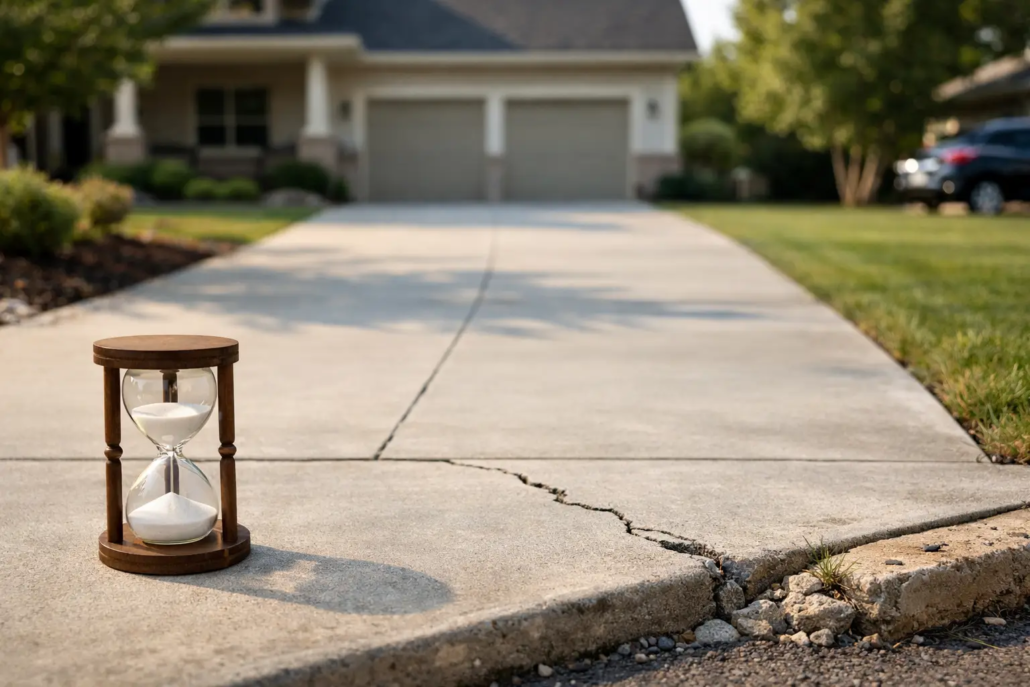
How Long Does a Concrete Driveway Last?
A driveway usually starts showing its true quality a few summers in. When the surface still looks clean, drains properly and handles daily traffic without cracking apart, that is when workmanship and material choice really prove themselves. So, how long does a concrete driveway last? In most cases, a well-built concrete driveway will last 25 to 30 years, and in some situations quite a bit longer.
That headline figure is useful, but it is only part of the answer. The real lifespan depends on how the driveway was designed, how well it was installed, what sits underneath it, the finish selected, and how it is used over time. In South East Queensland, climate and drainage also play a major role, especially through heavy rain, hot weather and shifting ground conditions.
How long does a concrete driveway last in real conditions?
For an average residential property, 25 to 30 years is a fair expectation for a properly installed concrete driveway. Some driveways begin to show significant wear earlier because corners were cut during preparation or the slab thickness was not right for the load. Others keep performing well for 35 years or more because the base was solid, drainage was handled correctly and the surface was maintained.
Commercial driveways, shared accessways and areas exposed to heavier vehicle traffic may have a shorter effective lifespan if they are not designed for that use from the start. A family sedan and the occasional delivery van place very different demands on a slab compared with frequent use by trucks, machinery or high-turnover traffic.
This is why there is no honest one-size-fits-all answer. Concrete is durable, but it is not indestructible. Longevity comes from matching the design and construction method to the site and the way the surface will be used.
What affects how long a concrete driveway lasts?
The biggest factor is what happens before the concrete is even poured. A driveway is only as good as the ground beneath it. If the sub-base is poorly compacted or uneven, the slab can settle, crack and lose performance much earlier than expected.
Thickness matters as well. A residential driveway needs the right slab depth and reinforcement for the traffic it will carry. If heavier vehicles are likely, that should be accounted for early. It is much more cost-effective to build for the intended load than to repair premature damage later.
Drainage is another major issue. Water that sits on the surface, runs underneath the slab or pools around edges can gradually weaken support and increase movement. In Queensland conditions, where intense rainfall is common, proper falls and runoff planning are not optional extras. They are part of a driveway that lasts.
The concrete mix itself also matters. Quality materials, correct batching and proper placement all contribute to strength and durability. Then there is curing. Even excellent concrete can underperform if it is not cured properly after installation. Good curing helps the slab gain strength and reduces the risk of early surface problems.
Finally, ongoing use makes a difference. Oil stains, neglected joints, tree root pressure, sharp turning from heavy vehicles and repeated impact at the same spots can all shorten lifespan. None of these issues mean concrete is a poor choice. They simply show why a driveway should be built and maintained with real-world conditions in mind.
Signs a driveway is ageing well or ageing badly
A concrete driveway does not suddenly fail overnight. Usually, there are signs that tell you whether the surface is holding up as it should.
A driveway that is ageing well will remain generally level, with only minor cosmetic wear. Small surface marks, slight fading and fine hairline cracking can be normal over time, especially on older driveways. These issues do not always affect structural performance.
A driveway that is ageing badly tends to show deeper cracking, uneven sections, edge breakdown, spalling, drainage issues or sinking in isolated areas. If water starts pooling where it never used to, or cracks widen and continue to move, the problem may be more than cosmetic. That often points back to movement in the base, poor joint control, heavy loading or water-related damage.
The timing of these signs matters. If substantial cracking or settlement appears early, the issue is usually linked to installation or site preparation rather than age alone.
Does decorative concrete last as long as plain concrete?
This is a common question, especially for homeowners balancing durability with street appeal. Decorative finishes such as exposed aggregate, coloured concrete, stencil concrete and stamped concrete can all last well when they are installed correctly and maintained properly.
The key point is that the finish does not replace the need for sound construction. A decorative driveway still needs proper excavation, compaction, reinforcement, concrete placement and curing. If those fundamentals are done well, a decorative surface can offer the same strong service life as standard concrete while delivering a more refined look.
What can differ is maintenance. Some decorative finishes benefit from resealing to preserve colour, protect the surface and keep the driveway looking fresh. That does not mean the driveway is wearing out faster. It means the aesthetic finish needs attention if you want it to continue performing and presenting at a high level.
How to make a concrete driveway last longer
The best way to extend lifespan is to get the construction right from day one. That includes suitable site preparation, correct slab thickness, quality materials, proper reinforcement and a finish that suits the property.
After installation, sealing can help protect the surface from moisture, staining and weathering, particularly on decorative concrete. Cleaning the driveway from time to time also helps, especially if leaves, dirt and oils are left to build up. It is a simple step, but it makes a difference to both appearance and long-term surface condition.
It is also worth being realistic about loading. If a driveway was built for residential traffic, regularly parking heavy machinery or large commercial vehicles on it can shorten its life. Likewise, if tree roots are pushing into the slab or drainage patterns around the home have changed, those issues should be addressed before they create larger problems.
Small repairs done early are usually far more affordable than major replacement later. Joint deterioration, isolated cracking and minor surface wear can often be managed before they develop into broader structural failure.
When should you repair a driveway instead of replacing it?
Not every older driveway needs to be ripped out. If the slab is still structurally sound and the issues are mostly surface-level, repair or resurfacing may be the smarter option. This can work well for driveways with cosmetic staining, light wear, minor cracking or a dated finish.
Replacement tends to be the better choice when there is widespread cracking, major movement, poor drainage, sinking sections or recurring failure. In those cases, surface fixes may only disguise the problem for a short time. If the base has failed, the concrete above it will keep telling the same story.
For property owners planning a renovation or upgrade, this is also a good time to think beyond simple replacement. If you are already investing in a new driveway, it can make sense to consider a finish that improves both durability and kerb appeal.
Why installation quality matters more than the headline lifespan
When people ask how long does a concrete driveway last, they are often really asking whether it is worth the investment. The answer is yes, provided the driveway is installed properly and suited to the property.
A cheaper quote can look appealing at the start, but shortcuts in preparation, thickness, reinforcement or finishing usually show up later. Premature cracking, drainage problems and surface breakdown are expensive ways to save money upfront.
That is why experience matters. A contractor should understand local ground conditions, stormwater behaviour, traffic demands and finish selection, not just the pour itself. For homes and commercial properties across Brisbane, Logan City and the Gold Coast, that local knowledge is part of building concrete that lasts in actual Queensland conditions, not just on paper.
At Creative Concrete Constructions, that practical approach sits behind every driveway project. The goal is not only a surface that looks good on completion day, but one that continues performing year after year.
A concrete driveway is a long-term asset when it is planned properly, installed with care and maintained sensibly. If you are weighing up a new driveway or wondering whether your existing one still has life in it, the right question is not only how many years it might last, but how well it will serve your property over those years.
