
How to Choose Pool Surround Concrete That Lasts
A pool surround has a tougher job than most outdoor surfaces. It needs to cope with wet bare feet, splashes of chlorinated or salt water, harsh Queensland sun and regular entertaining, all while looking right beside the pool and home. Knowing how to choose pool surround concrete means looking beyond colour alone and selecting a surface that delivers safe footing, comfortable use and lasting visual appeal.
The right choice depends on your pool design, how the area is used and the conditions around the site. A clean, contemporary pool may suit a light exposed aggregate finish, while a covered entertaining zone may call for a decorative concrete treatment that ties into existing paths or patios. Good planning before concrete is poured will make the finished space easier to enjoy and maintain for years.
Start with safety under wet feet
Slip resistance should be one of the first considerations for any pool surround. Water, sunscreen and pool chemicals can make smooth surfaces slippery, particularly where children are running between the pool and the house.
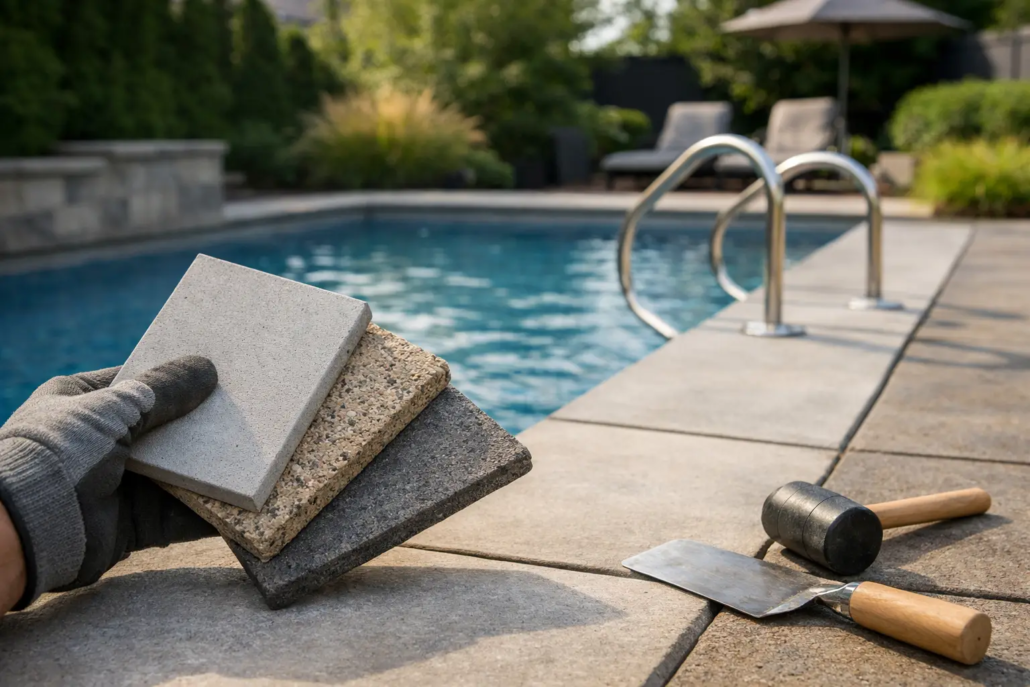
A lightly textured finish generally provides more dependable grip than a highly smooth concrete surface. Exposed aggregate is a popular choice because the small stones create natural texture while giving the area a refined, premium look. The amount of aggregate exposed matters, though. A finish that is too aggressive can feel uncomfortable underfoot, so the goal is a balanced texture that improves traction without becoming harsh on bare feet.
Broom-finished concrete can also provide practical slip resistance and suits more straightforward pool areas. Decorative finishes, including stamped or stencilled concrete, can work well when the pattern and sealer system are selected for wet outdoor conditions. The finish should never be chosen on appearance alone. Ask your concreter how it will perform when wet and what surface texture is planned.
Think about heat, glare and day-to-day comfort
Pool surrounds spend long hours in direct sun across Brisbane, Logan City and the Gold Coast. Darker concrete colours can look striking, but they usually absorb more heat. On a hot afternoon, that can make the path around the pool uncomfortable for bare feet.
Lighter shades tend to stay more comfortable and can make a compact pool area feel brighter and more open. Natural creams, soft greys, sandy tones and lighter aggregate blends often suit Queensland outdoor living particularly well. They also pair easily with white coping, timber fencing, rendered walls and landscaping.
There is a trade-off. Very pale surfaces may create glare around reflective pool water, especially in open areas with little shade. Mid-tone concrete or a varied aggregate blend can reduce glare while still avoiding the heat build-up associated with very dark finishes. Consider where the strongest afternoon sun falls, not just how a sample looks in the shade.
Choose a finish that suits the pool and house
Concrete pool surrounds should feel like part of the overall property, rather than an add-on around the waterline. Start with the architecture of the home, the pool coping, boundary fencing and adjacent entertaining spaces.
Exposed aggregate for natural texture
Exposed aggregate is widely used around pools because it combines slip resistance, durability and design flexibility. Aggregate blends can include light stones, darker pebbles or warmer natural tones, allowing the surface to complement the property without looking flat or overly uniform.
It is especially suited to homeowners who want a finish with visual depth. Because the aggregate is part of the concrete itself, it creates a durable surface rather than relying only on a top coating for its appearance.
Coloured concrete for a clean, modern look
Coloured concrete offers a more consistent appearance and can be finished with an appropriate texture for wet areas. It works well for contemporary homes, minimalist landscapes and larger outdoor areas where a calm, cohesive surface is preferred.
The key is choosing a colour that works with the surrounding materials in full sunlight. Samples are helpful, but concrete is a natural product and colour can appear different once installed across a larger area. Discussing the intended look early helps set clear expectations.
Decorative concrete for a tailored design
Stamped, stencilled and resurfaced concrete can introduce pattern or create the look of pavers, stone or tile without filling the area with individual joints. These options may suit renovation projects where the goal is to update an existing pool zone or coordinate the surround with a patio, pathway or driveway.
For a pool setting, the decorative system needs to be designed for exterior exposure, foot traffic and wet conditions. Quality preparation, suitable materials and correct sealing are essential. A decorative finish can look excellent, but it must still meet the practical demands of life around a pool.
Plan drainage before the concrete goes down
Even the best-looking pool surround will cause problems if water has nowhere to go. Concrete should be graded so surface water drains away from the pool where appropriate and away from the home, doors and other structures. Poor falls can lead to puddles, slippery patches, staining and water sitting against building elements.
Drainage planning becomes particularly important on tight sites, sloping blocks and areas where the pool is close to the house. In some cases, strip drains or other drainage solutions may be needed to manage runoff effectively. The required approach depends on the site levels, nearby structures and existing stormwater arrangements.
This is also why a site inspection matters. A reliable concreting contractor will look at access, excavation needs, existing surfaces, levels and water movement before recommending a finish. The visible concrete is only one part of a pool surround that performs properly.
Get the layout and joints right
A pool surround needs enough usable space for people to walk safely, place outdoor furniture and move around the pool without feeling cramped. Think about where swimmers enter and exit, where towels will be dropped, where the barbecue or dining setting sits, and whether there is a gate or pathway connecting the area to the rest of the yard.
Control joints are another practical detail that should be planned rather than treated as an afterthought. Concrete naturally moves as temperatures and moisture conditions change. Well-positioned joints help manage cracking and can be incorporated neatly into the layout, often aligning with pool edges, paths or changes in direction.
Where the concrete meets pool coping, walls or other fixed structures, suitable separation details are also needed to allow for movement. Precision at these edges makes a real difference to both the finished appearance and long-term performance.
Consider salt, chlorine and maintenance needs
Concrete is a durable choice for pool surrounds, but every finish has maintenance requirements. Saltwater and chlorinated pools can leave residue on the surface over time, while sunscreen, leaves and outdoor spills can affect appearance if not cleaned regularly.
Regular sweeping and occasional washing will keep most concrete surrounds looking presentable. Exposed aggregate may benefit from periodic sealing to help protect the surface and make cleaning easier. Decorative and coloured finishes may also require resealing at intervals, depending on the system used, weather exposure and level of use.
Avoid assuming that a glossy sealer is always better. Around a pool, excessive sheen can increase glare and may affect wet-foot traction. The right sealer should suit the finish, provide practical protection and maintain the intended surface feel.
Match the concrete to your lifestyle
The best pool surround is not always the most elaborate one. If the area is used mainly for family swimming and weekend barbecues, comfort, traction and low maintenance may take priority. If the pool is a central architectural feature, a carefully selected aggregate blend or decorative finish can help create a more distinctive outdoor setting.
For investment properties or commercial-style accommodation settings, durability and straightforward upkeep may carry more weight. For a renovation, blending new concrete with existing patios, pathways and landscaping may be the deciding factor. Each project benefits from a solution tailored to the site instead of a one-size-fits-all finish.
Creative Concrete Constructions helps property owners across South East Queensland select and install pool surrounds with the right balance of safety, drainage, durability and design. A clear discussion about your pool, sunlight, existing finishes and how you use the space is the best place to start. The right concrete surround should make the walk to the pool feel effortless, comfortable and ready for every summer ahead.

