
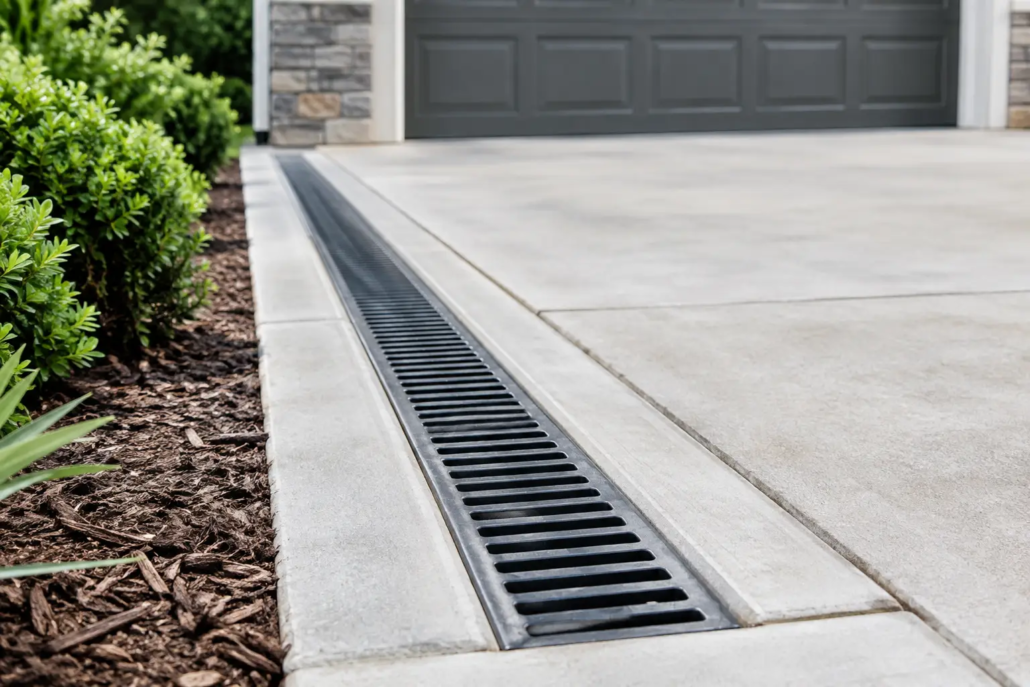
Concrete Drainage Channel Guide for Driveways
Water rarely stays where it lands. On a sloping driveway, beside a patio door or across a busy commercial hardstand, a heavy Queensland downpour can quickly expose poor surface drainage. This concrete drainage channel guide explains how channel drains work, where they belong and the practical decisions that protect concrete surfaces and nearby buildings over the long term.
Why drainage channels matter around concrete
Concrete is durable, but it is not a solution to uncontrolled water. When rainwater pools on the surface, runs back towards a garage or washes across garden edges, it can create safety issues, leave staining and place unnecessary pressure on surrounding areas. Repeated water movement can also undermine bedding and soil at the edge of slabs, leading to movement or cracking over time.
A drainage channel, also called a linear drain or trench drain, collects surface water along a continuous narrow line. Water enters through a grate, travels through the channel and discharges to an approved drainage point. Rather than relying on one low spot or a single pit to deal with a large sheet of water, it intercepts water before it becomes a problem.
For homes, this is often most useful at the base of a driveway, across an alfresco threshold, beside a pool surround or where paths meet a retaining edge. For commercial sites, channels are commonly used at warehouse entries, car park ramps, wash-down areas and large paved zones where vehicle traffic and runoff need careful management.
Concrete drainage channel guide: start with water flow
The right drain is determined by the water, not simply by the look of the grate. Before concrete is poured or resurfacing begins, identify where water falls, where it naturally travels and where it can legally and safely discharge. This assessment is especially valuable on blocks with steep driveways, tight side access, clay soils or neighbouring properties at a lower level.
Surface falls are the first part of the solution. A well-planned concrete area should direct water towards the channel without creating uncomfortable slopes for vehicles or pedestrians. If the surface is too flat, water may remain around the grate. If the fall is too sharp, it can be impractical for daily use and may create a trip hazard.
The channel should sit at the low point of the surface, often running across the full width of a driveway or opening. Positioning it a short distance in front of a garage is common because it intercepts runoff before it reaches the door. However, site conditions vary. On some properties, water may need to be captured further uphill so it does not build speed or bypass the drain altogether.
Discharge is equally important. A channel drain needs a properly considered outlet connected to the site’s lawful stormwater arrangement. It should never be treated as a place to send water towards a neighbour, onto a footpath or into an area that cannot handle the flow. Local requirements can differ across Brisbane, Logan City and the Gold Coast, so drainage design should account for the relevant council rules and the individual site.
Selecting a channel that suits the job
Drainage channels come in different widths, depths, materials and load ratings. The correct choice depends on how much water the area receives and what will travel over the grate.
For a residential pedestrian path or patio, a slim channel with a neat, low-profile grate may suit the space and complement the concrete finish. A driveway requires a product rated for regular passenger vehicle loads. If a ute, caravan, delivery vehicle or heavier equipment will cross the drain, that needs to be allowed for from the outset. A channel that looks suitable but is not rated for the traffic can crack, deform or loosen under repeated loading.
Commercial applications demand closer attention. Warehouse entrances, loading zones and car parks can experience high volumes of water and much heavier wheel loads. The channel body, grating, concrete surround and connection points all need to work as one system. In these settings, a deeper or wider channel may be required to manage fast-moving runoff without overflowing.
Grate material also involves a trade-off between appearance, durability and maintenance. Galvanised steel, stainless steel, polymer and cast iron options each suit different environments. Decorative finishes can be a priority at a front entrance or patio, while a heavy-duty grate is generally the practical choice in a service yard. The key is to match the detail to how the area will actually be used.
Installation details that protect the concrete
A channel drain is only as reliable as the concrete and preparation around it. The channel must be set to the intended level before the surrounding concrete is placed, with accurate alignment and enough support to resist movement. If it sits too high, water will pond beside it. Too low, and it can create an awkward dip that affects vehicle access or foot traffic.
Concrete should be properly formed and compacted around the channel so the edges are supported. This is particularly important at driveway crossings, where tyre loads concentrate near the grate. Control joints also need to be planned so normal concrete movement does not cause an uncontrolled crack to run into the drainage line.
The finish matters as well. Exposed aggregate, coloured concrete and decorative concrete can all work alongside channel drainage, but the transition must be clean and level. A well-selected grate can provide a deliberate edge detail rather than looking like an afterthought. On a polished or finely finished patio, careful setting-out is what keeps the drain functional without disrupting the overall design.
Existing concrete presents a different challenge. Retrofitting a channel usually involves saw-cutting and removing a strip of slab, preparing a stable base, installing the drain and reinstating concrete with appropriate falls. It can be an effective fix for recurring ponding, but it requires a clear understanding of why the water is collecting. Cutting in a drain will not solve a problem caused by surrounding land levels or a blocked outlet.
Common mistakes to avoid
The most frequent error is installing a drain without enough fall leading into it. Water follows gravity, and a grate cannot collect water that never reaches it. Another common issue is selecting a shallow channel for a large catchment area, particularly at the bottom of a long driveway during intense rainfall.
Blocked outlets and neglected grates also cause avoidable failures. Leaves, lawn clippings, sediment and debris can reduce flow, especially where drains sit beneath trees or beside garden beds. Regular checks after storms help keep the system working as intended.
It is also worth avoiding a drain location that is difficult to clean or that creates an unnecessary trip point. At doorways, patios and walkways, the grate profile and direction of travel should be considered just as carefully as the water flow. Practical drainage should fit the way people use the space every day.
Planning drainage into a new concrete project
The best time to resolve drainage is before construction begins. During site assessment, consider the existing levels, downpipe locations, driveway access, adjacent gardens, retaining walls and building thresholds. This allows the concrete layout, surface falls and drainage path to be coordinated rather than corrected later.
For a driveway extension or new patio, drainage may affect where the slab starts and finishes, how wide the channel needs to be and which finish will provide the right balance of grip and appearance. Around pools, it can influence water management while helping keep surrounding surfaces safer after rain. On commercial projects, early coordination with other site services can prevent disruptions once works are underway.
Creative Concrete Constructions approaches drainage as part of the complete concrete solution, not a separate add-on. Thoughtful planning, accurate levels and quality installation give the finished surface a better chance of performing well through changing weather and everyday use.
A well-placed channel drain is a small feature with a large job. When it is designed around the site, installed precisely and kept clear, it helps concrete areas stay safer, cleaner and ready for the next storm.
