
What Is Concrete Driveway Resurfacing?
A driveway can make the whole front of a property look tired long before the slab has actually reached the end of its life. If you have stains, minor cracking, surface wear or an outdated finish, you might be asking what is concrete driveway resurfacing and whether it is a smarter option than starting again.
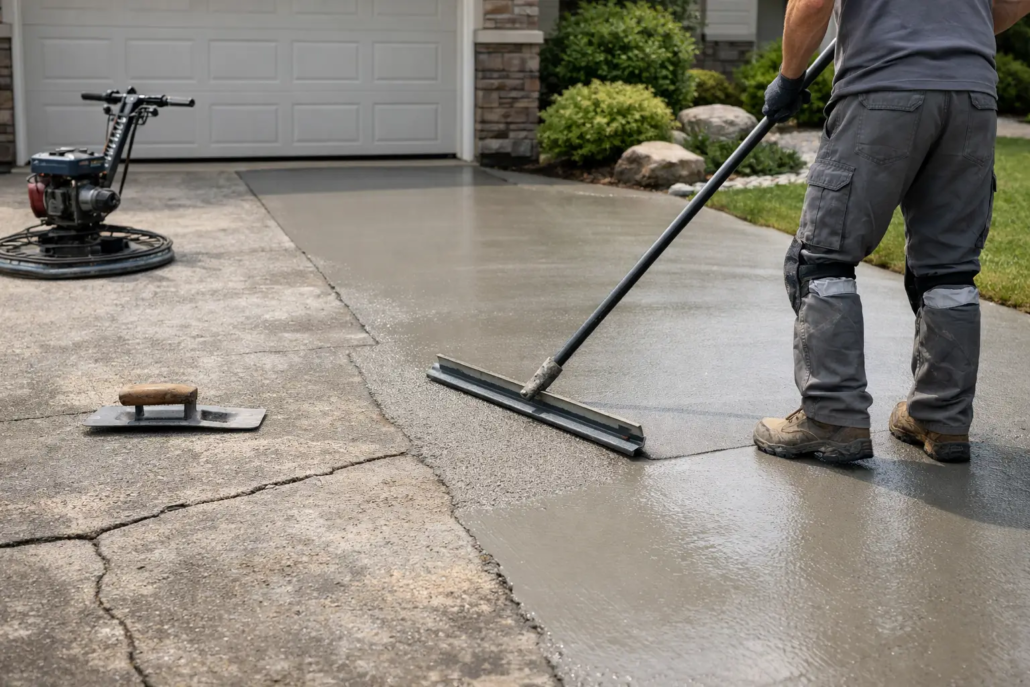
Concrete driveway resurfacing is the process of applying a new coating or topping over an existing concrete driveway to refresh its appearance and improve surface performance. It is designed for driveways that are still structurally sound but have cosmetic damage, ageing or a finish that no longer suits the property. Rather than removing the entire slab, resurfacing works with the concrete you already have and gives it a new look.
That sounds simple, but the result depends heavily on the condition of the driveway underneath and the preparation done before any new finish goes down. A well-executed resurfacing job can completely change the street appeal of a home or commercial site. A poor one will not last.
What is concrete driveway resurfacing used for?
Resurfacing is usually chosen when the existing driveway is serviceable but no longer presenting well. Over time, concrete can fade, develop light surface cracking, pick up oil marks, wear smooth in traffic areas or lose its original appeal. In many cases, the slab itself is still stable enough to keep using.
This is where resurfacing becomes a practical solution. It gives the driveway a fresh, more uniform surface and can also introduce a decorative finish such as a textured pattern, stencil design or coloured coating. For property owners wanting to lift street appeal without a full replacement, it can be an effective middle ground.
It is also useful when the original driveway was plain grey concrete and the owner now wants something with more character. Decorative resurfacing can help tie the driveway into the style of the home, landscape or frontage rather than leaving it as a purely functional surface.
How concrete driveway resurfacing works
The process starts with assessing the existing slab. This matters more than many people realise. Resurfacing is not there to hide major structural issues. If the driveway is moving badly, sinking, lifting or badly cracked through the slab, a new surface layer will not solve the underlying problem.
If the concrete is suitable, the driveway is cleaned thoroughly to remove dirt, grease, loose material and anything else that could affect bonding. Surface preparation may also include grinding, pressure cleaning, crack treatment and repairs to minor damaged areas. Good adhesion is critical. Without proper prep, even a high-quality resurfacing system can fail early.
Once the slab is prepared, the resurfacing material is applied. Depending on the finish, that may involve a cement-based overlay, decorative coating or textured system. Some driveways are finished with a spray-on texture, while others may use stencil patterns or coloured resurfacing compounds. After that, a sealer is typically applied to protect the surface and help it resist weathering, staining and day-to-day wear.
The exact method changes depending on the desired finish and the condition of the driveway. That is why resurfacing is not really a one-size-fits-all service.
When resurfacing is a good option
Resurfacing suits concrete that has cosmetic wear rather than structural failure. If your driveway has small surface imperfections, discolouration, patchy repairs, minor pitting or an old finish that dates the property, resurfacing may be worth considering.
It can also be a strong option for homeowners preparing for a broader exterior update. If you are refreshing landscaping, repainting the facade or improving outdoor areas, an older driveway can quickly stand out for the wrong reasons. Resurfacing helps bring that surface back into line with the rest of the property.
For commercial properties, the appeal is similar. A resurfaced driveway or traffic area can improve presentation without the disruption that often comes with ripping out and replacing an entire slab. That said, the suitability still comes down to site conditions, traffic demands and the state of the existing concrete.
When resurfacing is not enough
Not every driveway should be resurfaced. This is the part that is often overlooked.
If the slab has major movement, deep or recurring cracks, drainage problems, soft spots underneath, significant spalling or widespread structural breakdown, resurfacing is usually not the right answer. A new surface layer may improve the appearance for a while, but the old issues tend to come back through.
Driveways that were poorly installed to begin with can also be poor candidates. If the base is unstable or the slab thickness is inadequate for the loads it carries, the problem is below the surface. In that case, replacement is often the more reliable long-term solution.
A professional assessment is valuable here because it separates cosmetic faults from structural ones. Property owners understandably want to preserve what they can, but resurfacing only works when the existing driveway gives it a sound foundation.
What finishes are available with concrete driveway resurfacing?
One of the main advantages of resurfacing is that it can do more than cover wear. It can change the overall look of the driveway.
Depending on the system used, resurfacing can create a plain modern finish, a textured non-slip surface, a patterned stencil effect or a coloured decorative result that better suits the property. This is often appealing for homes where the driveway takes up a large part of the front elevation. A more considered finish can make the entrance feel cleaner, newer and more intentional.
For outdoor areas in South East Queensland, slip resistance and weather performance also matter. A surface needs to look good, but it also has to cope with heat, rain and regular use. Textured finishes are often chosen for that reason, particularly where safety and practical grip are important.
The best finish depends on the style of the property, how the driveway is used and how much maintenance the owner is comfortable with over time. Decorative options can look excellent, but they still need proper preparation and sealing to perform well.
Benefits of resurfacing a concrete driveway
The biggest benefit is that resurfacing can improve the appearance of a driveway without replacing the whole slab. That can make it a sensible option for owners who want a cleaner, updated finish while retaining the existing concrete.
It also allows for more design flexibility than many people expect. A driveway does not have to stay plain grey just because that is how it was first poured. Resurfacing can introduce colour, texture and pattern in a way that better matches the property.
Another advantage is reduced disruption compared with a full replacement, provided the slab is suitable. Because the existing driveway stays in place, the process is generally more straightforward than demolition and reconstruction. Even so, the quality of workmanship is still what determines whether the new surface holds up properly.
What affects how long resurfacing lasts?
Durability comes down to a few key factors: the condition of the original slab, the preparation work, the resurfacing product used, the sealer applied and how the driveway is used afterwards.
A resurfaced driveway that has been installed over weak or contaminated concrete is likely to have problems. By contrast, a sound slab with correct preparation and a finish suited to the environment can perform very well. Heavy vehicle use, turning tyres in the same spot, poor drainage and lack of maintenance can all shorten the life of the surface.
That is why professional resurfacing is not just about applying a coating. It is about understanding the slab, selecting the right system and preparing it properly so the finish has the best chance of lasting.
Is concrete driveway resurfacing right for your property?
If your driveway is looking worn but is still structurally stable, resurfacing may be a very worthwhile option. It can improve presentation, add a decorative finish and extend the useful life of the surface without going through a full replacement.
If the slab has serious damage underneath, resurfacing may only delay a larger repair. The right answer depends on the condition of the concrete, the finish you want and how the driveway needs to perform day after day.
For homeowners, renovators and commercial property owners, the most practical starting point is to have the driveway assessed properly rather than guessing from the surface alone. A good resurfacing result starts well before any new finish is applied. When the slab is suitable and the workmanship is right, the transformation can be substantial and the improvement is something you notice every time you arrive home or pull onto site.

