
What Is a Stamped Concrete Driveway?
If you want a driveway that does more than just handle the daily run of cars, bins and foot traffic, stamped concrete is worth a closer look. When people ask what is stamped concrete driveway, they are usually trying to work out whether it is just decorative concrete or a genuinely practical surface for long-term use. The answer is both – when it is designed and installed properly.
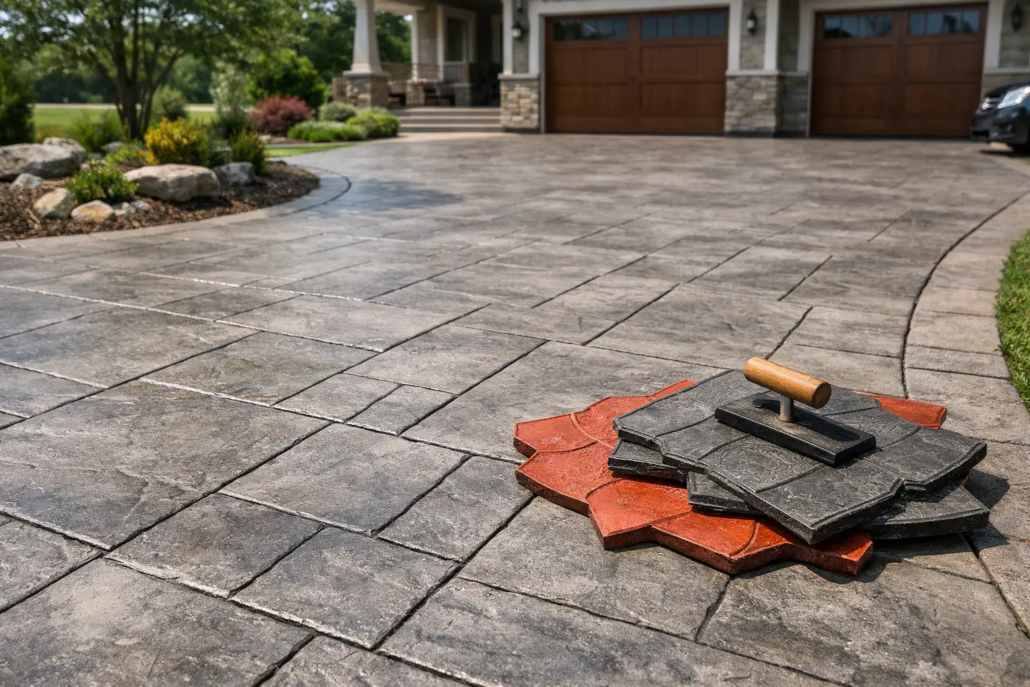
A stamped concrete driveway is a concrete surface that is patterned and textured while the concrete is still workable. Special mats are pressed into the surface to create the look of materials such as stone, slate, tile, brick or even timber-style planks. Colour can also be added to help achieve a more natural, higher-end finish.
The result is a driveway that offers the strength of concrete with a more customised appearance than plain grey. For homeowners, that often means better street appeal without moving to individual pavers. For builders and renovators, it creates more design flexibility while still keeping the surface continuous and durable.
What is stamped concrete driveway used for?
Stamped concrete driveways are most commonly used where appearance matters just as much as performance. At the front of a home, they can create a more refined entry and tie in with the façade, landscaping and pathways. On larger properties, they can also help define wide driveway areas without the visual flatness of standard concrete.
This finish is not limited to one style of home. It can work well with modern builds, heritage-inspired homes and renovation projects, provided the pattern and colour are chosen carefully. A busy stone-look pattern might suit one property, while a cleaner ashlar or tile-style finish may suit another.
Stamped concrete is also used beyond driveways, including patios, pool surrounds and paths. That matters because many property owners want a consistent finish across multiple outdoor areas rather than a driveway that looks disconnected from the rest of the home.
How stamped concrete is made
The process is what gives stamped concrete its visual appeal. First, the base needs to be prepared properly. Like any driveway, the finished result depends heavily on what sits underneath it. If the ground preparation, formwork and reinforcement are not right, no decorative finish will make up for that later.
Once the concrete is poured and levelled, colour may be introduced through integral colour, surface-applied colour hardeners, release agents, or a combination depending on the desired result. The stamping happens at the right stage of the curing process – firm enough to hold shape, but still workable enough to take an impression.
Large patterned mats are then pressed into the surface in sequence to create the chosen texture. After curing, the surface is cleaned and sealed. The sealer helps protect the finish, deepen the colour and improve resistance to weathering and general wear.
That final sealing stage is especially important in outdoor conditions. In places like Brisbane, Logan City and the Gold Coast, strong sun, rain and day-to-day use all put pressure on exterior surfaces. A decorative driveway needs to be finished with durability in mind, not just looks.
Why homeowners choose stamped concrete
The biggest reason is visual impact. A stamped concrete driveway can lift the look of the whole front of the property. Because the pattern is built into the slab itself, it gives the surface detail and character that plain concrete does not have.
It also offers a more cohesive finish than materials made from individual pieces. Unlike pavers, there are no separate units that can shift individually over time if the base movement becomes an issue. That continuous slab can be a practical advantage where you want a firm, unified surface.
Another drawcard is design flexibility. There is a wide range of patterns, textures and colours available, so the driveway can be matched to the style of the home rather than treated as an afterthought. A softer stone-inspired finish may suit a coastal property, while a sharper geometric pattern may work better for a contemporary build.
From a maintenance point of view, stamped concrete is generally straightforward to care for. It still needs cleaning and periodic resealing, but there are no joints full of loose sand and fewer gaps for weeds to become a problem.
The trade-offs to understand
Stamped concrete is not a one-size-fits-all answer. Like any decorative finish, it has strengths and limitations.
One consideration is that the finish depends heavily on workmanship. Pattern alignment, timing, colour application and sealing all affect the final result. If installation is rushed or inconsistent, the decorative effect can look artificial rather than premium.
Surface traction also needs thought. Some stamped finishes are more textured than others, and the sealer used can change the feel underfoot. On driveways, that means the pattern and finish should be chosen with both appearance and practical grip in mind.
Cracking is another topic that comes up often. Concrete can crack, whether it is plain, coloured, exposed or stamped. Good site preparation, reinforcement, control joints and proper installation all help manage this risk, but no contractor should promise that decorative concrete will be completely crack-free forever. The better question is whether the slab is being built correctly to perform well over time.
Repairs can also be more noticeable than they are on standard concrete. Because stamped concrete includes colour and pattern, patching one area may not blend perfectly with the surrounding finish. That is why quality installation from the start matters.
Is stamped concrete better than pavers or plain concrete?
It depends on what matters most to you.
Compared with plain concrete, stamped concrete clearly offers more visual appeal. If street appeal is high on your list, stamped concrete gives you a more finished, customised look. Plain concrete still has its place, especially where a simpler, more understated result suits the property better.
Compared with pavers, stamped concrete creates a continuous surface with less movement between individual sections. Pavers can be a great option in the right setting, but they come with joints, edge restraint requirements and different maintenance considerations. Stamped concrete gives a similar decorative effect while keeping the driveway as one solid slab.
That said, pavers can sometimes be easier to repair in isolated sections because individual units can be lifted and replaced. With stamped concrete, repairs need more finesse to avoid standing out.
The best choice comes down to the look you want, the site conditions, and how you expect the driveway to perform over the years.
Where stamped concrete works best
Stamped concrete is a strong option for homes where the driveway is a visible part of the overall presentation. If the driveway leads straight into your front façade, garage and entry path, upgrading the finish can make a noticeable difference.
It also suits projects where you want decorative consistency across the outdoor areas. For example, a stamped driveway can be coordinated with paths, entry areas or alfresco spaces to create a more unified look.
It may be less suitable where a very minimalist finish is preferred, or where the surrounding design is better matched to exposed aggregate or plain coloured concrete. The right finish should complement the property rather than compete with it.
What to look for in a stamped concrete installation
The pattern is the part most people notice first, but performance starts much earlier. A quality stamped concrete driveway needs proper excavation, a stable base, suitable reinforcement, controlled falls for drainage and a finish selected for the actual conditions on site.
It should also be sealed correctly and maintained over time. Sealing is not just about shine. It helps protect the decorative surface from weather exposure, marks and general wear. Ongoing care is usually straightforward, but it should not be ignored.
Just as important is clear communication before the pour begins. Pattern choice, colour selection, joint layout and the way the driveway connects with nearby surfaces all need to be planned. That is where working with an experienced concreting team makes a real difference, because decorative concrete leaves less room for guesswork.
For property owners who want a driveway that feels durable but looks more considered than standard concrete, stamped concrete can be an excellent fit. The key is treating it as both a structural surface and a design feature. When those two parts are handled properly, the finished result can add lasting function and a much stronger first impression every time you pull into the drive.

