
Best Concrete Driveway Cleaner: What Works
That dark patch near the garage never seems to go away. Neither does the line of tyre marks, the mildew in the shaded corner, or the general film that makes a driveway look older than it is. Finding the best concrete driveway cleaner starts with one simple fact – concrete is not all the same, and neither are the stains sitting on it.
A cleaner that works well on standard grey concrete may be too aggressive for a decorative surface. A product that lifts organic growth might do very little for oil. If you want a driveway to stay clean without damaging the finish, the right approach matters just as much as the product itself.
What makes the best concrete driveway cleaner?
The best cleaner is the one that matches both the stain and the surface. That sounds obvious, but it is where a lot of driveway cleaning goes wrong. People reach for bleach, acid, or a heavy-duty degreaser without checking whether the slab is sealed, coloured, resurfaced, exposed aggregate, or stamped.
Concrete is porous by nature. It absorbs oil, traps dirt, and gives mould and algae somewhere to hold. Decorative finishes can be even more sensitive because the surface texture, colour treatment, or sealer may react badly to harsh chemicals. The goal is not just to remove the stain. It is to clean the driveway without shortening its lifespan or dulling its appearance.
In most cases, the best concrete driveway cleaner is a pH-neutral or mildly alkaline product designed specifically for concrete. These cleaners are strong enough to lift common grime and many organic stains, but less likely to etch or discolour the surface. For specific issues such as grease, rust, or tannin stains, a targeted cleaner usually performs better than an all-purpose one.
The best concrete driveway cleaner depends on the stain
There is no single cleaner that handles every driveway problem equally well. A practical result comes from identifying what you are dealing with first.
For general dirt and traffic film
If the driveway just looks flat, dusty, or weathered, a concrete-safe general cleaner is usually enough. These products break down dirt, road grime, and light surface staining without being overly harsh. They are a good option for routine maintenance, especially on sealed driveways and decorative finishes.
This is often the best starting point for homeowners because it removes the build-up that makes concrete look tired, while giving you a clearer view of any deeper staining underneath.
For mould, mildew and algae
Shady areas, poor drainage, and humid conditions can leave driveways slippery and discoloured. In South East Queensland, this is common around pool surrounds, side paths, and sections that do not get much sun.
For this type of growth, the best cleaner is one designed for organic staining. These products target mould spores and algae without relying on raw acid strength. Bleach can kill surface growth, but it is not always the best long-term option. It may not penetrate properly, and overuse can affect nearby plants or leave patchy results on some finishes.
For oil and grease
Oil is one of the hardest driveway stains to remove because it sinks into the pores of the concrete. Fresh spills are much easier to treat than old ones. A proper concrete degreaser is usually the best choice here, particularly one made to draw oil out rather than just wash the top layer.
It often takes more than one application. If the stain has been there for months, you may improve it significantly without removing it completely. That is not a product failure in every case – sometimes the oil has simply penetrated too deeply.
For rust stains
Rust from tools, furniture, irrigation systems, or parked vehicles needs a different treatment again. A rust remover made for concrete is far more effective than a standard driveway cleaner. This is one area where people often reach for acidic products, and that can create problems if the surface is decorative or sealed.
On exposed aggregate or coloured concrete, rust removal should be handled carefully to avoid leaving a lighter patch around the treated area.
What to avoid when cleaning a concrete driveway
The wrong cleaner can create more work than the stain itself. It can also leave permanent cosmetic damage.
Hydrochloric acid is a common example. It may strip away surface staining, but it can also etch the concrete, weaken the top layer, and alter the appearance of decorative finishes. On exposed aggregate, resurfaced concrete, or coloured concrete, that risk is even higher.
Straight bleach is another one to treat with caution. It can be useful in some situations, but it is not a universal fix. Used too strongly or too often, it may affect surrounding landscaping and create uneven results.
Very aggressive pressure washing can also do damage, even if the cleaner itself is suitable. Too much pressure can strip sealers, rough up the surface paste, and leave lines across the slab. If your driveway has a decorative finish, that matters even more.
How to clean your driveway properly
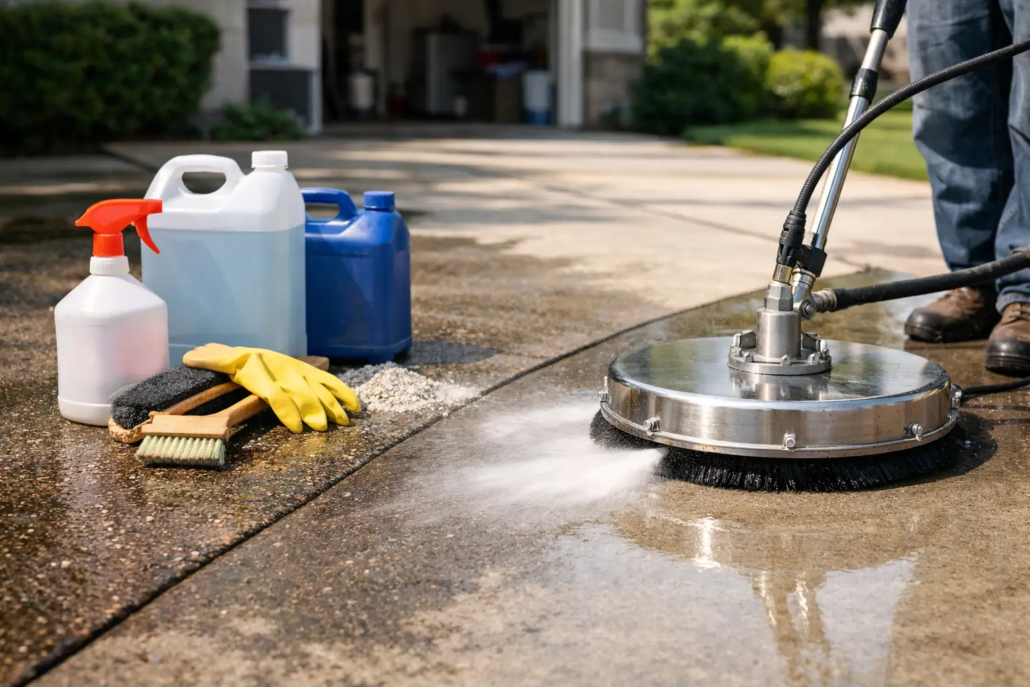
Good cleaning starts before the product goes down. Sweep away loose dirt and leaves first so the cleaner can actually reach the surface. Pre-wet the area if the product instructions call for it, and always test a small section before treating the whole driveway.
Apply the cleaner evenly and give it enough dwell time to work. This is where people often rush. If you hose it off too quickly, you do not give the active ingredients a chance to break down the stain. A stiff broom or deck brush can help with light agitation, especially for traffic film and organic growth.
Rinse thoroughly and let the surface dry fully before deciding whether it worked. Wet concrete can hide residual staining, especially oil marks. If needed, repeat the treatment rather than jumping straight to something harsher.
For stubborn staining, there is a point where professional cleaning or surface restoration makes more sense than repeated DIY attempts. That is especially true if the driveway has a premium finish you do not want to risk damaging.
Cleaning sealed and decorative driveways
This is where the answer to best concrete driveway cleaner becomes more specific. Decorative concrete needs a bit more care.
Exposed aggregate
Exposed aggregate has texture, which means dirt, algae, and leaf tannins can settle into the surface more easily. A cleaner made for outdoor concrete surfaces is usually the safest place to start. Avoid harsh acids unless a professional has assessed the finish, because they can affect both the cement paste and the look of the aggregate.
Coloured, stamped and stencilled concrete
These finishes rely heavily on the integrity of the surface treatment and sealer. Harsh chemicals can strip colour variation, dull the finish, or damage the sealer layer. A pH-neutral cleaner is typically the best option for regular washing, with more targeted products used carefully for isolated stains.
Resurfaced concrete
Resurfaced driveways can look excellent, but they need thoughtful maintenance. If a resurfaced layer is cleaned too aggressively, it can wear faster or lose its uniform appearance. In these cases, always use products recommended for coated or resurfaced concrete rather than generic heavy-duty cleaners.
When sealing matters more than cleaning
Sometimes the issue is not that the cleaner is wrong. It is that the driveway no longer has enough protection.
A good sealer helps resist staining, slows water absorption, and makes routine washing easier. If your driveway stains quickly, darkens unevenly after rain, or seems to hold dirt no matter what you use, the protective layer may be worn down.
Cleaning and sealing work together. A well-cleaned surface gives you the best chance of a tidy finish, while a well-sealed driveway gives future stains less chance to settle in. For homeowners wanting long-term presentation and lower maintenance, that combination usually delivers a better result than constantly trying stronger cleaning products.
Choosing the right cleaner for long-term results
If you are comparing options, read past the front label. Look for whether the product is made for concrete specifically, whether it suits sealed surfaces, and whether it targets the stain you actually have. That matters more than marketing terms like heavy duty or industrial strength.
It also helps to think about the finish you are protecting. A plain utility driveway and a decorative front entry do not always need the same treatment. The cleaner that gives the fastest result is not automatically the best one if it shortens the life of the surface.
For many property owners, the smartest approach is to use a gentle maintenance cleaner regularly and reserve specialised products for specific stains. That keeps the driveway looking cleaner overall and reduces the temptation to overdo it with harsh chemicals.
A concrete driveway is one of the first things people notice when they arrive at a property. Keeping it clean is not just about appearance. It also helps preserve the finish, improve safety, and protect the value of the work already done. If you are unsure which cleaner suits your surface, it is worth getting advice before trial and error leaves a mark that cannot be washed away.

