
Is Exposed Aggregate Slippery? The Real Answer
A surface can look textured and still become risky underfoot if it is installed or finished the wrong way. That is why one of the most common questions we hear is: is exposed aggregate slippery? The short answer is no, not usually – but the real answer depends on the stone mix, the finishing method, the sealer used, the slope of the area, and how well the surface is maintained.
For many homeowners and property managers, exposed aggregate is chosen because it offers more grip than smoother decorative finishes while still delivering a premium look. It is a popular option for driveways, pathways, patios and pool surrounds for exactly that reason. But like any concrete finish, slip resistance is not just about the material itself. It is about the full system and how that surface performs in day-to-day conditions.
Is exposed aggregate slippery in wet weather?
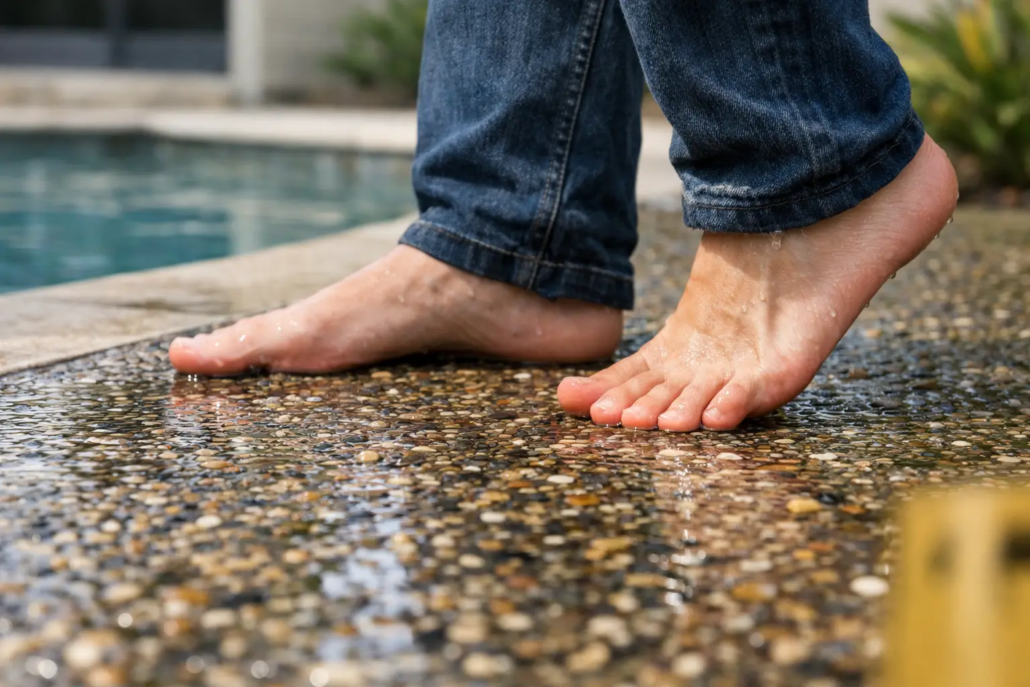
In normal conditions, exposed aggregate is generally less slippery than plain trowelled concrete because the small stones create texture. That texture helps provide underfoot grip, especially when the surface is wet from rain, pool splash, or regular outdoor use.
That said, not all exposed aggregate finishes feel the same. A lightly exposed surface with rounded stones can feel different to a mix with more angular aggregate and stronger texture. If the surface has been over-sealed with a glossy product, or if dirt, algae and leaf residue are left to build up, even a textured finish can become more slippery than it should be.
This is where experience matters. A decorative concrete finish needs to be selected and installed for the space it will be used in. A driveway has different demands to a pool area. A shaded path under trees behaves differently to a front entry that gets full sun all day.
What affects slip resistance most?
The biggest factor is how much texture is actually exposed at the surface. Exposed aggregate works by washing back the top layer of cement paste to reveal the aggregate within the slab. If that process is done with care, the finished concrete has a consistent, practical texture. If too little is exposed, the surface can feel flatter and offer less grip. If too much is exposed, it can become harsh underfoot and harder to clean.
The aggregate itself also matters. Stone size, shape and blend all influence how the surface feels. Some decorative mixes are chosen mainly for appearance, but a good contractor will balance appearance with performance. That balance is especially important around pools, sloped driveways and busy pedestrian areas.
Sealing is another major factor. Sealers are important because they help protect the concrete from staining, weathering and wear. But the wrong sealer, or too much of it, can reduce traction. In areas where slip resistance matters most, the finish should be sealed in a way that protects the concrete without creating an overly slick surface.
Where exposed aggregate performs well
Exposed aggregate is often a strong choice for outdoor areas because it combines durability with natural grip. On residential projects, it is commonly used for driveways, alfresco areas, garden paths and pool surrounds. On commercial sites, it can suit footpaths, entries and other external spaces where a decorative finish still needs to be practical.
Driveways benefit from the tougher wearing nature of exposed aggregate, and the textured finish can help with vehicle and foot traction. Around pools, many property owners prefer it because it stays more slip resistant than smoother finishes when wet. On pathways and patios, it can provide a clean, finished look without feeling too polished or artificial.
Still, the best result depends on matching the finish to the use of the space. A steep driveway, for example, may need a different aggregate profile or finishing approach than a flat entertaining area. Good design is not just about how the concrete looks on day one. It is about how safely and reliably it performs over time.
When can exposed aggregate become slippery?
Even though exposed aggregate is usually a safer option than smoother decorative concrete, it is not automatically slip-proof. There are a few common situations where problems can develop.
One is poor drainage. If water sits on the surface because the fall is wrong or runoff is trapped, the area stays wet longer and becomes more hazardous. Another is algae or mildew growth, which is especially common in shaded areas or around pools. That slimy film can make almost any surface slippery, including textured concrete.
A third issue is maintenance. Leaves, dust, dirt and organic residue can settle into the textured surface over time. If it is not cleaned periodically, the surface loses some of the grip that makes exposed aggregate attractive in the first place.
Finally, inappropriate sealing can change how the surface behaves. A high-build or glossy sealer might look appealing at first, but for external areas it can work against the practical performance of the concrete. The finish has to suit the environment.
Is exposed aggregate slippery compared with other concrete finishes?
Compared with plain smooth concrete, exposed aggregate usually offers better traction. Plain concrete that has been steel trowelled or finished too smoothly can become slick when wet. Exposed aggregate is typically more forgiving because the stone gives the surface natural variation and grip.
Compared with polished concrete, exposed aggregate is generally the better option outdoors where slip resistance is a priority. Polished concrete has its place, particularly indoors, but it is not the first choice for wet external areas.
Compared with stencil or stamped concrete, the answer depends on the pattern, texture and sealer. Some decorative stamped finishes can be made slip resistant, but exposed aggregate tends to have more built-in texture rather than relying on a surface pattern alone.
This is why exposed aggregate continues to be one of the most practical decorative options for outdoor residential and commercial projects. It offers a strong middle ground – attractive, durable and usually better underfoot than smoother alternatives.
How to make sure your exposed aggregate is not too slippery
The best way to avoid a slippery result is to think about safety before the slab is poured, not after. Surface performance is shaped by planning, material choice and workmanship from the start.
Begin with the purpose of the area. If it is a pool surround, front path or sloping driveway, mention that early in the design stage. That helps guide the choice of aggregate blend, exposure level and sealer. It also allows the slab to be set out with the right drainage and fall.
It is also worth thinking about how the area will age. An exposed aggregate finish in a leafy backyard may need a different maintenance approach to one in an open front yard. If a surface is likely to stay shaded and damp, cleaning and drainage become more important.
Working with an experienced concreter makes a real difference here. At Creative Concrete Constructions, the focus is not just on delivering a decorative finish that looks sharp on completion, but one that suits how the space will actually be used.
Maintenance matters more than many people think
A well-installed exposed aggregate surface is relatively low maintenance, but low maintenance does not mean no maintenance. Regular sweeping and occasional pressure cleaning help remove built-up grime and organic matter that can affect traction.
If the area is around a pool or in a damp, shaded spot, it is smart to keep an eye out for algae growth. Treating that early is far easier than letting the surface become stained or slippery. Resealing should also be done at appropriate intervals with a product suited to external decorative concrete, not just whichever finish gives the most shine.
In practical terms, a clean exposed aggregate surface will almost always perform better than a neglected one. The texture can only do its job if it is not being covered by residue.
The real answer for homeowners and property managers
So, is exposed aggregate slippery? In most cases, no – it is actually one of the better decorative concrete options for outdoor areas where grip matters. But like any surface, performance depends on the details. The mix design, level of exposure, sealing method, drainage, location and ongoing maintenance all play a part.
If you are choosing a surface for a driveway, patio, path or pool area, it is worth looking beyond appearance alone. A finish should suit the conditions, feel safe underfoot, and hold up well over time. When those factors are handled properly, exposed aggregate gives you a surface that looks refined without sacrificing practicality.
The best concrete finish is the one that still works well after summer storms, wet feet, fallen leaves and years of daily use.

