
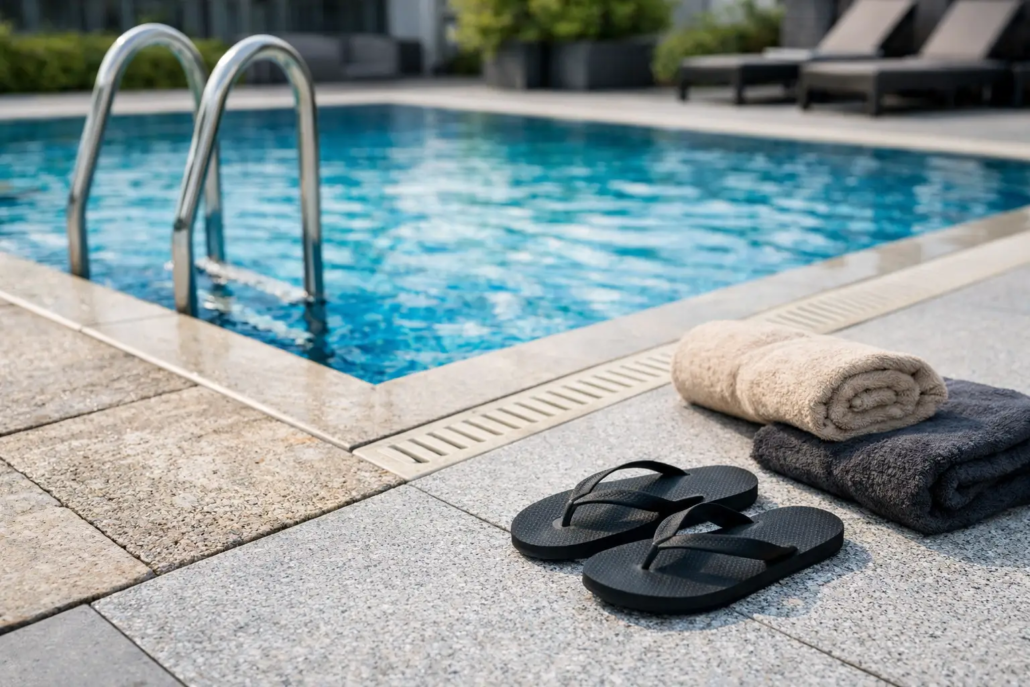
Choosing Slip Resistant Pool Surrounds
A pool area can look outstanding on day one and still be frustrating to live with if the surface gets slick every time it is wet. That is why slip resistant pool surrounds matter so much. Around a pool, the right finish needs to do more than suit the house – it needs to feel safe underfoot, stay comfortable in the heat and hold up to constant water, foot traffic and outdoor exposure.
For most property owners, the challenge is finding the balance between safety, appearance and maintenance. A rough finish might improve grip, but if it is too aggressive it can be uncomfortable on bare feet. A smoother decorative surface may look clean and modern, but it can become risky if the finish is not chosen properly. Good pool surround design comes from understanding how the space will actually be used, not just how it will photograph.
What makes slip resistant pool surrounds work
Slip resistance is not about one magic product. It comes down to surface texture, material choice, drainage, installation quality and ongoing condition. Even a well-finished surround can become more slippery if water ponds on the surface, if algae builds up, or if the wrong sealer is applied.
For concrete pool surrounds, texture plays a major role. A lightly textured finish helps create traction without making the area harsh to walk on. This matters in family homes where kids are running in and out of the pool, and it matters just as much in larger outdoor entertaining spaces where people move between wet and dry areas throughout the day.
The fall of the slab is another key factor. If water sits on the surface instead of draining away properly, slip risk increases and the area becomes harder to keep clean. This is where experienced installation makes a real difference. The finish might be decorative, but the performance comes from the groundwork underneath.
Popular concrete finishes for slip resistant pool surrounds
Concrete remains one of the most practical choices for pool areas because it offers design flexibility as well as durability. The right finish can be tailored to suit both the home and the way the area is used.
Exposed aggregate
Exposed aggregate is a strong option for homeowners who want a surface with natural grip and a more textured appearance. Because the stone is revealed through the top layer, it creates a finish that generally performs well around wet areas. It also suits a wide range of home styles, from contemporary builds to more traditional outdoor spaces.
That said, not all exposed aggregate finishes feel the same underfoot. The size of the stone, the level of exposure and the mix design all affect comfort. A finish that looks great in a driveway may not be the best choice right beside a pool if it feels too coarse on bare feet.
Honed or refined decorative concrete
Some owners want a cleaner, more refined look around the pool. In these cases, a decorative concrete finish can still be made suitable, but the texture needs to be considered carefully. The goal is to avoid a surface that becomes overly smooth when wet.
This is where customised advice matters. A finish may suit a shaded pool area differently than one that gets full sun all day. It may also depend on whether the area is mainly used by adults, young children or a mix of both.
Stencil and stamped concrete
Stencil and stamped concrete can work well for pool surrounds when designed with slip resistance in mind. These finishes offer more visual detail and can complement surrounding patios, pathways or alfresco areas. They are often chosen when the pool zone is part of a larger landscaping plan and the owner wants one cohesive outdoor finish.
The main consideration is the final texture and sealing system. Too much gloss or the wrong topcoat can reduce traction. Decorative finishes need to be selected and installed as part of a full system, not just chosen for appearance.
Concrete resurfacing for existing pool areas
If an older pool surround is structurally sound but worn, dated or too slippery, resurfacing can be a practical way to improve both safety and presentation. This can be especially useful when the existing concrete no longer suits recent renovations or when the pool area needs a fresh finish without full replacement.
Resurfacing is not suitable in every case. If the base has major cracking, movement or drainage issues, those problems need to be addressed first. But where the slab is still in good condition, resurfacing can provide a new textured layer with better grip and a more updated look.
Slip resistance is only part of the decision
A good pool surround should not only reduce the chance of slips. It should also stay comfortable to use in Queensland conditions. Heat retention, maintenance demands and visual compatibility with the home all affect whether the finished space feels like a success long term.
Lighter concrete colours can help reduce heat absorption, which makes a difference during summer. This is particularly relevant in open pool areas with little shade. A dark surface may look striking, but if it becomes too hot for bare feet by mid-afternoon, the design has not fully done its job.
Maintenance also needs to be realistic. Pool surrounds are regularly exposed to water, sunscreen, leaves and general outdoor grime. A finish that looks excellent but needs constant attention may not be ideal for busy households. In many cases, the best result is a finish that offers enough texture for grip while still being easy to clean and maintain.
Why installation quality matters so much
Even the best material choice can underperform if the installation is rushed or poorly detailed. Pool surrounds need accurate levels, controlled joints, sound slab preparation and a finish that is applied consistently across the entire area.
This is where experience really counts. Around pools, small errors are more noticeable. Inconsistent texture, drainage problems or patchy finishing can affect both safety and appearance. A professional concreting team should be thinking about how the surface will perform after rain, after months of use and through changing temperatures, not just how it looks once the job is complete.
It also helps when the contractor can guide you through decorative options without losing sight of practical use. Many owners want a pool area that adds visual value to the home, and that is a worthwhile goal. But pool surrounds are working surfaces. They need to earn their keep every day.
How to choose the right finish for your pool area
The best choice usually starts with a few practical questions. How much direct sun does the area get? Will children be using it often? Is the pool part of a larger entertaining zone? Are you trying to match an existing driveway, patio or pathway?
From there, the finish can be narrowed down based on texture, comfort and style. A modern home might suit a cleaner decorative concrete look, while a more natural outdoor setting may benefit from exposed aggregate. If the existing area is dated but structurally sound, resurfacing may be the right pathway.
What matters most is choosing a finish for the real conditions on site. Shade, drainage, nearby landscaping and expected use all influence performance. There is rarely one best surface for every pool. There is only the best fit for your pool.
A long-term surface, not a quick decision
Slip resistant pool surrounds should be approached as a long-term investment in safety, usability and overall property presentation. The right concrete finish can lift the look of the entire backyard while making the space more practical for everyday use. It can also help tie the pool area into adjoining entertaining spaces so the whole outdoor zone feels considered rather than pieced together.
For homeowners and builders alike, the strongest results usually come from working with a concreting team that understands both decorative outcomes and technical performance. That means looking beyond colour charts and finish samples to consider drainage, texture, durability and the way the area will actually function once the pool is in regular use.
If you are planning a new pool area or upgrading an existing one, it is worth slowing down and choosing a surface that feels right underfoot, suits the home and performs well through years of weather and wear. A pool surround should do its job quietly – safe, durable and easy to live with every summer.

