
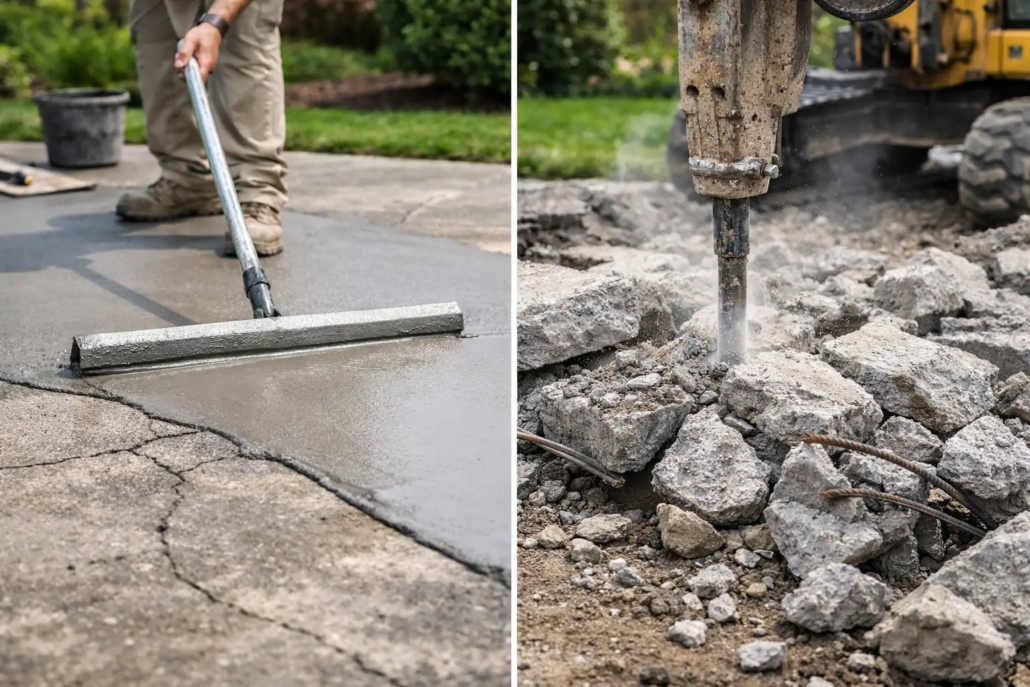
Concrete Resurfacing vs Replacement
A driveway can look tired long before it stops doing its job. The same goes for patios, pool surrounds and commercial hardstands. When surface wear, stains or cracking start to stand out, the question usually comes down to concrete resurfacing vs replacement – and the right answer depends on what is happening beneath the surface, not just what you can see on top.
For property owners, this decision is rarely just about appearance. It affects durability, maintenance, safety and how well the finished surface suits the way the space is used. If you are weighing up options for a home or commercial site, the key is to separate cosmetic issues from structural ones.
Concrete resurfacing vs replacement: what is the difference?
Resurfacing keeps the existing concrete slab in place and applies a new finish over the top. That finish may be decorative, slip-resistant, refreshed in colour, or designed to cover minor surface wear and ageing. It is often used when the slab is still sound but no longer looks the part.
Replacement means removing the existing concrete and installing a new slab from the ground up. This is the better path when the original concrete has failed structurally, the base is unstable, drainage is wrong, or the slab no longer meets the needs of the site.
On paper, the difference sounds simple. In practice, many surfaces sit in the middle. A driveway may have visible cracks but still be suitable for resurfacing if those cracks are minor and stable. A patio may look patchy and old, but if it is lifting in sections, holding water or breaking apart, replacement is usually the more reliable long-term option.
When resurfacing makes sense
Resurfacing is best suited to concrete that is fundamentally in good condition. The slab should be intact, reasonably level and free from major movement. If the main problem is cosmetic wear, resurfacing can deliver a substantial improvement without rebuilding the whole area.
This is often the case with older driveways that have weathered unevenly, patios with faded finishes, or pool surrounds where the surface has become dated and rough. It can also suit commercial areas where the slab remains serviceable but the presentation has slipped or the finish no longer aligns with the use of the space.
The appeal of resurfacing is not just that it refreshes the look. It also opens up design options. A plain slab can be updated with a new texture, decorative pattern or coloured finish to better match the property. For homeowners, that can mean stronger street appeal or a cleaner finish around outdoor living areas. For commercial sites, it can help create a more professional, well-maintained appearance.
That said, resurfacing is only as good as the slab underneath. If the existing concrete is moving, crumbling or losing strength, a new surface layer will not fix the underlying problem. It may improve the look for a time, but it will not deliver the lasting result most owners want.
Good candidates for resurfacing
A slab is usually a strong resurfacing candidate when the damage is superficial rather than structural. Surface discolouration, minor pitting, light wear, old coatings, and small non-moving cracks can often be addressed. The same applies when the main goal is aesthetic improvement rather than major repair.
Preparation matters here. Even when resurfacing is the right option, the concrete still needs proper cleaning, repair work and surface profiling before the new finish is applied. Cutting corners at this stage tends to show up later.
When replacement is the smarter option
Replacement is generally the better decision when the slab has deeper issues that cannot be solved at surface level. Large cracks, ongoing movement, sinking sections, poor drainage, edge failure and significant spalling are all signs that the existing concrete may be past the point of a cosmetic fix.
This is particularly important for driveways and commercial slabs that carry vehicle traffic. If the sub-base has failed or the slab thickness was inadequate from the start, resurfacing will not restore structural performance. In these cases, replacement provides the chance to correct the full build, from excavation and base preparation through to reinforcement, levels and finish selection.
Replacement also makes sense when the site needs to function differently than it did before. A driveway extension, a change in traffic load, a new house slab connection or a commercial area with different compliance requirements may all call for a fresh installation rather than an overlay on the old surface.
For some owners, replacement can feel like the bigger step because it is more involved. But when the slab has genuine structural failure, it is often the more practical choice. Doing the job properly once is usually better than resurfacing over problems that continue to worsen.
Signs your concrete may need replacing
If cracks are wide, spreading or changing over time, that is a warning sign. The same applies to slabs that rock underfoot, hold water after rain, or have sections that are lifting or sinking. When concrete is breaking down deeply rather than just wearing on top, replacement should be assessed seriously.
A professional site inspection is the clearest way to tell. Surface appearance only tells part of the story. The pattern of cracking, drainage behaviour, slab condition and support underneath all matter.
Appearance matters, but performance comes first
One of the biggest mistakes in the concrete resurfacing vs replacement decision is choosing based on looks alone. A surface might appear rough enough to replace when it really only needs resurfacing. Just as often, it might look suitable for a makeover while hiding structural issues that will keep causing trouble.
That is why the intended use of the area needs to be part of the conversation. A decorative patio has different performance demands from a steep driveway. A pool surround needs slip resistance and comfort underfoot. A warehouse floor or car park has to cope with heavier loads and more demanding wear conditions.
The finish also needs to match the property. Decorative resurfacing can be an excellent option where the slab is sound and the owner wants a more polished, modern or customised look. Replacement, however, gives full freedom to redesign the space from the start if levels, layout or load requirements have changed.
The long-term view
A good concrete decision should hold up well beyond the first impression. Resurfacing can offer very strong long-term value when applied to a suitable slab and finished correctly. It can extend the life of an existing surface, improve presentation and reduce disruption compared with full removal and reinstatement.
Replacement usually delivers better long-term confidence where structural integrity is the issue. It gives you the chance to rebuild the area to current needs, with correct preparation and finish selection from the outset. That matters for both residential and commercial applications, particularly in outdoor environments where drainage, ground movement and weather exposure can affect performance over time.
Neither option is automatically better. The better option is the one that suits the actual condition of the concrete and the demands of the site.
How to decide between concrete resurfacing vs replacement
Start by asking a practical question: is the slab sound, or is it failing? If the base concrete is stable and the main issue is visual wear, resurfacing may be the right path. If the slab is cracked through, moving, settling or no longer fit for purpose, replacement is usually the more dependable solution.
It also helps to think about what you want the area to do next. If you are simply refreshing the look of an existing driveway, patio or footpath, resurfacing may be enough. If you need a different layout, improved drainage, extra strength or a new finish system built on a reliable foundation, replacement may offer a better outcome.
For many property owners across Brisbane, Logan, Ipswich, Redland City and the Gold Coast, the best next step is not choosing a method straight away. It is getting the slab assessed properly by an experienced concreting team that can look at both condition and end use, not just surface appearance.
A concrete surface does not have to be perfect to be worth saving, and it does not have to be completely broken to justify starting again. The value is in making the right call early, with clear advice and workmanship that matches the job. If your concrete is showing its age, the smartest move is to treat the cause, not just the symptom.

