
Patio Concrete Resurfacing Options That Last
A patio can be structurally sound yet still make the whole outdoor area feel tired. Faded grey concrete, old paint, minor surface cracking and stubborn stains can detract from an otherwise well-kept home. The right patio concrete resurfacing options can renew the look of the slab without the disruption of removing and replacing it, while also improving comfort, grip and long-term performance.
Resurfacing is not a cover-up for every problem. It is a practical solution when the existing concrete has a stable base but its surface has worn, become dated or no longer suits the way you use the space. The key is matching the finish to the patio’s condition, drainage, exposure to weather and the style of the home.
Start with the condition of the existing concrete
Before choosing a decorative finish, assess what is happening beneath it. A quality resurfacing system depends on good preparation and a sound concrete substrate. Surface wear, light crazing, small chips and cosmetic cracking can often be repaired as part of the process.
However, wide cracks that continue to move, major sinking, hollow areas or poor drainage need to be addressed first. These issues may point to ground movement, inadequate compaction, water problems or a failing slab. Applying a new finish over an unstable base can lead to cracking or delamination later.
For patios in Brisbane, Logan City and the Gold Coast, drainage deserves particular attention. Heavy rain, humidity and leaf litter can affect the performance of an outdoor surface. Water should drain away from the house and should not sit in low spots after a storm. A professional assessment identifies whether resurfacing is appropriate and what preparation is needed for a finish that lasts.
Patio concrete resurfacing options to consider
There is no single best finish for every patio. Some homeowners want a clean, contemporary surface that complements a renovation. Others want texture around an entertaining area, a decorative pattern that suits a character home, or a practical finish that handles regular use by children and pets.
Cement-based concrete overlays
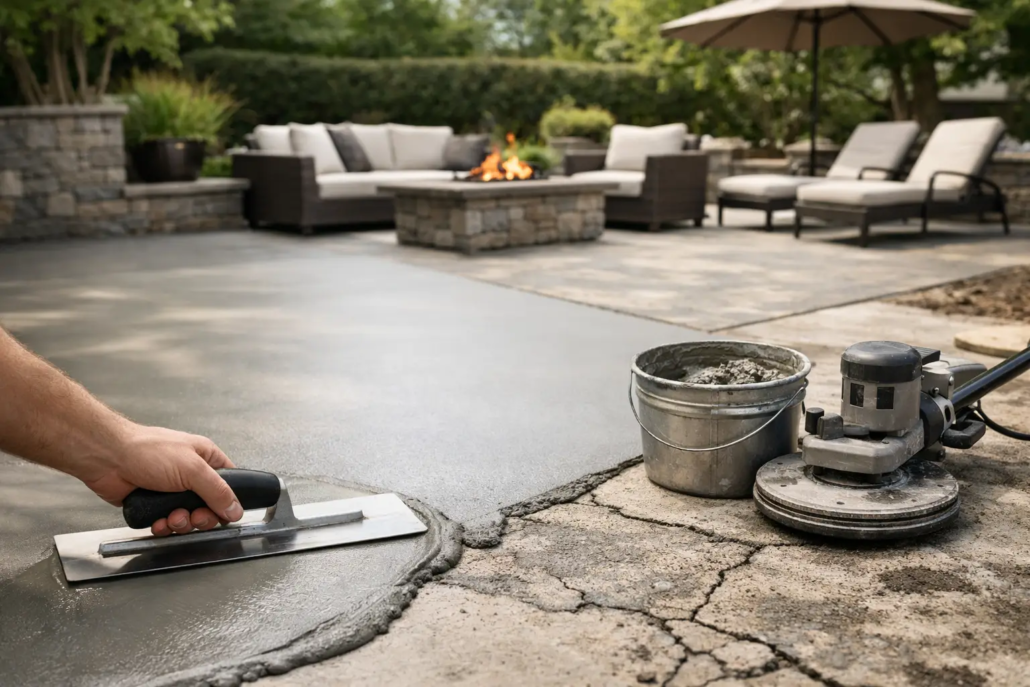
A cement-based overlay is one of the most versatile ways to refresh an existing slab. A specialised resurfacing mix is applied over prepared concrete to create a new wearing surface. It can provide a simple modern finish or become the base for colour, texture and decorative effects.
Overlays work well where the old patio has superficial imperfections and needs a more uniform appearance. They can also help level minor variations, although they are not a substitute for correcting substantial falls or structural movement. The finished texture can be tailored for outdoor use, making it a sensible option where slip resistance and easy maintenance matter.
The visual result depends heavily on surface preparation, product selection and application skill. Proper cleaning, crack treatment, profiling and bonding are essential. This is why a professional installation is particularly valuable on larger patios or areas connected to pool surrounds, pathways or outdoor kitchens.
Stencilled and stamped concrete finishes
For homeowners who want more character than a plain surface, stencil concrete and stamped concrete can recreate the look of pavers, stone, tiles or brick without introducing individual joints across the patio. Patterns can define an entertaining zone, complement a garden path or connect the patio visually with an existing driveway.
Stencil finishes are often chosen for clear geometric patterns and traditional paving looks. Stamped finishes create more pronounced texture and can achieve a natural stone or slate-inspired effect. Both offer far more design flexibility than standard grey concrete.
Texture needs to be selected carefully. A deeply textured pattern can be attractive, but outdoor patios also need to be comfortable underfoot and straightforward to keep clean. In covered areas, a finer finish may suit. In exposed areas or locations that can become wet, a more slip-resistant texture is usually the better choice.
Coloured resurfacing systems
Colour can change the feel of a patio without making the design overly busy. Warm sands, soft charcoals, earthy browns and neutral greys can tie the outdoor area to the home’s façade, fencing and landscaping. A coloured resurfacing system gives a more consistent result than simply applying paint to ageing concrete.
Lighter colours can help reduce heat underfoot in sunny areas, although every surface will warm up in strong Queensland conditions. Mid-tone colours are often practical because they balance visual appeal with the reality of dust, garden debris and everyday outdoor use.
The right colour should be considered alongside the patio’s aspect. A heavily shaded patio may benefit from a lighter tone to keep the area open and inviting, while a bright, exposed entertaining area may suit colours that reduce glare. Samples and surrounding materials should be viewed together before a final selection is made.
Spray texture and non-slip finishes
A spray texture finish is designed for outdoor spaces where grip is a priority. It can give a consistent, lightly textured surface that is comfortable for bare feet and practical around patios, pool surrounds and connecting pathways.
This option is particularly useful where the concrete is sound but has become slippery when wet, or where a smooth older finish no longer suits the property’s needs. Texture can be adjusted to suit the location, but more texture is not always better. An overly coarse finish may collect dirt and feel harsh underfoot, so the goal is practical traction without sacrificing comfort.
A well-designed non-slip finish should also work with the patio’s drainage. Texture helps underfoot, but it cannot compensate for standing water. Correct falls and a clean surface remain part of safe outdoor concrete performance.
Exposed aggregate-inspired and decorative aggregate finishes
Exposed aggregate is valued for its natural variation, durability and strong visual connection to Australian outdoor living spaces. Where a full replacement is not required, decorative resurfacing systems can create an aggregate-inspired appearance or incorporate selected aggregates into an overlay system.
This approach can suit patios that need a more premium finish and a surface with natural texture. It works especially well when the patio needs to complement an exposed aggregate driveway, pool surround or pathway already on the property.
The exact finish depends on the existing slab, the selected aggregate and the desired level of texture. Because decorative aggregate surfaces are detailed work, accurate preparation and application make a noticeable difference to the final appearance.
What about coatings and epoxy?
Outdoor coatings can be useful in the right setting, particularly on covered patios where a decorative protective layer is required. However, not every coating system is suited to full sun, regular rain or high levels of foot traffic. UV exposure, moisture within the slab and slip resistance all need consideration.
Epoxy flooring is highly effective in many interior and sheltered commercial applications, but it is not automatically the best choice for an exposed residential patio. If a coating is being considered, it should be selected specifically for outdoor conditions and installed over properly prepared concrete. A resurfacing overlay is often the more durable choice where the patio is fully exposed to Queensland weather.
Choosing a finish for how you use the patio
The best patio finish is one that performs well on an ordinary weekend, not just on the day it is installed. Think about how the space is actually used. A covered alfresco dining area may prioritise a refined decorative appearance. A patio leading to a lawn may need stronger traction and a surface that handles muddy feet. An area beside a pool needs particular care with texture, drainage and heat.
Maintenance also matters. Most resurfaced concrete benefits from regular sweeping and occasional washing to remove dirt, organic matter and spills. Sealed decorative finishes may need periodic maintenance to retain their appearance and protection. The right finish should fit the level of upkeep you are prepared to give it.
It is also worth considering adjoining surfaces. A patio that visually connects with the driveway, garden edging, footpaths or pool area can make the property feel more considered. This does not mean every concrete area needs to match exactly. Complementary colours and textures often create a better result than using one finish everywhere.
Workmanship determines the result
Even the best resurfacing material cannot perform properly if the slab is inadequately prepared. The process should include an assessment of the concrete, removal of contaminants, repair of suitable cracks and damaged areas, mechanical preparation where required, and application of a system designed for the intended environment.
At Creative Concrete Constructions, resurfacing is approached as both a practical repair and a design decision. The aim is to provide a patio surface that suits the property, handles local conditions and gives homeowners confidence in the finished result.
A refreshed patio should make outdoor living easier to enjoy. When the existing slab is sound and the finish is chosen with care, resurfacing can give the area a durable new purpose without losing the strength already beneath your feet.

