
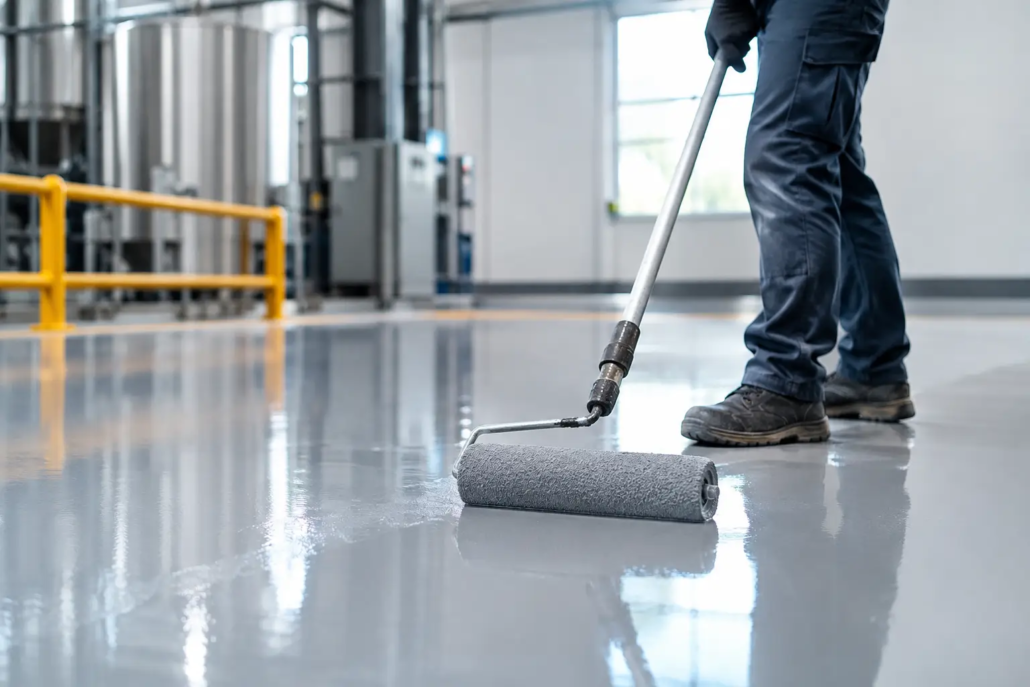
Industrial Floor Coatings That Work Harder
A warehouse floor can look sound on a Friday afternoon and become a safety issue by Monday morning. Forklift tyres leave marks, dropped stock chips weak points, wash-down water finds unsealed concrete, and oil or chemical spills create slippery patches. The right industrial floor coatings protect the slab beneath, improve day-to-day safety and help a hard-working space stay presentable under pressure.
For facility managers, builders and business owners, the goal is not simply to make concrete look better. It is to select a system that suits the way the site actually operates: the traffic it carries, the substances it handles, the cleaning regime it follows and the downtime it can accommodate. A coating that performs well in a light-duty storeroom may not last in a busy workshop, loading area or food processing facility.
What industrial floor coatings are designed to do
Industrial coatings form a protective layer over prepared concrete. Depending on the product and system selected, they can reduce dusting, resist abrasion, protect against oil and chemical exposure, improve cleanability and add slip resistance. They can also create clear visual zones for walkways, work areas, storage bays or safety markings.
Bare concrete is durable, but it is porous. Over time, moisture, contaminants and repeated wear can affect its surface. Once the top layer begins to break down, it becomes harder to clean and more likely to produce dust or develop localised damage. A well-specified coating system addresses these issues while making the floor easier to maintain.
There is no single best coating for every site. The most reliable choice comes from matching the floor system to the operational demands, rather than choosing a finish based on appearance alone.
Start with the conditions on site
The condition of the existing slab has a direct effect on the finished result. Before any coating is applied, the concrete needs to be assessed for cracking, surface weakness, moisture, contamination and previous sealers or coatings. These issues do not disappear under a new finish. If they are not properly addressed, they can lead to bubbling, peeling or early wear.
Moisture is especially relevant in South East Queensland. Concrete can hold moisture long after it appears dry, and vapour moving through a slab can affect coating adhesion. Ground-floor slabs, older buildings and areas exposed to regular wash-downs need careful testing and preparation before a system is selected.
The intended use of the space matters just as much. Consider the type and frequency of vehicle traffic, whether pallet jacks or forklifts will turn in the same locations, and whether the floor will be exposed to oils, solvents, food products, cleaning chemicals or hot tyres. A coating needs to handle the specific pressures of the job, not just general foot traffic.
Choosing the right coating system
Epoxy coatings for tough, cleanable surfaces
Epoxy flooring is a popular choice for warehouses, workshops, showrooms, commercial kitchens and storage facilities because it creates a hard, continuous surface with strong adhesion when installed over correctly prepared concrete. It is available in a range of colours and can be built up as a thin coating or a heavier-duty system, depending on the application.
Epoxy is valued for its resistance to many common industrial contaminants and its easy-clean finish. It also allows practical additions such as line marking, coloured work zones and broadcast aggregates for extra grip. However, epoxy can be affected by prolonged UV exposure, so areas with strong sunlight may need a UV-stable topcoat or a different system for the best long-term appearance.
Polyurethane topcoats for UV and wear resistance
Polyurethane coatings are often used as a protective topcoat over epoxy or as part of a complete flooring system. They offer good resistance to abrasion and can hold their colour well in spaces with regular sunlight. This makes them useful near roller doors, open-sided work areas and commercial spaces where appearance matters alongside performance.
The trade-off is that polyurethane systems need correct product selection and application conditions. They are not a substitute for proper slab repairs or surface preparation, and the finish needs to be chosen with the expected traffic and exposure in mind.
Fast-curing systems where downtime is limited
Some industrial sites cannot close a work area for several days. Fast-curing coating systems can reduce disruption and may suit projects with tight shutdown windows. They can be a practical option for loading zones, retail back-of-house areas and facilities that need to return to operation quickly.
Speed should not override preparation. Even a fast-curing product relies on a clean, mechanically prepared substrate and suitable site conditions. Rushing the assessment stage can create problems that are far more disruptive than allowing enough time for the floor to be prepared correctly.
Surface preparation determines the result
The most important stage of an industrial flooring project happens before the coating is applied. Concrete must be clean, sound and profiled so the coating can bond properly. This commonly involves mechanical grinding or shot blasting to remove weak surface material, old coatings, contaminants and laitance – the soft, dusty layer that can form on new concrete.
Cracks, joints and damaged sections also need attention. Some movement in concrete is normal, particularly at control joints, so joints often require a different treatment to static cracks. Filling everything with a rigid product may look neat at first but can fail when the slab moves. A good installation plan recognises where flexibility is needed and where a repair can be made rigid.
Oil-contaminated concrete deserves particular care. Surface cleaning alone may not be enough if contaminants have soaked into the slab. In these cases, the preparation method and coating system need to be selected to give the best chance of lasting adhesion.
Safety and finish should work together
A gloss finish can brighten a workplace and make cleaning easier, but it is not automatically the right finish for every area. Wet entry points, wash bays, food preparation spaces and ramps may need additional slip resistance. This can be achieved by incorporating a suitable aggregate into the coating system or using a textured finish in targeted zones.
More texture generally means more grip, but it can also make a floor harder to mop. The right balance depends on the cleaning method, the likelihood of water or product spills, and whether staff are walking, pushing trolleys or operating equipment. It is often sensible to vary the finish across a facility rather than applying the same texture everywhere.
Colour also has a practical role. Light colours can improve visibility in enclosed workspaces, while darker tones can be more forgiving in areas exposed to tyre marks or outdoor grime. High-contrast line marking helps separate pedestrians from vehicle routes, define storage locations and support an organised workflow.
Plan around operations, not just installation day
Industrial floor coatings need curing time before they are exposed to foot traffic, equipment, vehicles or chemicals. The exact timeframe varies by product and site conditions. Planning the work around access requirements, stock movement and cleaning schedules helps prevent damage to a newly completed floor.
It is also worth considering edges, drains, thresholds and wall junctions early. These areas often receive the most water, impact and cleaning activity, yet can be overlooked if the project is planned only around the main floor area. A well-finished system includes details that help contain spills, direct water appropriately and protect vulnerable transitions.
For larger facilities, staged installation may be the practical answer. Dividing the work into manageable sections can keep part of the operation moving while each area is prepared, coated and cured. The best approach depends on the layout, access points and the level of traffic each zone receives.
Keep the coating performing well
A quality coating reduces maintenance demands, but it does not eliminate maintenance. Regular sweeping removes abrasive grit that can dull the surface over time. Promptly cleaning spills limits staining and reduces the chance of contaminants sitting on the floor longer than intended.
Use cleaning products suited to the installed system, and avoid unnecessarily harsh chemicals or abrasive pads. Heavy equipment should be moved with care, especially around edges and joints. If damage occurs, early local repairs are usually simpler and less disruptive than waiting for a small failure to spread.
Periodic inspections are useful in high-traffic areas such as forklift turning points, loading bays and entrances. These are the locations most likely to show wear first, and they provide a clear picture of whether maintenance or a future recoat should be planned.
A floor coating is a working surface, not just a finishing touch. When the slab is properly assessed, prepared and matched with the right system, it can support safer operations, easier cleaning and a more professional commercial environment for years to come. The sensible next step is to assess how your space is used at its busiest, then choose a finish designed for those real conditions.

