
Concrete Resurfacing vs New Slab: Which Fits?
A driveway can look tired long before it has reached the end of its useful life. Light cracking, stains, worn finishes and an outdated grey surface may be suitable for an upgrade, while deep movement or poor drainage can point to a larger structural issue. When weighing up concrete resurfacing vs new slab, the right answer comes down to what is happening beneath the surface, not simply how the concrete looks from the street.
For Brisbane, Logan City and Gold Coast properties, heat, heavy rain, reactive ground conditions and daily vehicle use all influence how concrete performs over time. A proper site assessment helps determine whether an existing slab can support a new decorative finish or whether removal and replacement will provide the more dependable result.
Concrete Resurfacing vs New Slab: The Core Difference
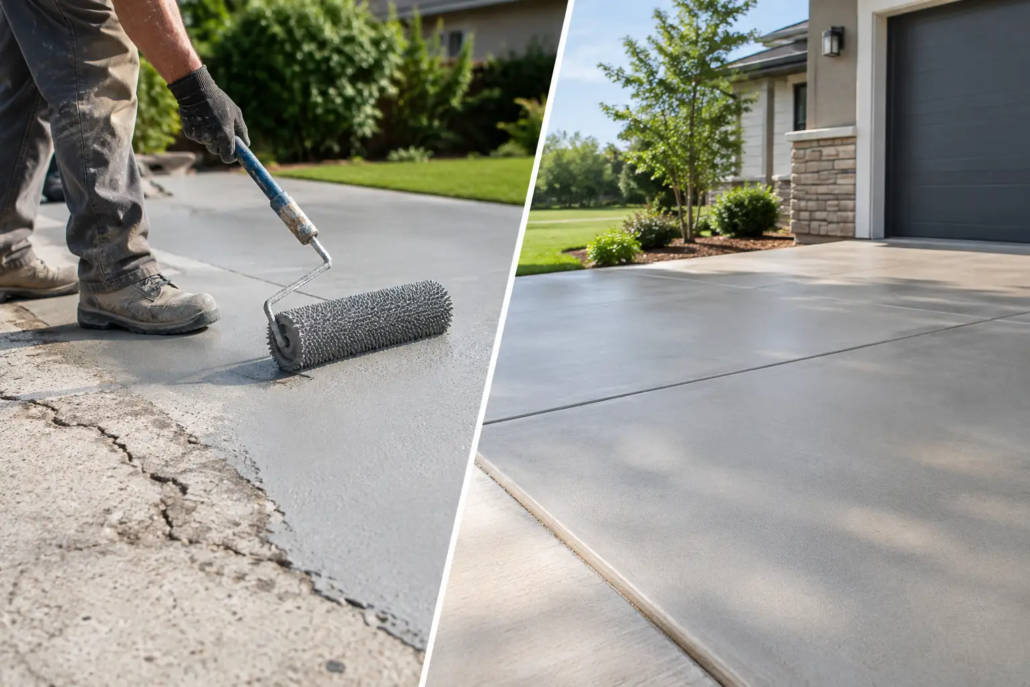
Concrete resurfacing refreshes the top layer of an existing concrete slab. After the slab is cleaned, repaired and prepared, a specialised resurfacing system is applied to create a new hard-wearing finish. It can be used to improve the appearance of driveways, patios, pathways, pool surrounds and selected commercial surfaces without removing sound concrete underneath.
A new slab involves demolishing and removing the existing concrete, preparing the base correctly, installing reinforcement where required, and pouring new concrete. This option addresses issues that begin below the surface, including significant cracking, slab movement, failed edges, inadequate thickness or unsuitable falls.
Both approaches can deliver an attractive, durable result. The decision is not about choosing the quickest-looking option. It is about matching the solution to the condition of the slab, how the area will be used and the finish you want to achieve.
When Concrete Resurfacing Is a Strong Option
Resurfacing is often appropriate when the existing concrete is structurally sound but visually worn. A slab may have surface discolouration, minor shrinkage cracks, old coatings, patchy repairs or a finish that no longer suits the property. Provided the concrete has a stable base and the damage is not caused by ongoing movement, resurfacing can give the area a complete visual reset.
It is particularly useful for homeowners who want to update a plain patio, improve driveway street appeal or create a more cohesive connection between outdoor living areas. Decorative resurfacing can introduce colour, texture and pattern that standard grey concrete cannot provide. Depending on the system and application, finishes may suit contemporary homes, coastal properties, traditional facades or commercial entry areas.
Resurfacing can also be practical where removing a slab would disrupt established landscaping, nearby structures or access around the home. The existing concrete remains in place, reducing demolition work while still allowing for a substantial change in appearance.
Sound preparation determines the result
A quality resurfacing job relies on more than applying a new layer over old concrete. The slab needs to be assessed for cracking, contamination, moisture concerns and adhesion issues. Surface preparation is critical. If the base is not properly cleaned, repaired and profiled, the new finish may not perform as intended.
Minor cracks can often be repaired or managed as part of the preparation process. However, resurfacing cannot stop structural cracks from returning if the slab continues to move. That is why an experienced concreting contractor will investigate the cause of cracking before recommending a finish.
Signs a New Concrete Slab Is the Better Choice
Replacement is generally the more reliable option when the existing slab has widespread structural failure. This may include large cracks that have separated or lifted, sections that are sinking, major spalling, unstable edges, poor levels or water consistently flowing towards the house, garage or building entry.
A new slab is also worth considering when the current concrete was not designed for its present use. For example, an old pathway may not be suitable for vehicle loads, or a driveway may need to accommodate heavier vehicles, a wider access point or a redesigned garage approach. Starting again allows the slab thickness, reinforcement, joints, base preparation and drainage to be planned for the job at hand.
If tree roots, drainage failures or unstable ground have contributed to damage, these issues should be addressed before new concrete is placed. Pouring over a problem does not remove the problem. Proper excavation and preparation give the new slab the best chance of long-term performance.
Replacement creates more design freedom at ground level
A new concrete slab is not limited by the layout, levels or falls of the existing surface. This matters when a property needs better water management, a smoother transition to a doorway, new steps, a driveway extension or a revised outdoor entertaining area.
It also makes sense when you are undertaking a broader renovation or new build. A newly installed driveway, patio or pool surround can be designed alongside landscaping, fencing, drainage and access requirements, rather than adapting to an older surface.
What to Check Before Making the Decision
The visible condition of concrete is only one part of the assessment. A practical recommendation should consider the slab’s structural condition, the stability of the ground beneath it, drainage, intended traffic and the surrounding property.
For residential driveways, look at where cracks are located and whether one side of the crack sits higher than the other. Check for puddling after rain, crumbling edges, wheel-path wear and damage near drainage points. On patios and pool surrounds, consider slip resistance, water flow and how the finish will work with adjoining doors, gardens and coping.
Commercial properties need a similarly careful approach, with extra attention to operational loads and safety. Warehouse floors, car parks, footpaths and entry zones may need to support regular vehicle traffic, equipment, trolleys or high pedestrian use. In these settings, surface appearance matters, but performance, levels and durability are equally important.
A site inspection is the best way to distinguish cosmetic defects from deeper problems. What appears to be a simple crack may be linked to movement, poor compaction or water undermining the slab. Conversely, a weathered surface can sometimes be transformed without the disruption of replacement.
Finishes and Function Should Work Together
The choice between resurfacing and replacement also affects your finish options. Resurfacing can be an effective way to introduce decorative colour, stencil patterns or textured finishes to a sound slab. It is well suited to projects where the goal is to improve presentation while retaining the existing structure.
With a new slab, there is more freedom to select the concrete finish from the beginning. Exposed aggregate can provide texture and a natural look for driveways and pool surrounds. Coloured concrete can complement the home’s exterior. Stamped or stencil concrete can add character to paths and entertaining spaces, while polished concrete or epoxy flooring may suit selected internal or commercial applications.
The best finish is not just the one that looks good on day one. It should suit the area’s traffic, cleaning requirements, drainage and slip-resistance needs. A pool surround, for instance, needs a different approach to a warehouse floor or a front driveway.
Avoid Decisions Based on Surface Appearance Alone
It is easy to assume that old concrete must be removed, or that resurfacing will repair every crack. Neither assumption is always correct. Sound concrete with superficial wear can be an excellent resurfacing candidate. Concrete with ongoing movement, poor falls or a compromised base usually needs more than a new top layer.
The long-term result depends on accurate diagnosis, careful preparation and workmanship at every stage. This is where clear communication matters. You should understand what is causing the problem, what preparation is required and how the finished surface is expected to perform in its specific location.
Creative Concrete Constructions approaches resurfacing and replacement work with that practical focus, helping property owners choose a solution that suits both the site and the desired finish.
Before committing to either option, arrange an assessment of the existing concrete and discuss how you use the area every day. A surface that is built or renewed for the right reasons will not only look better – it will serve the property with greater confidence for years to come.

