
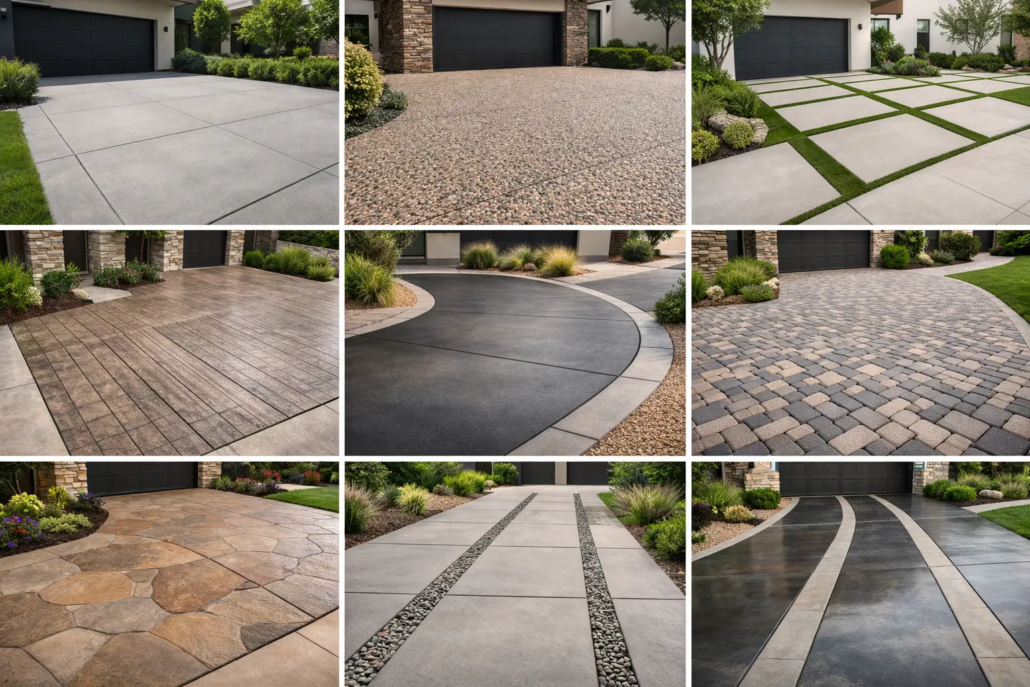
9 Concrete Driveways Ideas That Work
A driveway does more than get cars off the street. It frames the front of your home, handles daily traffic, and has to keep looking good through heat, rain and regular wear. That is why choosing the right concrete driveways ideas early matters. The best result is not just a surface that looks sharp on day one, but one that suits your home, your block and the way you actually use it.
For most properties, there is no single “best” driveway finish. A steep site, a modern façade, heavy vehicle use or a coastal setting can all push the right decision in different directions. Good driveway design comes from matching appearance, grip, maintenance and durability to the conditions on site.
Concrete driveways ideas that suit real homes
Some driveway styles look great in photos but are less practical once you factor in tyre marks, leaf litter, slope or surrounding landscaping. Others are easy to overlook, yet they perform exceptionally well over time. The strongest options usually combine solid construction with a finish that fits the character of the home.
1. Exposed aggregate for texture and street appeal
Exposed aggregate remains one of the most popular choices for good reason. By revealing the natural stone within the concrete, it creates a textured finish with depth and variation, rather than a flat, plain surface. It works particularly well on contemporary homes, coastal properties and larger driveways where you want visual interest without overcomplicating the design.
It is also practical. The textured finish offers natural slip resistance, which can be useful on sloping driveways or in areas that see regular rain. The trade-off is that exposed aggregate can hold more debris than smoother finishes, so it benefits from the occasional clean to keep the stones looking fresh.
2. Coloured concrete for a cleaner architectural look
If you want a driveway that feels more refined and understated, coloured concrete is a smart option. Earthy tones, charcoals and warm greys can complement brick homes, rendered façades and modern builds without drawing too much attention. The colour is built into the concrete, so the finish feels intentional and consistent.
This style suits homeowners who want something beyond standard grey but still prefer a clean, simple surface. The key is choosing a tone that works with the roof, garage door and exterior palette. Too light, and the driveway may show marks more easily. Too dark, and it can absorb more heat in full sun.
3. Plain concrete with sharper detailing
Plain concrete should not be dismissed as basic. When it is installed properly and finished with attention to edging, joints and layout, it can look neat, modern and durable. On many homes, a simpler driveway is exactly the right choice, especially if the landscaping or façade already carries plenty of visual detail.
The difference is in the execution. Clean borders, well-planned control joints and a tidy connection to the path or crossover can lift plain concrete significantly. It is also a sensible option if you want low visual maintenance and a surface that stays versatile over time.
4. Stencil concrete for patterned definition
Stencil concrete gives you the look of pavers or patterned stone without introducing individual units that can shift over time. This finish is created by applying a pattern and colour treatment to the surface, which can add character to the front of the property and help tie the driveway into paths or entry areas.
It can work well on traditional homes or properties where you want the driveway to feel more decorative. That said, it is a more design-led choice, so balance matters. A strong pattern can look dated faster than a simpler finish if it does not suit the house. In most cases, subtle textures and restrained colours age better.
5. Stamped concrete for a premium statement
Stamped concrete is often chosen when homeowners want the look of stone, slate or paving with the strength of concrete underneath. It offers a more pronounced texture and pattern than stencil finishes and can create a premium feel at the front of the home.
This option works best when the broader landscape design supports it. On the right property, it can be a standout feature. On the wrong one, it can feel too busy. It also needs careful installation to ensure the pattern remains consistent and the finish performs well under vehicle traffic.
Design ideas beyond the surface finish
The finish matters, but the layout and detailing of the driveway often have just as much impact. Some of the best concrete driveways ideas come from stepping back and thinking about the full frontage, not just the slab itself.
Borders create contrast without overdoing it
A contrasting border is a simple way to make a driveway look more considered. This might mean pairing plain or coloured concrete with an exposed aggregate edge, or using a darker band to frame the shape. Borders help define the driveway visually and can make a wide area feel more structured.
They are especially effective on large frontages, duplex developments or driveways that also connect to paths and entry zones. Used well, they add interest without forcing the whole surface to carry a decorative finish.
Wider layouts improve both function and appearance
Many homeowners start by thinking about finish and colour, when width is the real issue. A driveway that is too narrow can be awkward to use, hard to reverse from, and prone to edge wear. If there is room on the block, an extension or better layout can make the whole area feel more balanced.
This is where practical design and presentation overlap. A driveway that allows easier access, safer turning and cleaner parking usually looks better too. It feels deliberate rather than squeezed into the available space.
Integrated paths and entry areas lift the frontage
A driveway rarely sits alone. It often meets a front path, porch area or side access. Treating these surfaces as part of one design can create a far stronger result than selecting each element separately. Matching finishes are one option, but so is using complementary textures that define each zone while keeping the overall look consistent.
For example, an exposed aggregate driveway paired with a smoother path can create contrast while still feeling connected. The right combination depends on how formal or relaxed you want the front of the home to feel.
Choosing the right finish for your site
A smart driveway choice is never based on looks alone. Site conditions, traffic levels and maintenance expectations all matter.
If the driveway is steep, grip should be part of the discussion from the start. Textured finishes such as exposed aggregate often make more sense than very smooth surfaces. If the area sits under trees, think about how much leaf litter and organic staining the finish will show. If you park heavier vehicles or use the space often, the slab design underneath becomes just as important as the decorative surface on top.
In South East Queensland, weather also shapes performance. Heat, heavy rain and strong UV can all affect how a driveway ages, particularly if the wrong product or finish is used for the setting. That is why preparation, reinforcement, drainage and finishing technique matter as much as style. Even the best-looking surface will disappoint if the construction is not right.
When resurfacing makes sense
Not every driveway needs to be removed and replaced. If the existing concrete is structurally sound but tired, stained or visually outdated, resurfacing can be a practical way to refresh the appearance. This can open up more decorative options, especially for homeowners who want a new look without starting from scratch.
Resurfacing is not suitable for every slab. If there are deeper structural issues, movement or poor drainage, those problems need to be addressed properly first. But where the base is solid, resurfacing can give an older driveway a cleaner, more modern finish and extend its useful life.
What homeowners often get wrong
One common mistake is choosing a finish based only on a sample. A small swatch does not show how the driveway will look across a large area in full sun, beside the house, garage and landscaping. Another is focusing entirely on appearance without considering daily use. A beautiful finish that shows every mark or does not suit the slope may become frustrating quickly.
The most successful projects usually start with practical questions. How many vehicles use the driveway? Does water move away properly? Will the finish still suit planned upgrades to the home exterior? Those answers tend to lead to better design decisions than chasing trends.
For homeowners who want a result that balances durability with presentation, working with an experienced concreting team makes a difference. A company such as Creative Concrete Constructions can help assess the site, explain the trade-offs between finishes and tailor the design to the property, rather than pushing a one-size-fits-all solution.
A good driveway should feel right every time you pull in – practical to use, easy on the eye and built to last. If you start with the conditions on your site and choose a finish that supports the way you live, the best idea is usually the one that keeps performing long after the first impression.

