
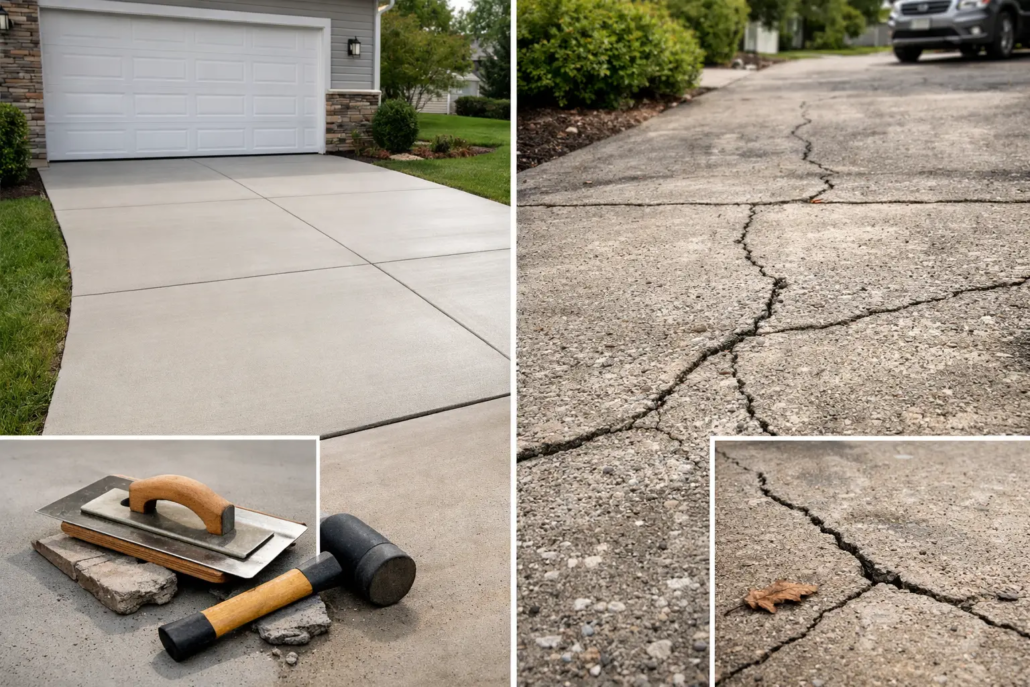
Concrete Driveways Pros and Cons
A driveway does more than get your car off the street. It sets the tone for the front of the property, handles daily traffic, and has to cope with heat, rain and wear over time. When homeowners start weighing up concrete driveways pros and cons, they are usually trying to answer one practical question – will this surface still look good and perform well years from now?
For many properties, concrete is a strong all-round choice. It is reliable, versatile in appearance and suited to everything from standard residential driveways to wider access areas and heavier-use sites. But like any surface, it is not the right fit for every block, every budget or every expectation. The value is in understanding where concrete performs brilliantly and where the trade-offs sit.
Why concrete remains a popular driveway option
Concrete has staying power for a reason. Properly installed, it creates a solid, stable surface that can handle regular vehicle use without shifting the way some other materials can. That matters on busy households with multiple cars, trailers, caravans or frequent visitors.
It also suits a wide range of home styles. A plain finish can keep things clean and understated, while exposed aggregate, coloured concrete or decorative treatments can lift street appeal and tie in with the rest of the landscape. For homeowners who want durability without giving up design, that flexibility is a major advantage.
In South East Queensland, weather performance also matters. Driveways see strong sun, heavy downpours and the occasional storm event. Concrete can cope well in these conditions when the base preparation, drainage and finish are done properly. That last part is important, because a driveway is only as good as the groundwork under it.
Concrete driveways pros and cons at a glance
The main strengths of concrete are durability, low day-to-day maintenance and design flexibility. The main drawbacks are that it can crack, it is harder to repair invisibly than some surfaces, and installation quality makes a big difference to the final result.
That means concrete often rewards owners who are thinking long term. If you want a driveway that feels solid underfoot, presents well from the street and does not need constant upkeep, it is a sensible option. If you are expecting a completely crack-free surface forever, or you want something that can be patched without visible changes, you need to go in with realistic expectations.
The advantages of a concrete driveway
Long-term durability
One of the biggest reasons people choose concrete is lifespan. A well-constructed driveway can serve a property for many years with relatively little fuss. It handles the repeated weight of cars well and, when designed correctly, can also support heavier vehicles where needed.
This makes it particularly suitable for family homes, investment properties and commercial settings where reliability matters more than novelty. A driveway is not something most people want to redo after a few years, so that long-term stability counts.
Low maintenance in everyday use
Concrete is generally easy to live with. It does not need the regular re-levelling that loose materials can require, and it does not rut under tyres in the same way softer surfaces might. Basic cleaning and occasional resealing, depending on the finish, is often enough to keep it in good condition.
That suits owners who want a practical surface without turning driveway care into an ongoing job. Decorative concrete finishes may have slightly different maintenance needs, but even then, the workload is usually manageable.
Strong street appeal
Driveways take up a large visual footprint at the front of a home. Concrete gives owners plenty of control over that look. Standard grey concrete still has a place, especially on modern or minimalist homes, but it is far from the only option.
Exposed aggregate can add texture and a more premium finish. Coloured concrete can complement roofing, render or landscaping. Stencil and stamped finishes can create a more decorative effect without moving away from the strength of a concrete base. For many homes, this balance between performance and presentation is where concrete stands out.
Good performance in Australian conditions
Heat, UV exposure and sudden rain can be hard on outdoor surfaces. Concrete is well suited to these conditions when installed with the right joints, thickness and drainage planning. It does not soften in hot weather, and it provides a dependable hardstand for vehicles year-round.
Slip resistance can also be addressed through finish selection. That is especially useful on sloping driveways or properties where water runoff needs careful consideration.
The downsides worth knowing
Cracking can happen
This is the most common concern, and rightly so. Concrete can crack over time. That does not always mean poor workmanship, because concrete naturally shrinks as it cures and can also move with ground conditions and temperature changes. Control joints are used to help manage where cracking occurs, but they do not eliminate movement altogether.
The key point is that some cracking risk comes with the material. Good site preparation, reinforcement, joint placement and curing practices all reduce problems, but no honest contractor should promise a driveway that will never crack.
Repairs are not always invisible
If part of a concrete driveway is damaged, repairs can be more noticeable than owners expect. Colour variation, weathering and the age of the original slab can make patched sections stand out. This is especially relevant with decorative finishes, where matching texture and tone can be difficult.
That does not mean repairs are impossible. It just means that if visual consistency is a priority, prevention through quality installation is usually better than relying on future patch-ups.
Installation quality matters a lot
Concrete is not forgiving of shortcuts. A driveway may look fine on the day it is poured, but poor base preparation, weak drainage planning or rushed finishing can lead to problems later. Surface scaling, ponding water, premature cracking and edge failure are often linked to how the job was built, not just to the material itself.
This is why experience matters. A driveway needs more than a neat finish on top. It needs proper excavation, compaction, reinforcement, levels and curing to perform the way it should.
It can absorb heat and show marks
In full sun, concrete can get hot underfoot, particularly darker colours. It can also show tyre marks, leaf stains, rust marks or oil spots if left unattended. Sealing helps, and some finishes are more forgiving than others, but it is still worth factoring in if the driveway doubles as a play area or sits prominently at the front of the home.
When concrete is a smart choice
Concrete tends to be a very good option when you want a surface that feels permanent, works hard and can be tailored to the look of the property. It suits new builds, major renovations and driveway replacements where owners want to improve both function and presentation at the same time.
It also works well on properties where access needs to be widened, turning areas need to be added, or the driveway has to connect cleanly with paths, patios or crossover areas. In these cases, the ability to customise shape, finish and detailing becomes just as valuable as the structural performance.
For commercial sites, concrete is often chosen because it provides a dependable, orderly finish that handles repeated use without constant maintenance interruptions. Appearance still matters there too, especially for customer-facing spaces, but durability usually leads the decision.
When the cons may matter more
If you are highly concerned about even minor cracking, concrete may test your patience. The same goes if you want a surface where future repairs blend in perfectly with the original finish. Some owners also prefer a softer or more natural look, depending on the style of the property and surrounding landscaping.
Steep blocks, drainage challenges and reactive soil do not rule concrete out, but they do raise the stakes on design and installation. On these sites, detailed planning is essential. The right contractor will assess the block properly and explain what is needed to give the driveway the best chance of lasting well.
Choosing the right finish makes a difference
The question is not just whether to choose concrete, but what kind of concrete suits the property. A plain finish may be ideal for a simple, functional driveway. Exposed aggregate often appeals to owners who want a more decorative and premium look while keeping strong slip resistance. Coloured or patterned finishes can help the driveway feel integrated with the rest of the home rather than added as an afterthought.
That choice affects both appearance and maintenance. Some finishes are better at disguising marks and natural wear, while others make more of a visual statement. A good result usually comes from balancing practicality with the look you want to live with every day.
The real decision behind the pros and cons
When people compare concrete driveways pros and cons, they are often comparing priorities. Do you want low maintenance over time, or are you willing to accept more upkeep for a different look? Do you need a driveway that can handle regular heavy use? Is visual appeal just as important as function?
Concrete performs best when those priorities are clear from the start. The right design, finish and installation method can turn it into one of the hardest-working surfaces on the property, while still adding value to the way the home presents from the street.
If you are weighing up materials, the smartest next step is not chasing a perfect option. It is choosing the one that fits your site, your expectations and the way the driveway will actually be used.

