
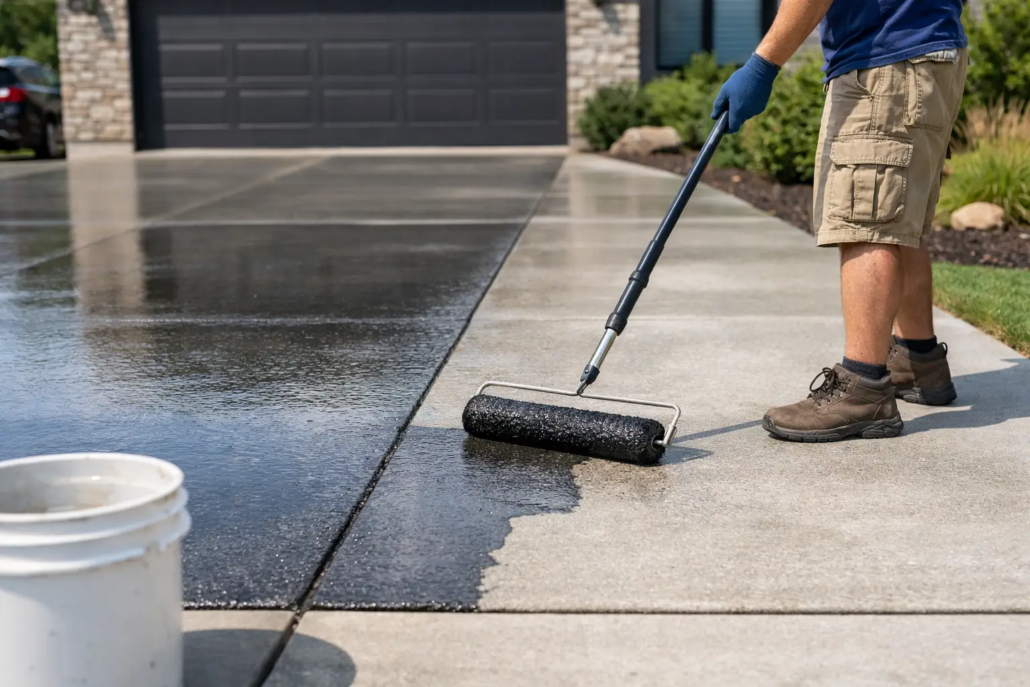
What Is Concrete Driveway Sealing?
A driveway can look solid and low-maintenance, right up until oil marks settle in, the surface starts to dull, or fine cracks begin to hold dirt and moisture. That is usually the point people ask, what is concrete driveway sealing, and whether it is actually worth doing. In simple terms, it is the process of applying a protective sealer over cured concrete to help guard it against water, staining, UV exposure, surface wear, and day-to-day traffic.
For homeowners, that protection is often about keeping the driveway looking cleaner for longer and preserving street appeal. For commercial properties, it can also be about reducing surface wear and making ongoing maintenance more manageable. Either way, sealing is not a decorative extra for the sake of it. When done properly, it is part of looking after the concrete so it performs well over time.
What is concrete driveway sealing and what does it do?
Concrete driveway sealing involves applying a specially formulated product to the surface of the concrete after it has cured and dried to the right level. The sealer sits on or penetrates into the surface, depending on the product used, and creates a protective barrier against common sources of damage.
Concrete is strong, but it is also porous. That means it can absorb water, oil, dirt, leaf tannins, tyre residue, and other contaminants. Once those materials soak in, they can be difficult to remove. Moisture can also contribute to long-term wear, especially where driveways face regular rain, hot sun, and changing conditions through the year.
A quality sealer helps reduce that absorption. It can also enhance the appearance of the surface, especially with decorative finishes such as exposed aggregate, coloured concrete, or stencil concrete. Some sealers leave a natural look, while others deepen the colour or add a low-sheen to gloss finish. The right choice depends on how the driveway is used, the finish itself, and the result you want.
Why sealing matters more than many people realise
A concrete driveway is one of the hardest-working surfaces on a property. It deals with parked vehicles, turning tyres, foot traffic, weather exposure, and whatever gets tracked onto it from the road. Because it is outside and constantly in use, it tends to wear gradually rather than fail all at once.
That gradual wear is exactly why sealing matters. It helps slow down the effects of everyday exposure before they become obvious problems. On plain concrete, this might mean less staining and easier cleaning. On decorative surfaces, it can mean helping the finish hold its appearance and reducing premature fading or patchiness.
It is also worth remembering that not all concrete surfaces age the same way. A shaded driveway under trees faces different issues from one exposed to full sun all day. A steep driveway may see more tyre friction. A coastal or high-rainfall environment may create more moisture-related wear. Sealing is not a one-size-fits-all decision, but in many cases it adds a useful layer of protection where it counts.
Types of sealers used on concrete driveways
There are two broad categories most people come across: penetrating sealers and topical sealers. The difference matters because each one behaves differently on the surface.
Penetrating sealers soak into the concrete and work below the surface. They are generally chosen when the goal is protection with minimal change to appearance. They can be a good option for plain concrete where a natural finish is preferred.
Topical sealers form a coating on the surface. These are often used where appearance is part of the outcome, such as exposed aggregate or decorative concrete. They can enrich colour and give the driveway a more finished look, but they also need the right preparation and maintenance to perform well.
Neither category is automatically better. It depends on the concrete finish, the site conditions, and how much visual enhancement is wanted. A sealer that works well on one driveway may not be the best fit for another.
What is concrete driveway sealing for decorative finishes?
With decorative concrete, sealing does more than protect against stains. It also plays a major role in how the finished surface looks once the job is complete.
On exposed aggregate, for example, sealing can help bring out the natural variation in the stone and give the driveway a richer, cleaner appearance. On coloured or stencil concrete, it can help preserve the intended colour tone and make the pattern or texture more defined. Without the right sealer, decorative surfaces can lose visual impact sooner than expected.
This is one reason sealing is often treated as part of the full installation process rather than an afterthought. The concrete may be structurally sound without it, but the finish may not present or wear as well over time. For homeowners investing in a driveway that is meant to lift the look of the property, that difference matters.
When should a concrete driveway be sealed?
New concrete should not be sealed too early. It needs time to cure properly, and the timing depends on the type of concrete, site conditions, and the sealer being used. If sealing is rushed, moisture can become trapped or the product may not bond as intended.
Existing driveways can also be sealed or resealed, provided the surface is in suitable condition and prepared properly first. Preparation is a key part of the result. Dirt, old coatings, mould, grease, or ingrained stains can affect how well a new sealer performs. In some cases, the driveway may need pressure cleaning or further surface preparation before sealing is worthwhile.
There is no single calendar rule that suits every property. A driveway in a high-traffic area or exposed position may need attention sooner than one in a sheltered location. The best indicator is often the condition of the surface – whether water is soaking in quickly, whether staining has become easier, or whether the finish has visibly dulled.
What sealing can and cannot fix
Sealing is a protective treatment, not a repair method. That distinction is important.
A sealer can help reduce future staining, make cleaning easier, and protect the surface from further wear. What it cannot do is correct poor drainage, fix structural cracking, level uneven concrete, or hide serious surface defects. If a driveway already has damage, those issues should be assessed first.
This is where professional advice adds value. Sometimes a driveway needs cleaning and resealing. Sometimes it needs resurfacing or repairs before any sealer is applied. Applying sealer over an unresolved problem can improve the look temporarily, but it will not address the cause.
DIY sealing versus professional application
Some property owners consider sealing a DIY job, and on the surface it can seem straightforward. The challenge is that good results depend on more than rolling on a product.
Surface preparation, moisture levels, weather conditions, sealer selection, and application rate all affect the outcome. Too much product can lead to patchiness, bubbling, or a slippery finish. Too little may not provide enough protection. Using the wrong sealer on decorative concrete can also change the appearance in ways that are hard to reverse.
Professional application tends to deliver more consistent results because the process is matched to the concrete itself. That matters even more with exposed aggregate, coloured finishes, and larger driveways where variation is easier to spot. A dependable concreting contractor should also be able to explain what sealer is being used, why it suits the surface, and what level of maintenance to expect after application.
How long does driveway sealing last?
That depends on the type of sealer, the driveway finish, the amount of traffic, and the local conditions. A driveway exposed to strong sun, heavy rain, and frequent vehicle use will generally wear faster than one with lighter use.
Topical sealers may need more regular resealing because they sit on the surface and take the brunt of wear. Penetrating sealers often last differently because they work within the concrete rather than as a visible coating. Even so, no sealer lasts forever. It is a maintenance measure, not a permanent once-only treatment.
The practical benefit is that regular sealing can help extend the life and presentation of the driveway in between larger maintenance work. For many property owners, that makes it a sensible part of long-term upkeep rather than an optional extra.
Is concrete driveway sealing worth it?
For most driveways, yes – provided the surface is properly prepared and the right sealer is used. Concrete represents a significant part of a property’s functionality and appearance. Protecting it makes sense, especially when the driveway contributes to first impressions and daily use.
The value is not only in how the surface looks on the day the sealer goes on. It is in how the driveway handles weather, marks, traffic, and general ageing over the months and years that follow. A sealed driveway is usually easier to maintain, better protected from staining, and more likely to keep its finish for longer.
For residential and commercial properties alike, the goal is simple: get more life, better presentation, and more consistent performance from the concrete already in place. If you are weighing up a new driveway or looking at ways to protect an existing one, sealing is one of the most practical steps you can take to keep that surface working hard and looking the part.

