
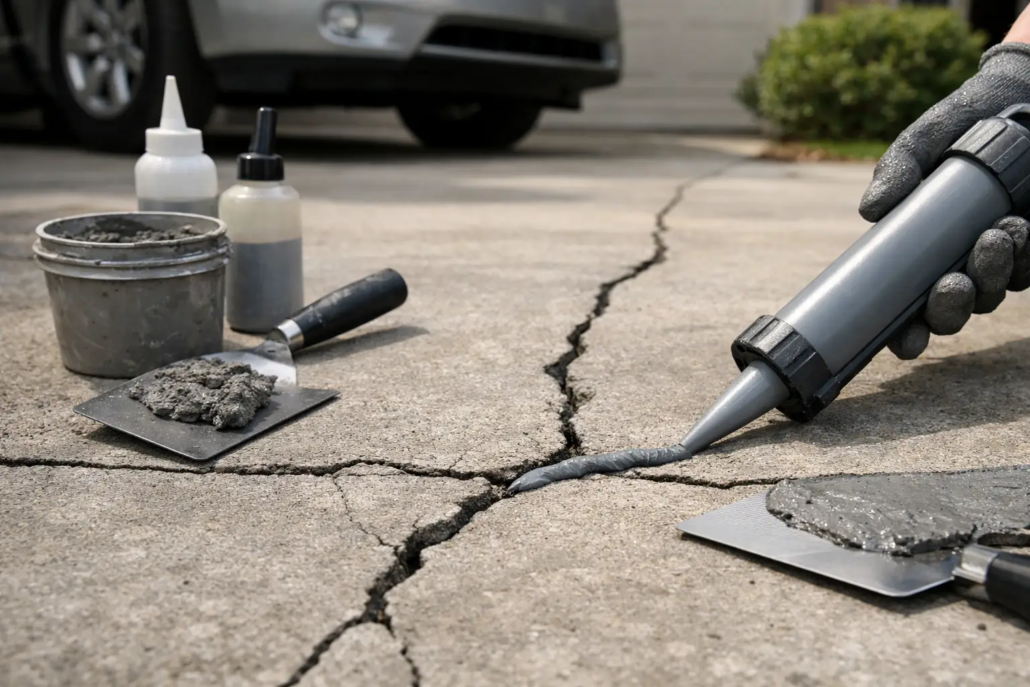
Best Concrete Driveway Crack Repair Options
A driveway crack rarely starts as a major problem. It begins as a thin line you notice while bringing the bins in, then a few months later it is wider, rougher and collecting water. Choosing the best concrete driveway crack repair early usually means a cleaner result, a longer-lasting surface and less chance of the damage spreading.
Not every crack needs the same fix. Some are cosmetic and can be sealed neatly. Others point to movement underneath the slab, drainage issues or concrete that has already lost too much strength. That is where many property owners go wrong. They treat every crack as a simple patching job, when the right repair depends on the crack width, depth, location and cause.
What actually causes driveway cracks?
Concrete is durable, but it is not immune to movement or wear. Driveways carry vehicle loads, sit in full weather exposure and deal with ground conditions that change over time. In South East Queensland, heat, heavy rain and shifting moisture in the soil can all play a part.
Some cracking comes from shrinkage as the concrete cures. These hairline cracks can be more of a visual issue than a structural one. Other cracks develop because of tree roots, poor subgrade preparation, insufficient control joints, drainage problems or repeated vehicle loads in the same area. If the slab is sinking on one side of the crack or the edges are breaking away, that is usually a sign the problem goes beyond the surface.
This is why there is no single best product or method for every job. A repair that works well on a shallow, stable crack may fail quickly on a crack caused by slab movement.
Best concrete driveway crack repair for different crack types
The best concrete driveway crack repair starts with matching the method to the condition of the slab.
Hairline and non-moving cracks
For narrow hairline cracks that are not lifting, spreading or changing over time, a quality concrete crack filler or sealant can be enough. The goal here is to close the gap, reduce water entry and improve appearance. Flexible sealants are often a better choice than rigid fillers because they can handle minor expansion and contraction.
The result can be very tidy when the surface is properly cleaned and prepared first. The trade-off is that colour matching is rarely perfect, especially on older driveways that have weathered unevenly. If appearance matters as much as function, sealing one crack may still leave the driveway looking patchy.
Wider cracks and surface edge damage
When cracks are wider or the edges have started to crumble, a stronger repair material is often needed. Polymer-modified repair mortars and epoxy-based compounds can bond well and restore damaged sections more effectively than a basic filler.
This type of repair suits localised damage where the rest of the driveway is still in solid condition. Surface preparation matters a great deal. Loose concrete, dust, oil and moisture can all reduce bond strength. If the damaged area is simply filled without cutting back weak edges first, the repair may break down sooner than expected.
Cracks caused by movement
If one side of the crack sits higher than the other, or if the crack keeps reopening after repairs, movement is the real issue. In these cases, filling the gap alone is rarely the best answer. The slab may need stabilisation, drainage correction or partial replacement depending on the cause.
This is the point where a cosmetic repair can become false economy. You can patch over movement, but if the ground underneath is still shifting, the crack often comes back.
When patching is enough and when it is not
A lot comes down to whether the crack is isolated or part of a bigger pattern.
If your driveway has one or two minor cracks and the slab remains level, patching or sealing is often a practical option. It helps keep out water, slows further deterioration and can improve safety by reducing loose edges.
If the driveway has multiple cracks, widespread surface wear, sinking sections or a tired finish overall, resurfacing may be the better path. Resurfacing covers the existing slab with a new topping, which can improve both appearance and wear resistance, provided the base concrete is still structurally sound. This can be a smart option for homeowners who want to deal with repair issues while also lifting street appeal.
Where the slab is badly broken, heavily shifted or compromised through its depth, replacement of the affected section is usually the more reliable long-term solution. It is not the answer people always hope for, but it often delivers a cleaner and more durable result than repeated patching.
Why DIY crack repair often looks good at first and fails later
There is no shortage of off-the-shelf repair products, and some can work well for very minor cracks. The problem is that many DIY repairs focus on filling what is visible rather than correcting what caused the crack in the first place.
Preparation is often where things come unstuck. A crack needs to be thoroughly cleaned, and in many cases opened or chased to create a sound repair profile. If dust or loose particles remain, the filler may not bond properly. If moisture conditions are wrong, some products will not cure as intended. Even when the material itself is suitable, poor prep can shorten the life of the repair.
Finish is another issue. Driveways are a prominent part of the front of the property. A repair that is lumpy, mismatched or feathered out unevenly can stand out more than the crack did. For decorative finishes such as exposed aggregate, coloured concrete or stamped surfaces, repairs are even more difficult to blend.
The role of resurfacing in crack repair
For ageing driveways with minor to moderate cracking, resurfacing can sit in the middle ground between patching and full replacement. It is not a fix-all, and it should not be used to hide active structural failure, but it can be an excellent option when the slab is basically stable.
A proper resurfacing job starts by addressing the cracks themselves, not just coating over them. Once repairs are made and the surface is prepared correctly, a resurfacing system can refresh the appearance and provide a more uniform finish. This is particularly useful where there are several old repairs, stains or surface inconsistencies that make a driveway look tired.
For property owners thinking about long-term presentation, this matters. The best repair is not only the one that closes a crack today, but the one that leaves the driveway looking consistent and performing well over time.
How professionals assess the best concrete driveway crack repair
An experienced concreter will usually look at more than the crack itself. They will consider whether the slab has dropped, whether water is draining correctly, how the concrete was originally finished, and whether vehicle traffic is placing stress on a weak area.
They will also assess whether the repair should be flexible or rigid, shallow or full-depth, isolated or part of a broader restoration. This matters because concrete driveways are not all built the same. A residential crossover, a steep driveway or a commercial traffic area may each need a different repair approach.
In areas like Brisbane, Logan City and the Gold Coast, local weather patterns can influence what repair method performs best. Prolonged wet periods followed by heat can expose weaknesses in both the slab and the repair material, so choosing the right system from the start makes a difference.
Signs it is time to move beyond crack filling
Some driveways have passed the point where crack filler is a worthwhile solution. If you are seeing repeated cracking in the same zones, widening gaps, loose aggregate, ponding water or uneven slab sections, it is worth getting the driveway assessed properly.
The same applies if the cracks are creating a trip hazard or affecting vehicle access. In those cases, the concern is no longer just cosmetic. Safety, drainage and structural performance all start to come into play.
A good contractor will not push one answer for every driveway. Sometimes a straightforward repair is enough. Sometimes resurfacing offers the best balance of presentation and durability. Sometimes replacing a section is the most sensible path. The right advice depends on the actual condition of the concrete, not just the appearance of the crack.
If you are weighing up the best concrete driveway crack repair for your property, the most useful starting point is to treat the crack as a symptom, not just a surface blemish. A repair lasts longer when it deals with the reason the crack formed, protects the slab from further water entry and suits the way the driveway is used every day. That is what keeps a small issue from turning into a much bigger one.

