
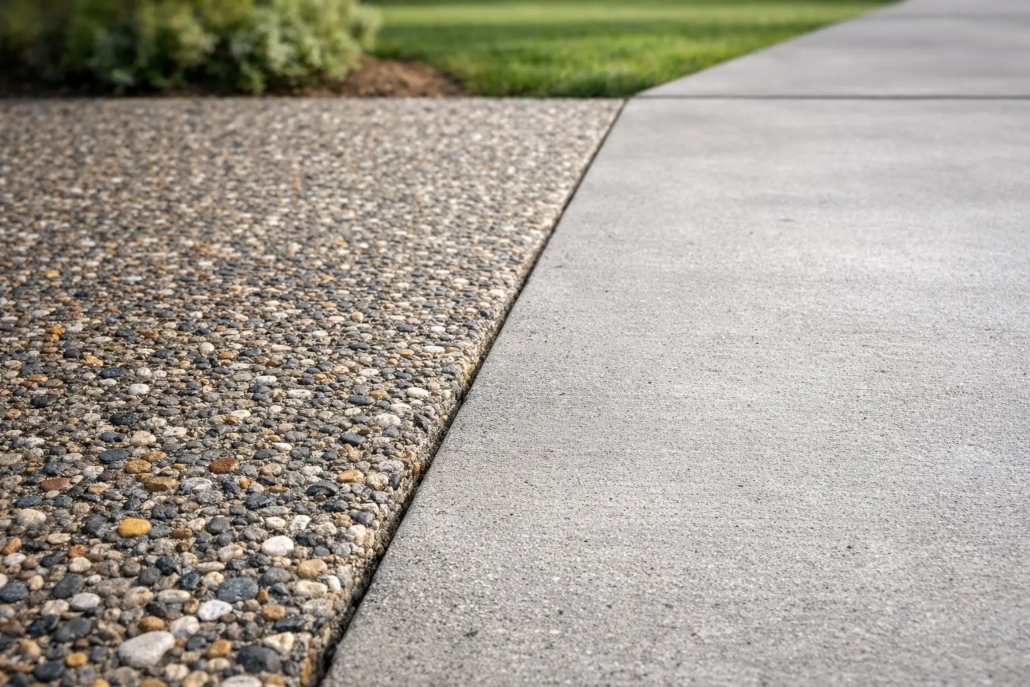
Exposed Aggregate vs Plain Concrete
A driveway can change the way an entire property feels before anyone steps through the front door. The choice between exposed aggregate vs plain concrete usually comes down to more than appearance. It affects grip underfoot, how much surface heat you notice in summer, the level of maintenance you are comfortable with, and whether you want the concrete to blend in or make a stronger design statement.
For homeowners, renovators and commercial property owners, both finishes can be the right choice. The better option depends on where the concrete is going, how you use the space, and what you want the finished job to achieve over the long term.
Exposed aggregate vs plain concrete: what is the difference?
Plain concrete is the classic, smooth-finished grey slab most people know well. It is practical, clean in appearance and suits a wide range of residential and commercial applications. When finished properly, it delivers a neat, consistent surface that works well for driveways, pathways, patios, house slabs and work areas.
Exposed aggregate starts with a similar concrete base, but the top layer is treated to reveal the natural stone, pebbles or crushed materials within the mix. That creates a more textured, decorative finish with added visual depth. Instead of a flat grey look, you get a surface with character, variation and a more premium appearance.
Structurally, both can be strong and long-lasting when installed correctly. The main difference is in the finish, the feel underfoot, and the role the concrete plays in the overall look of the property.
Appearance and street appeal
If appearance matters, exposed aggregate usually offers more design impact. The mix can be selected to complement the home, landscaping, fencing or surrounding hardscape. That makes it a popular choice for front driveways, pool surrounds, alfresco areas and entry paths where presentation is a big part of the brief.
Plain concrete is simpler by design. That is not necessarily a drawback. On the right property, especially modern builds or utility-focused spaces, a clean plain finish can look sharp and well considered. It tends to suit projects where the goal is a tidy, understated surface rather than a decorative feature.
There is also a difference in how each finish ages visually. Plain concrete can show marks, stains and small variations more obviously because the surface is more uniform. Exposed aggregate tends to disguise day-to-day wear a little better thanks to its natural texture and mixed tones.
Grip, texture and everyday use
One of the biggest practical differences in exposed aggregate vs plain concrete is traction. Exposed aggregate has a naturally textured finish, which can provide better grip than a standard smooth concrete surface. That is one reason it is often chosen for sloped driveways, pathways, outdoor entertaining areas and pool surrounds.
Plain concrete can still be finished to suit outdoor use, but the final texture matters. A smooth finish may feel cleaner and simpler, though it can become more slippery when wet if the wrong finish is used in the wrong setting. For outdoor areas exposed to rain, pool water or frequent foot traffic, surface texture should be part of the decision from the start.
This is a good example of where the best option depends on the application. A plain concrete slab under a shed or in a warehouse has very different demands compared with a poolside walkway or a front entry exposed to weather.
Maintenance and cleaning
Neither finish is maintenance-free, but both are relatively straightforward when installed and sealed properly. Plain concrete is often seen as the simpler option to clean because the surface is smoother and more uniform. Sweeping and washing down is easy, especially in covered or low-traffic areas.
Exposed aggregate can also be low maintenance, but the textured finish can hold a little more dirt and organic matter if it is left unattended, particularly in shaded outdoor areas. Regular cleaning helps maintain the look and reduces the chance of grime building up between the exposed stones.
Sealing is important for both surfaces. A quality sealer helps protect against staining, weather exposure and general wear, while also making the surface easier to maintain. The timing and type of resealing will depend on the location and how heavily the area is used.
Heat, comfort and outdoor living
In South East Queensland, heat matters. Outdoor surfaces are not just judged by how they look on installation day. They need to work through hot summers, storms and everyday use.
Plain concrete, particularly in standard grey, can absorb and hold heat. Exposed aggregate may also warm up, but its colour blend and texture can affect how heat is perceived underfoot. Lighter aggregate mixes often feel more suitable in outdoor entertaining zones and around pools where comfort is a priority.
That said, no finish should be chosen on colour alone. Sun exposure, surrounding landscaping, shade coverage and intended use all play a part. A darker decorative finish might look excellent in a shaded courtyard but feel less practical in a full-sun pool area.
Suitability for driveways, patios and commercial spaces
Driveways are often where the decision becomes most visible. Exposed aggregate is a strong choice when you want durability with added street appeal. It gives the front of the property a more finished, premium look and can help a driveway feel like part of the home design rather than a purely functional surface.
Plain concrete remains a reliable choice for driveways where simplicity, clean lines and practical performance are the priority. It can work particularly well for side access, rear vehicle areas, extensions and homes with a more minimal aesthetic.
For patios and pathways, the balance often shifts towards comfort and appearance. Exposed aggregate is commonly selected for these spaces because it brings texture and decorative value without sacrificing durability. Plain concrete can still work well, especially when the surrounding design calls for a restrained finish.
In commercial settings, the decision is usually more function-led. Plain concrete often suits warehouses, foundations, service areas and larger operational zones where consistency and practicality matter most. Exposed aggregate may be better suited to customer-facing entries, public-facing footpaths or commercial outdoor areas where presentation is important.
Durability and long-term performance
A common assumption is that decorative concrete is somehow less durable than standard concrete. In practice, that is not the issue that decides long-term performance. Installation quality, site preparation, reinforcement, drainage, expansion joints and finishing all matter more than whether the final surface is plain or exposed aggregate.
A well-installed plain concrete surface can perform exceptionally well for years. The same is true of exposed aggregate. Problems usually come from poor groundwork, rushed finishing or a mismatch between the surface and the job it is expected to do.
That is why the selection process should never be based on samples alone. The surface needs to suit traffic levels, weather exposure and site conditions. A steep driveway, for example, asks more of the finish than a level garden path.
Which finish gives better value?
Value is not just about the slab itself. It is about whether the finished surface meets your practical needs and supports the overall result you want from the property.
Plain concrete offers value through simplicity, versatility and a clean look that suits many applications. If you want a dependable surface that does the job without drawing too much attention, it can be the right fit.
Exposed aggregate offers value in a different way. It combines strength with a more decorative finish, which can lift the presentation of a home or outdoor area and help the concrete feel more integrated with the rest of the landscape design. For many property owners, that added visual impact is exactly the point.
Neither option is automatically better. The better value comes from choosing the finish that fits the space properly.
How to choose between exposed aggregate and plain concrete
If you are weighing up exposed aggregate vs plain concrete, start with the purpose of the area. Ask whether the space needs to be mostly practical, more decorative, or a balance of both. Then consider traction, sun exposure, maintenance expectations and how visible the concrete will be within the overall property.
It also helps to think beyond the slab itself. Look at the house exterior, fencing, gardens, pool area and adjoining surfaces. Concrete should not feel like an afterthought. It should support the broader design and function of the property.
This is where experience matters. A good concreting contractor will not just ask which finish you like more. They will ask how the area is used, what conditions it faces, and what result you want in five or ten years, not just on handover day.
At Creative Concrete Constructions, that practical approach is central to getting the finish right. Whether the job calls for a clean plain slab or a more detailed exposed aggregate surface, the best outcome comes from matching the installation to the site, the use and the look you want to achieve.
If you are still deciding, the most useful next step is not to chase a trend. It is to choose the surface that will feel right every day when you drive onto it, walk across it, or rely on it to perform without fuss.

