Can Concrete Be Resurfaced? Yes – If It’s Sound
A tired driveway or patio does not always need to be ripped out and replaced. If you are asking can concrete be resurfaced, the short answer is yes – but only when the existing slab is still structurally sound. Resurfacing can refresh the look, improve wear resistance and give old concrete a more refined finish without starting from scratch.
That said, resurfacing is not a fix for every concrete problem. The condition of the slab matters, the preparation matters, and the finish you choose matters. A good result comes from matching the right resurfacing system to the space, the level of traffic, and the condition of the existing concrete.
Can concrete be resurfaced in every situation?
No. Concrete resurfacing works best when the slab underneath is stable, well-drained and free from major structural failure. Surface wear, minor pitting, light flaking, outdated finishes and cosmetic staining can often be addressed with a resurfacing system. If the slab has widespread movement, deep cracks, major heaving, drainage issues or severe deterioration, replacement is often the better long-term option.
This is where a proper site assessment makes a difference. What looks like a surface problem can sometimes point to a deeper issue underneath. Tree root movement, poor sub-base preparation, water ingress or long-term settlement can all cause damage that resurfacing alone will not solve.
In practical terms, resurfacing is usually suitable when the concrete has superficial defects rather than structural ones. If your slab is basically doing its job but looks worn out, resurfacing may be the right path.
What concrete resurfacing actually does
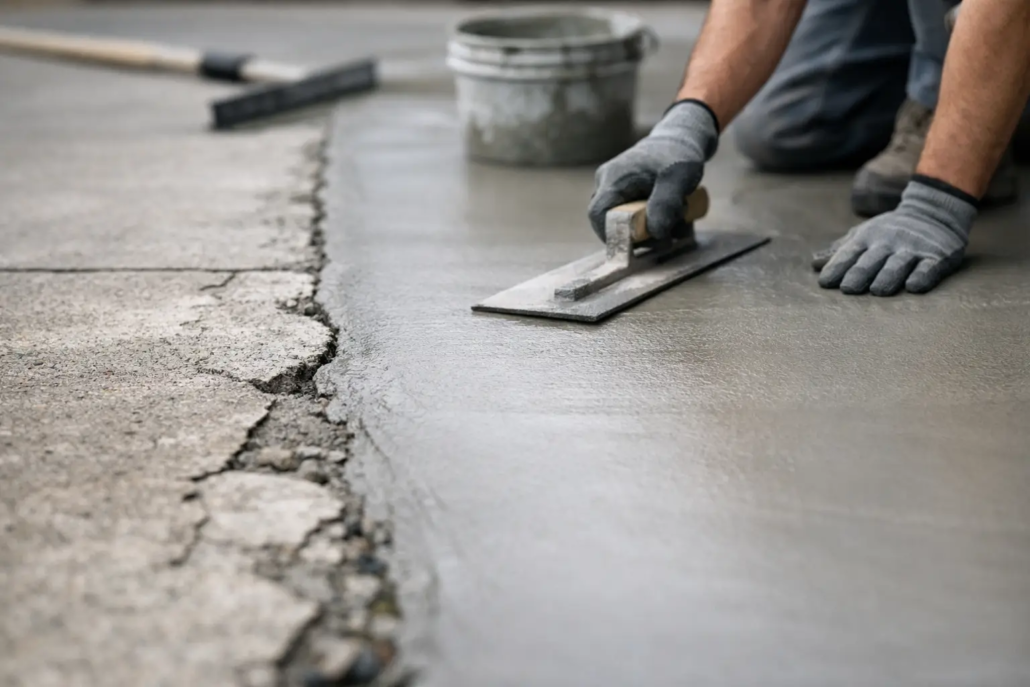
Resurfacing adds a new layer or finish over prepared concrete to restore appearance and improve performance. Depending on the system, that might mean a cement-based overlay, decorative coating, stencil finish, epoxy system or another specialist treatment designed for the location.
The goal is not just to cover the old surface. A quality resurfacing job creates a properly bonded, durable top layer that can handle the demands of the area. For a residential driveway, that means vehicle traffic, weather exposure and strong street appeal. For a patio or pool surround, it might mean slip resistance, comfort underfoot and a finish that suits the rest of the home. In a commercial setting, durability, compliance and ease of maintenance often take priority.
Because resurfacing can also change the appearance of concrete, it gives property owners more flexibility than many people expect. An old plain slab can often be transformed into something cleaner, more modern and better suited to the property.
Signs your concrete may be a good candidate
A slab is often suitable for resurfacing when the damage is mostly at surface level. That includes minor cracking, discolouration, patchy previous coatings, worn textures or a dated finish that no longer suits the property. Concrete around homes and commercial buildings often remains structurally serviceable long after it starts looking tired.
Age alone is not the deciding factor. Some older slabs are excellent candidates because they have settled and remained stable over time. On the other hand, newer concrete can still be a poor candidate if it was laid badly or is already showing movement.
One common example is a driveway with faded concrete and light surface scaling, but no major sinking or broad cracking. Another is a patio slab that is sound underfoot yet stained, patchy and out of step with a recent renovation. In those cases, resurfacing can be a practical upgrade.
When resurfacing is the wrong choice
If the concrete is breaking apart, lifting, sinking or cracking due to movement, resurfacing is usually only a temporary cosmetic layer over a bigger problem. It may improve the look for a while, but the original defects often return through the new surface.
Drainage is another issue that should not be ignored. If water pools on the slab, runs back toward the house or consistently sits in low areas, resurfacing will not correct the underlying fall. The same applies where concrete has become unsafe due to pronounced unevenness or edge failure.
For commercial sites especially, this decision matters. A warehouse floor, car park or high-traffic access area needs to perform reliably, not just look better for a few months. In those situations, replacing failed concrete can be the more responsible long-term solution.
Surface preparation is what makes resurfacing last
The biggest difference between a resurfacing job that lasts and one that fails early usually comes down to preparation. The existing concrete needs to be cleaned properly, any unstable material removed, cracks assessed and repaired where appropriate, and the surface mechanically prepared so the new material can bond correctly.
Simply applying a coating over dirty, dusty or poorly prepared concrete is asking for trouble. Delamination, peeling and patchy wear are common when prep work is rushed.
This is also why resurfacing is not a one-size-fits-all service. A driveway exposed to tyres, rain and UV needs a different approach from an indoor floor or decorative patio. The products, preparation methods and finish selection all need to suit the job.
Finish options can do more than hide old concrete
One of the strongest reasons property owners choose resurfacing is the ability to improve both function and appearance at the same time. You are not limited to making concrete look newer. In many cases, you can make it look noticeably better than it did originally.
Decorative resurfacing can introduce colour, texture and pattern to a previously plain slab. Stencil concrete can create a more defined, designed look. Epoxy flooring may suit enclosed commercial or garage spaces where a clean, hard-wearing finish is needed. Other resurfacing systems can be tailored for slip resistance around pool surrounds, pathways and outdoor entertaining areas.
The best finish depends on how the space is used. For a front driveway, durability and street appeal often lead the discussion. Around a pool, comfort, grip and heat performance are usually more relevant. For commercial spaces, maintenance and operational wear tend to guide the choice.
Residential and commercial resurfacing are not the same job
The principles are similar, but the decision-making is different. Homeowners are often focused on presentation, safety and getting more life from an existing surface. Commercial clients usually need resurfacing to support heavier use, minimise disruption and maintain a professional standard across the site.
That means the specification should follow the intended use, not just the visual goal. A decorative finish that works beautifully on a patio may not be right for a loading area. Likewise, an industrial-grade system may be excessive for a backyard path.
An experienced contractor should be able to explain those trade-offs clearly. Good resurfacing is about fit for purpose as much as finish.
How long resurfaced concrete lasts
There is no single answer because lifespan depends on slab condition, preparation quality, traffic levels, weather exposure and ongoing care. A well-executed resurfacing system on sound concrete can perform well for years, particularly when it is matched to the space and maintained properly.
Heavy traffic, poor drainage, harsh exposure and neglect will shorten that lifespan. So will choosing the wrong finish for the application. This is why honest assessment at the start matters more than optimistic promises.
For property owners, the practical takeaway is simple. Resurfacing can offer strong long-term value when the slab is suitable and the work is done properly. It is not magic, but it is a very effective solution in the right circumstances.
Can concrete be resurfaced after cracks appear?
Sometimes, yes. Hairline or minor non-structural cracks can often be treated as part of the resurfacing process, depending on their cause and pattern. But if cracks are active, widening or linked to movement in the slab, they need closer attention. Otherwise they are likely to reflect through the new finish.
This is one of the most common areas where professional advice helps. Not all cracks mean replacement, but not all cracks can be safely hidden either.
Making the right call for your surface
If your concrete is worn, dated or marked up, resurfacing may be the smartest way to restore it. If the slab is unstable or failing, replacement may save you time and frustration later. The key is not guessing based on appearance alone.
At Creative Concrete Constructions, we see plenty of surfaces that still have good bones but need the right treatment to look and perform properly again. A careful assessment, the right preparation and a finish suited to the site will always give you a better result than a quick cosmetic patch.
Old concrete does not always need to be removed to feel like new again. Sometimes it just needs the right second life.

