
What Is a Concrete Driveway Apron?
If you are planning a new driveway or replacing an old one, the section near the street deserves more attention than most people give it. When clients ask what is a concrete driveway apron, they are usually talking about the short transition area that connects the road to the main body of the driveway. It looks simple, but it does a lot of heavy lifting for access, drainage, edge support and long-term durability.
A poorly built apron can crack early, pond water, scrape low vehicles or create a weak point where the driveway meets the kerb. A well-built one does the opposite. It helps traffic move smoothly on and off the property, protects the surrounding concrete, and gives the whole frontage a cleaner, more finished look.
What is a concrete driveway apron?
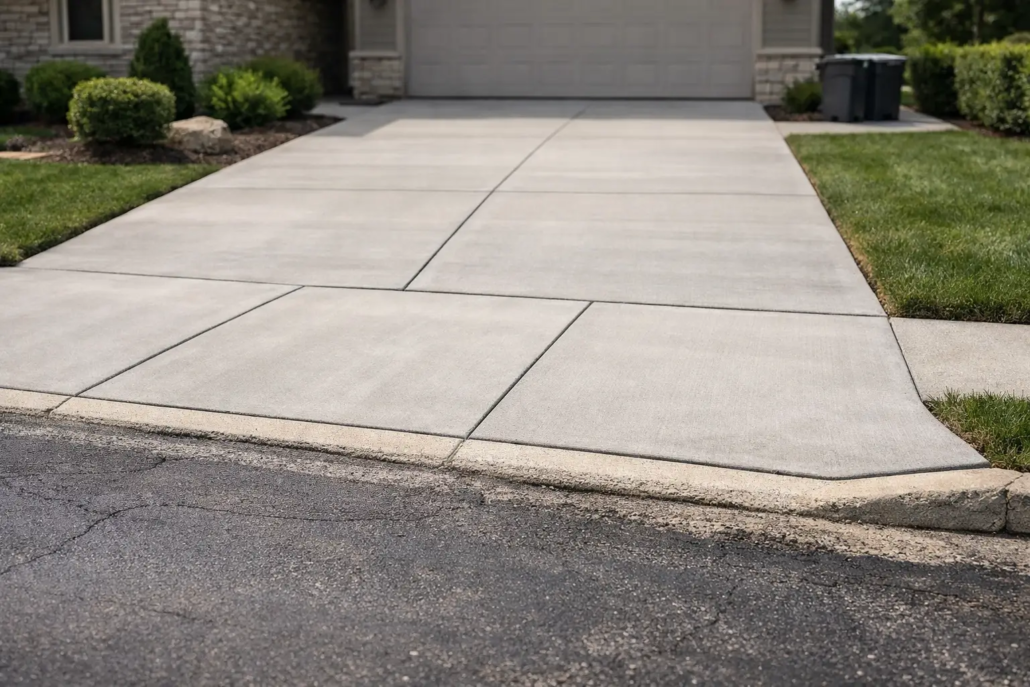
A concrete driveway apron is the section of concrete at the entrance of a driveway, usually between the street and the main driveway area. Depending on the property and kerb layout, it may sit between the road and the boundary line, or between the kerb crossover and the private driveway slab.
In practical terms, it is the transition zone. It carries vehicle loads as cars turn in and out, absorbs some of the stress where levels change, and helps direct water away from the driveway and garage rather than letting it pool at the front of the property.
People sometimes use different terms for this area, including the driveway entrance or crossover section. The exact definition can vary from one council area to another, especially where public infrastructure meets private property. That is why the design cannot be treated as a cosmetic add-on. It needs to suit the site conditions, the kerb profile and the traffic it will handle.
Why the apron matters more than people expect
The apron is one of the hardest-working parts of any driveway. Every vehicle crossing applies pressure at an angle as tyres leave the road and climb into the property. That repeated loading can expose weak compaction, poor reinforcement or the wrong concrete thickness very quickly.
This section also affects how usable the driveway feels day to day. If the apron is too steep, too flat or finished without enough thought, it can cause scraping underneath vehicles, water collection near the entrance, or an awkward bump each time you drive over it.
There is also the visual side. The driveway entrance is one of the first things people notice from the street. A neat, well-shaped apron can improve street appeal and make the entire driveway look intentional rather than patched together.
Where it sits and how it works
On a typical residential property, the apron starts where the road ends and continues into the front edge of the driveway. On some sites, it includes the crossover area over the footpath. On others, the apron is the private section directly behind the kerb. The exact layout depends on local requirements, frontage levels and whether there is a mountable kerb, barrier kerb or no kerb at all.
Its job is to create a clean transition between public road levels and private driveway levels. That means balancing several things at once. The apron needs enough fall for drainage, enough strength for traffic loads, and a profile that allows vehicles to enter without bottoming out.
This is where experience matters. A driveway entrance that looks fine on paper can still perform poorly if the surrounding levels are not read correctly during construction.
What a good concrete driveway apron should do
A quality apron should first provide smooth access. Cars, utes and delivery vehicles should be able to enter and exit without a harsh rise or drop. That sounds straightforward, but every site is different. A sloping block, a high garage slab or a deep roadside gutter can all change the shape required.
It should also support drainage. Water should move away as intended rather than settling at the entrance, washing back towards the house or spilling into areas where it causes erosion. In South East Queensland, where heavy rainfall events are part of life, proper drainage is not optional.
Strength is another key requirement. Because the apron takes concentrated traffic at a turning point, it needs suitable base preparation and reinforcement. The edge conditions matter too. Weak edges are often where cracking begins.
Finally, the apron should suit the overall finish of the property. Standard grey concrete is common, but exposed aggregate, coloured concrete or other decorative finishes can be used to create a more refined entrance, especially when matching the rest of the driveway or surrounding paths.
Common problems with badly built aprons
Most apron issues come back to design, preparation or finishing. Cracking is one of the most common complaints, but cracks are not always caused by one single problem. They may relate to poor subgrade preparation, inadequate thickness, lack of proper joints, heavy vehicle traffic or water undermining the base over time.
Drainage problems are also common. If the apron is too flat, water can pond near the road or at the base of the driveway. If falls are wrong, runoff may head towards the house or garage. Neither outcome is something a property owner wants to deal with after the concrete has cured.
Then there is vehicle clearance. This is especially relevant for lower cars, long-wheelbase vehicles and some commercial vehicles. An apron with the wrong transition can make access frustrating from day one.
Surface wear can also show up early where cheap materials or poor finishing methods have been used. Because the apron faces constant exposure to tyres, weather and runoff, it tends to reveal shortcuts faster than other parts of the driveway.
Do all driveways need the same type of apron?
No, and that is where a lot of confusion starts. There is no one-size-fits-all apron design. A flat suburban block with easy street access will not need the same solution as a sloping site with a rolled kerb and narrow frontage.
Residential and commercial properties can differ as well. A family home with regular car traffic has different load demands from a commercial site where vans, service vehicles or heavier traffic move in and out. The intended use should shape the construction method.
Council requirements can also affect the design. In some cases, the crossover section and kerb interface need to meet specific standards. That can influence thickness, reinforcement, width and levels. It is better to account for those details at the start than discover them after plans are underway.
Finish options for a concrete driveway apron
A driveway apron should be practical first, but it can also add to the presentation of the property. Many owners choose to keep the apron consistent with the rest of the driveway so the entrance feels cohesive.
Plain concrete remains a solid option for a clean, understated finish. Exposed aggregate is popular where a more decorative, textured look is wanted. Coloured concrete can help tie the apron into the house exterior, landscaping or adjoining hard surfaces. On some projects, a resurfaced or patterned finish may be suitable, although the surface texture still needs to support grip and durability.
The right finish depends on the style of the property, expected traffic and maintenance preferences. Decorative options can lift the appearance of the frontage, but the substrate and construction quality underneath still matter most.
How to know if your apron needs replacement
If the entrance to your driveway shows wide cracking, sinking, edge breakup or regular water pooling, the apron may be failing rather than just ageing. Surface marks alone are not always serious, but movement, drainage problems and structural cracking usually point to a deeper issue.
You may also notice practical signs before obvious damage appears. Cars might scrape at the entry point, water may sit after rain, or the apron may feel uneven under tyres. Those issues often suggest the shape or support is no longer doing its job properly.
Where damage is localised, repairs may be possible. Where the slab has poor levels, widespread cracking or base failure, replacement is often the better long-term option.
Why professional installation makes a difference
A concrete driveway apron sits at the point where appearance, engineering and everyday use meet. It has to look right from the street, perform under traffic and handle water properly. That combination leaves very little room for guesswork.
Professional installation means the levels are assessed properly, the base is prepared correctly and the concrete is placed with the intended use in mind. It also means the apron can be integrated with the rest of the driveway rather than treated as a separate patch.
For property owners in Brisbane, Logan City, Ipswich, Redland City and the Gold Coast, local conditions matter too. Rainfall intensity, soil behaviour and site gradients all influence how a driveway entrance should be built.
At Creative Concrete Constructions, this is the sort of detail that shapes the end result. A driveway apron may be a small part of the overall slab, but when it is done properly, the whole driveway works better and looks sharper from the street.
If you are planning a new driveway or upgrading an existing one, treat the apron as part of the system, not an afterthought. It is the first section your vehicle touches, and often the first place problems show when the build is not right.

