
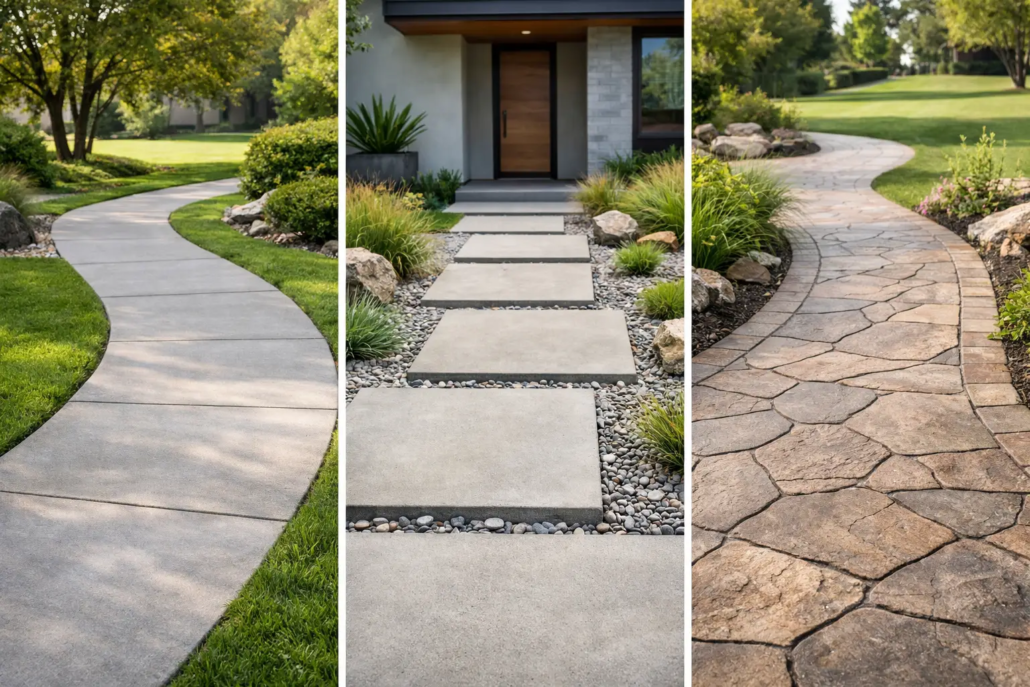
Concrete Pathways Design Options for Every Property
A pathway is more than a strip of concrete between the driveway and front door. It guides visitors, manages foot traffic, protects garden edges and helps make outdoor areas safer in wet weather. The right concrete pathways design options can also connect the visual character of your home, pool area or commercial site without creating another surface that needs constant upkeep.
For properties across Brisbane, Logan City, Ipswich, Redland City and the Gold Coast, the best choice usually comes down to three things: how the path will be used, how much grip it needs, and how closely it should match surrounding surfaces. A clean grey path may be exactly right for one project. For another, exposed aggregate or a decorative finish can make a narrow accessway feel like a considered part of the landscape.
Start with the pathway’s purpose
Good pathway design starts below the surface and works outward. Before choosing a colour or pattern, consider who will use the path and what it needs to connect. A front entry path may need to create a strong first impression, while a side passage often needs to be practical, hard-wearing and easy to hose down. Paths around pools, gardens, sheds and commercial buildings each have different requirements.
Width matters more than many property owners expect. A narrow path can be suitable for occasional garden access, but a main entry route should feel comfortable for two people to pass or for moving bins, prams and equipment. Curved paths can soften a landscaped yard and direct people naturally through the space. Straight lines tend to suit contemporary homes, narrow side access areas and commercial settings where clear movement is the priority.
Drainage is equally critical. Concrete should be formed with appropriate falls so water moves away from buildings and does not sit on the finished surface. Proper base preparation, reinforcement where required, joint placement and edge finishing all contribute to a path that performs well over time.
Concrete pathways design options to consider
The finish you choose should complement the building, surrounding hardscape and the level of maintenance you are comfortable with. Decorative concrete offers plenty of flexibility, but not every finish is ideal for every location.
Plain or coloured concrete
Plain concrete remains a dependable option for footpaths, side paths and service areas. It is clean, durable and works particularly well where the pathway should sit quietly alongside the home rather than become a feature. A broom finish can provide useful texture underfoot, especially where rain or shade may leave the path damp.
Coloured concrete adds warmth and definition without relying on a heavy pattern. Earthy charcoals, warm sands and neutral greys can suit Queensland homes and landscaped gardens, while deeper tones can provide contrast against lighter external walls. Because the colour is integrated through the concrete mix, it is a practical way to achieve a more tailored appearance across larger connected areas.
Exposed aggregate
Exposed aggregate is one of the most popular choices for residential pathways because it combines texture, natural variation and grip. The surface reveals selected stone within the concrete, creating a finish that looks at home beside gardens, timber, rendered walls and pool surrounds.
It is a strong option for front paths, stepping routes between entertaining zones and pathways that need a more decorative finish than standard concrete. Aggregate blends can be selected to work with existing driveways or outdoor areas, helping the entire property feel more coordinated. The trade-off is that exposed aggregate has a more textured feel under bare feet than smooth finishes, so it is worth considering how and where the path will be used.
Stamped concrete
Stamped concrete can give a pathway the look of stone, slate, paving or timber-style boards while retaining the continuous strength of a concrete slab. It is useful where you want pattern and visual detail without the movement that can occur between individual pavers over time.
This finish suits feature entries, courtyards and pathways that are intended to make a statement. Pattern selection should be proportionate to the area. A large, busy stamp can overwhelm a small side path, while a more restrained pattern can add interest without competing with the home’s façade. Surface sealing and appropriate texture are particularly important where stamped concrete is used outdoors.
Stencil concrete
Stencil concrete creates a brick, tile or paving-style pattern over a concrete base. It can be a practical choice for homeowners who like the structure of a laid-paver appearance but prefer a continuous surface with fewer joints to manage.
A stencil finish works well on front paths and patio connections, particularly when matched with a similarly finished driveway or entry area. Colour combinations can be subtle or contrasting, depending on whether the pathway should blend in or define a route through the yard. As with any decorative finish, preparation and application quality have a direct effect on the final result.
Polished and honed-style finishes
For covered walkways, internal-to-external transitions and contemporary commercial spaces, polished concrete can provide a refined appearance with excellent durability. It is generally better suited to protected areas than exposed paths, as high-gloss surfaces are not always the right choice where rainwater and wet footwear are common.
A honed or lower-sheen finish may suit some outdoor designs where a smoother, more architectural look is wanted. The key is balancing appearance with slip resistance. Your concreter should assess exposure to weather, shade, pool water and likely pedestrian traffic before recommending a finish.
Match the path to the rest of the property
The most successful pathways rarely look like an afterthought. They pick up a colour, texture or line already present in the property. An exposed aggregate driveway can flow into a matching front path. A charcoal-coloured path may tie in with window frames, fencing or roof tones. A stamped entry path can echo stone features used around a façade or garden wall.
You do not need to use the same finish everywhere. In fact, a small amount of contrast often makes the layout easier to read. For example, a plain broom-finished side path can sit behind the home, while a more decorative exposed aggregate path is reserved for the front entry and entertaining area. This approach directs investment towards the spaces people see and use most.
Commercial sites benefit from the same thinking. A public-facing footpath should be durable, accessible and clear to navigate, while landscaped approaches can use a decorative treatment to reinforce the quality of the development. In higher-traffic settings, practicality, compliance and long-term performance should lead the decision.
Details that improve safety and performance
A decorative finish cannot compensate for poor planning. Pathways need a stable base, sensible levels and proper control joints to help manage natural concrete movement. Where the route meets a driveway, door threshold, turf edge or existing slab, those transitions need to be planned carefully so the finished path is safe and visually neat.
Texture should be chosen with the environment in mind. Areas near pools, outdoor taps, shaded gardens and entry points exposed to rain need reliable traction. Raised edges, abrupt changes in level and overly tight turns can create trip hazards, particularly on pathways used by children, older residents or customers.
Lighting is another worthwhile consideration. Low garden lighting or well-positioned wall lights can make a path safer after dark while highlighting the colour and texture of decorative concrete. It is best to plan cable routes and drainage requirements before concrete is placed, rather than cutting into a finished surface later.
Why workmanship matters with pathway concrete
Pathways may appear simple, but they demand precision. Small inconsistencies in falls, joints or edge lines are noticeable on a narrow run of concrete. The surface also needs to be finished at the right time and cured correctly to support its strength, appearance and long-term durability.
An experienced concreting team can help translate a visual idea into a practical layout, advise on finishes suited to the site, and coordinate the technical details that protect the result. At Creative Concrete Constructions, that means treating a pathway as part of the overall property, not just a connection between two points.
The best pathway feels natural from the first step. Choose a design that suits your home or site, allow for the way water and people move through the area, and invest in a finish that will still look considered after years of Queensland weather.

