
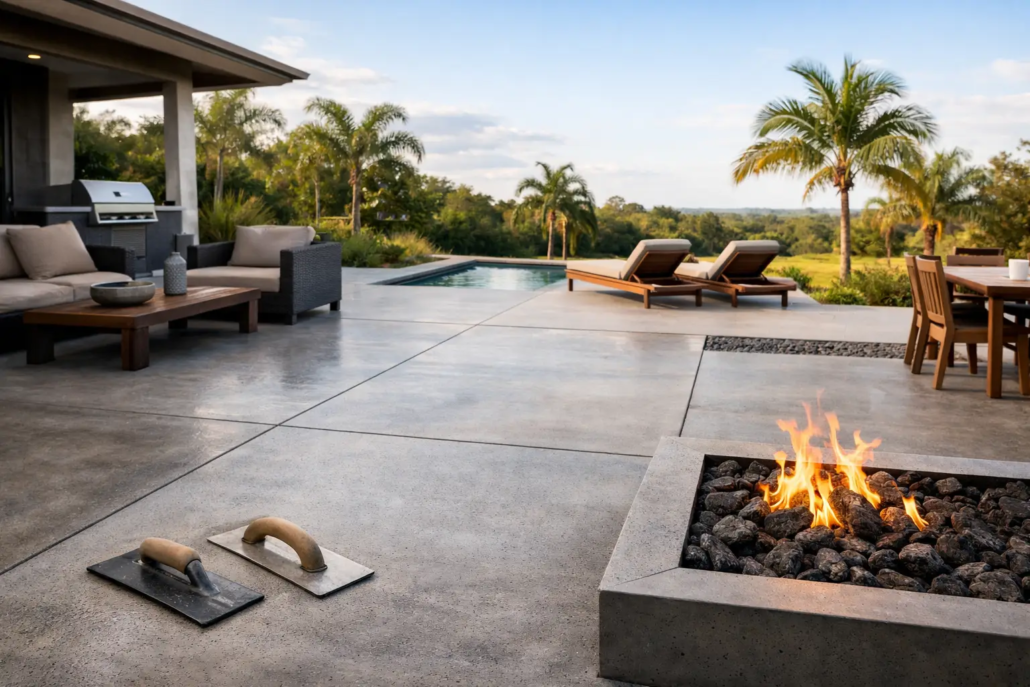
Concrete Patios That Work Hard in Queensland
A patio has to do more than look good on the day it is poured. In South East Queensland, concrete patios need to handle intense sun, sudden downpours, wet feet from the pool, outdoor dining and the regular movement between house and yard. Getting the planning and finish right creates an area that feels like a genuine extension of the home, rather than a spare slab at the back door.
The best result starts with how you intend to use the space. A compact coffee spot outside a living room needs a different layout and finish from a large entertaining area with a barbecue, dining setting and direct access to a pool. Good concrete work brings the practical details and the visual design together from the outset.
Start with how the patio will be used
Before choosing a concrete finish, think about the furniture, foot traffic and activities the patio needs to support. Mark out the proposed area in the yard if possible. This gives you a far better sense of scale than viewing measurements on a plan.
For a dining setting, allow enough room to pull chairs out without backing into garden beds, walls or sliding doors. If the patio will include a barbecue or outdoor kitchen, consider where people will stand while food is being prepared and where smoke, heat and service connections need to go. A clear path from the kitchen inside to the patio also makes everyday use much easier.
Orientation matters in Queensland. A west-facing patio may need substantial shade in the afternoon, while a covered southern area can remain damp for longer after rain. Existing trees, roof lines, pools and neighbouring properties all affect sun, privacy and drainage. These factors should influence the layout before construction begins, not become problems to solve afterwards.
Patios also work best when they connect naturally to surrounding surfaces. A pathway to the clothesline, a step down to the lawn or a transition beside a pool should feel deliberate. Matching or complementing the finish of a driveway, path or pool surround can give the whole property a more considered appearance.
A sound base and drainage protect concrete patios
The visible surface receives most of the attention, but preparation underneath is where long-term performance begins. The site needs to be excavated to the correct depth, formed accurately and prepared for the local ground conditions. A properly compacted base helps support the slab and reduces the risk of movement over time.
Drainage is equally important. Water should fall away from the house and be directed to an appropriate drainage point. Even a subtle fall is enough to move rainwater, but it must be planned precisely. A patio that drains towards external walls, door thresholds or a pool edge can create ongoing frustration and, in some cases, damage.
Control joints are another essential detail. Concrete naturally shrinks as it cures, and joints help manage where cracking is likely to occur. They are not a sign of poor workmanship. When they are positioned thoughtfully, they help the patio perform while fitting neatly within the overall pattern of the area.
Where a new patio meets an existing structure or slab, the connection needs careful consideration. Levels, movement and water flow all need to be accounted for. This is particularly relevant for renovations, where older concrete may have settled or where new work sits against a home extension.
Choose a finish that suits the space
Standard grey concrete remains a practical choice for many patios. It is clean, durable and works well with contemporary homes, timber features and landscaped gardens. However, decorative finishes can make the outdoor area feel more connected to the architecture of the property.
Exposed aggregate for texture and grip
Exposed aggregate reveals natural stone within the concrete surface. It offers texture underfoot and a finish that can sit comfortably beside gardens, pools and modern façades. Because the aggregate mix and surrounding concrete colour can be selected to suit the property, it provides more design flexibility than many homeowners expect.
It is a popular option for entertaining areas and pool-adjacent spaces, although the texture should be chosen with the intended use in mind. A more pronounced aggregate can offer useful grip, while a finer blend may feel more comfortable for bare feet. The right balance depends on who will use the area and how often.
Coloured, stamped and stencil concrete
Coloured concrete can soften the look of a large patio and help reduce the stark appearance of plain grey. Earthy tones often work well with brick, rendered homes and established landscaping, while charcoal and neutral greys can suit contemporary builds.
Stamped and stencil concrete create a patterned look, such as pavers, stone or tile, without installing individual units. These finishes can be effective when you want stronger visual definition or a particular architectural style. They do require careful installation and maintenance to keep the pattern and protective surface looking its best, especially in high-traffic outdoor areas.
Polished or resurfaced options
Polished concrete is usually better suited to covered patios, alfresco rooms or indoor-outdoor areas where a refined, low-profile surface is wanted. Its appearance can be striking, but slip resistance, exposure to weather and the condition of the existing slab need to be assessed before it is selected for an external setting.
If an existing patio is structurally sound but dated, concrete resurfacing may be a practical alternative to removal and replacement. Resurfacing can refresh the appearance with a new colour, texture or decorative treatment. It is not suitable for every slab, however. Significant movement, drainage issues or extensive cracking should be addressed at their source rather than covered over.
Make comfort part of the design
A patio should be enjoyable in the middle of summer, not only during mild weather. Shade structures, pergolas, insulated patio roofs and well-positioned planting can all change how often the space gets used. The concrete itself also has a role. Darker finishes can absorb more heat in direct sunlight, while heavily textured surfaces may be less comfortable for bare feet.
Consider the edges of the patio as carefully as the centre. Built-in seating, garden borders and steps can make the area feel settled into the landscape. If the slab will sit near a lawn, a clean edge makes mowing easier and helps prevent soil from washing across the surface during rain.
Lighting deserves early planning as well. Small changes such as low-level step lights, wall-mounted fittings or wiring for an outdoor fan are much easier to coordinate before the patio is completed. They add safety and make the area more useful after dark without cluttering the finished space with visible cables or temporary fittings.
Curing and early care affect the final result
Concrete gains strength as it cures, and the first stage after placement matters. The surface should be protected and curing managed according to the weather and selected finish. Hot, windy conditions can cause moisture to leave the surface too quickly, while rain at the wrong time can mark fresh concrete. An experienced concreting team monitors these conditions and adjusts the work process accordingly.
Avoid treating a new patio as fully ready the moment it looks dry. Heavy furniture, planters, barbecue units and concentrated loads should wait until the concrete has had appropriate curing time. This protects the surface from early marking and supports a more durable result.
For decorative patios, sealing may be recommended to enhance colour, assist with stain resistance and support ongoing maintenance. The appropriate sealer and reapplication schedule depend on the finish, exposure and expected use. A poolside surface, for example, has different demands from a fully covered alfresco area.
Keep maintenance simple and consistent
Concrete is valued because it does not need the ongoing attention of timber decking or individual pavers, but it is not maintenance-free. Regular sweeping removes abrasive grit and leaf matter. A gentle wash helps prevent built-up dirt, particularly in shaded areas where mould or algae can develop.
Use cleaning products suited to the finish. Harsh chemicals or aggressive pressure cleaning can affect sealers and decorative surfaces. Address food spills, oil marks and pot-plant stains early, and keep drainage channels clear so water does not sit against the patio after storms.
A quality patio is not simply a rectangle of concrete. It is a surface designed around your home, site conditions and everyday routines. With considered drainage, reliable preparation and a finish that suits the way you live, it can become the place where Queensland outdoor living feels easiest.

