
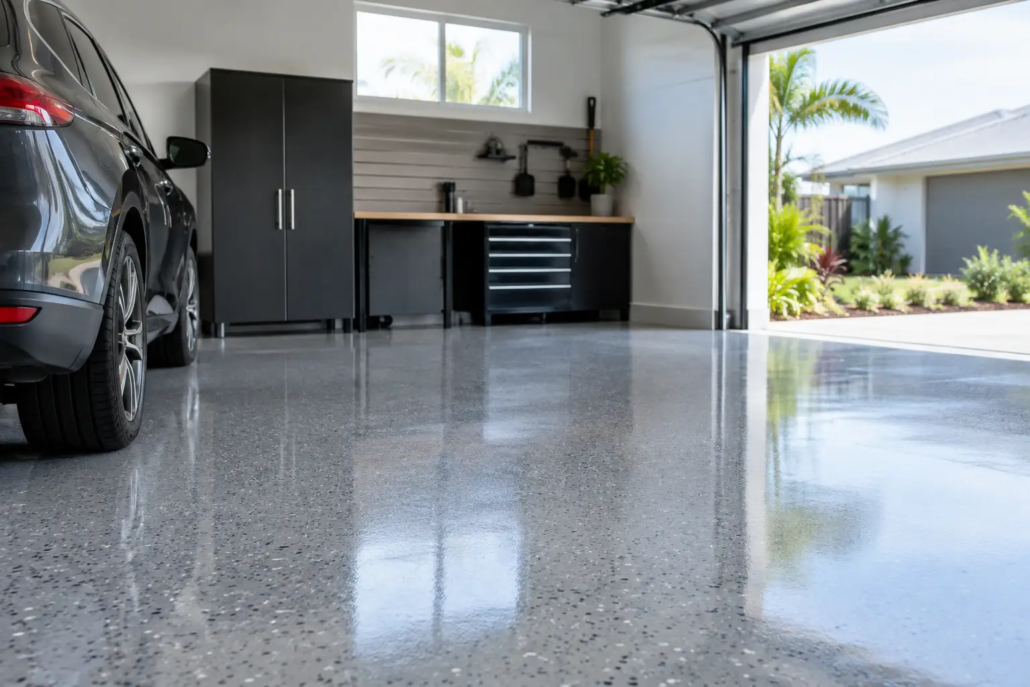
Epoxy Garage Floor Review for Queensland Homes
A garage floor takes more punishment than most surfaces around the home. It carries hot tyres, dropped tools, oil drips, muddy shoes and the occasional weekend project that gets out of hand. This epoxy garage floor review looks beyond the showroom shine to assess how epoxy performs in real Queensland garages, where preparation makes all the difference and the right finish needs to work as hard as it looks.
What an epoxy garage floor actually is
A quality epoxy floor is not simply a coat of paint rolled over concrete. It is a resin-based coating system that is applied to a properly prepared concrete slab. Once cured, it forms a hard, bonded layer that protects the surface and gives the garage a clean, finished appearance.
The system may include a primer, epoxy base coat, decorative flakes or coloured finish, and a clear topcoat. Each layer has a purpose. The primer helps the coating bond to the concrete, the epoxy provides build and durability, flakes can add colour variation and texture, and the topcoat improves wear resistance and makes cleaning easier.
This layered approach is why professional installation matters. A garage may look like a simple rectangular space, but the condition of its concrete, its moisture levels and how the surface is prepared will determine whether the coating lasts or begins to peel.
Epoxy garage floor review: the everyday benefits
For many homeowners, the biggest change is how the space feels. Bare concrete is dusty, absorbent and often marked by years of tyre tracks or stains. An epoxy finish creates a sealed surface that looks purposeful, whether the garage is used for parking, storage, a home gym or a workshop.
Epoxy is highly resistant to common garage spills when they are cleaned up in a reasonable timeframe. Oils, grease, dirt and many household chemicals sit on the surface rather than soaking into unsealed concrete. That makes routine cleaning far more straightforward: sweep loose grit away, then mop with a suitable neutral cleaner as required.
Durability is another clear strength. A well-prepared epoxy system can stand up to regular vehicle traffic, stored equipment and daily foot traffic. It also protects the concrete underneath from surface wear and helps limit the dusty, chalky appearance that older slabs can develop.
Design flexibility should not be overlooked. Solid colours can suit a clean, contemporary garage, while decorative flake systems disguise dust and minor marks better than a single-colour finish. Flakes also create a more textured visual effect, which can make a practical work area feel like a considered extension of the home.
The trade-offs worth understanding
Epoxy has genuine benefits, but it is not the answer to every garage-floor problem. The most common disappointment comes from choosing a coating before checking the slab beneath it.
Concrete with high moisture vapour transmission can affect adhesion. So can slabs contaminated with oil, curing compounds, old sealers or previous coatings. Cracks, spalling and uneven areas also need to be repaired and assessed before any resin is applied. Coating over these issues may hide them briefly, but it does not solve them.
Surface grip is another consideration. A glossy floor can become slippery when wet, particularly near a driveway entrance during heavy rain or where vehicles bring water into the garage. A professional system can incorporate flake texture or an appropriate anti-slip additive to improve traction without making the floor difficult to clean. The right level of texture depends on how the space is used.
Epoxy can also change in appearance with prolonged direct sun exposure. Garages with wide open fronts or strong afternoon light may benefit from a UV-stable topcoat, particularly in South East Queensland conditions. This is one reason it helps to select the complete coating system rather than judging a finish by the base epoxy alone.
Preparation is the real test of workmanship
The most durable epoxy floors begin with thorough mechanical preparation. Diamond grinding removes weak surface material and opens the concrete pores so the primer can bond properly. It is a cleaner, more controlled approach than relying on an acid wash, and it allows the installer to identify areas that need repair before coating begins.
Once the slab is prepared, cracks and small defects can be filled, joints can be considered, and the floor can be vacuumed thoroughly. The surface must be clean, dry and sound. Skipping these steps may save time at the start, but it can lead to bubbling, delamination or patchy results later.
Timing also matters. Epoxy products have specific mixing and application windows, while temperature and humidity influence curing. A reliable installer plans the work around the slab condition and site environment rather than treating every garage as the same job.
For homeowners, this is a useful way to assess a proposed installation. Ask how the concrete will be prepared, how existing cracks or stains will be handled, and what finish will be used for grip and UV exposure. Clear answers usually indicate a process built around long-term performance rather than a quick cosmetic coat.
Choosing the right epoxy finish for your garage
A full flake epoxy floor is a popular option for family garages because it balances appearance and practicality. The flake blend breaks up the visual field, so light dust, small scuffs and tyre marks are less noticeable than they can be on a plain dark or bright floor. It also offers plenty of scope to coordinate with the home’s exterior palette.
A solid-colour epoxy finish can be a strong choice for garages that double as workshops, showrooms or storage spaces. It creates a streamlined look and can help make a darker room feel brighter. The trade-off is that dirt and marks may be more visible, depending on the colour selected.
The intended use of the garage should guide the decision. A space housing a daily driver and household storage needs a different level of texture and visual tolerance than a workshop with heavier equipment. Likewise, a new slab may need a different assessment from an older garage with repairs, moisture concerns or years of contamination.
What to expect during installation and curing
Garage coating work requires the area to be emptied before preparation begins. Vehicles, shelving, stored boxes and loose items need to be removed so the entire slab can be assessed and finished consistently. This is also the ideal time to decide whether skirting edges, steps or adjoining thresholds should be included in the coating plan.
There will be noise and dust during mechanical grinding, although professional dust-extraction equipment helps keep the process controlled. After preparation and repairs, the coating layers are applied in sequence and allowed to cure. The floor may look finished quickly, but it should not be returned to normal service until the specified curing period has passed.
That waiting time is worth respecting. Parking a vehicle too early or dragging heavy items across a newly coated surface can mark a finish before it has reached its intended strength. Your installer should provide clear aftercare instructions based on the exact product system used.
Keeping an epoxy floor looking its best
An epoxy garage floor is low maintenance, not maintenance-free. Regular sweeping is the simplest way to prevent sand and grit from acting like an abrasive under tyres and foot traffic. Clean spills promptly, especially oils and automotive fluids, and avoid harsh cleaners that can leave a residue or dull the topcoat.
Use a soft broom or mop for routine cleaning, and place protective pads under very heavy stored items where practical. If you weld, use metal stands or carry out work involving hot materials, protect the coating from intense localised heat. Epoxy is tough, but no decorative surface is immune to sharp impacts, dragging metal or careless chemical exposure.
Is epoxy the right choice?
This epoxy garage floor review comes down to one practical point: epoxy is an excellent finish when the slab is sound, the preparation is thorough and the coating system suits the way you use the space. It delivers a cleaner, more durable and more polished garage than bare concrete, with enough design choice to complement the rest of the property.
For garages with moisture issues, major movement or extensive concrete damage, the first step is to address those underlying conditions rather than coating over them. A site-specific assessment gives you a more reliable outcome and a finish that earns its place over time.
A well-finished garage floor should make daily life easier from the first sweep to the last car parked for the night. Choosing experienced workmanship and the right preparation gives that surface the best chance to keep performing for years.
