Stencil Concrete vs Stamped Concrete
If you’re weighing up stencil concrete vs stamped concrete, the real question is not which one looks better in a photo. It is which finish will suit the way your surface is used, how much texture you want underfoot, and how well the final result will complement your home or commercial space for years to come.
Both options are popular for driveways, patios, pool surrounds and pathways because they offer more character than plain grey concrete. They can also mimic higher-end materials such as stone, brick, slate and pavers without introducing the movement and weed growth that often come with separate laid materials. Even so, stencil and stamped concrete are not interchangeable finishes. They are created differently, they wear differently, and they suit different project goals.
Stencil concrete vs stamped concrete: the basic difference
The simplest way to understand stencil concrete vs stamped concrete is to look at when the pattern is added and how deep that pattern goes into the surface.
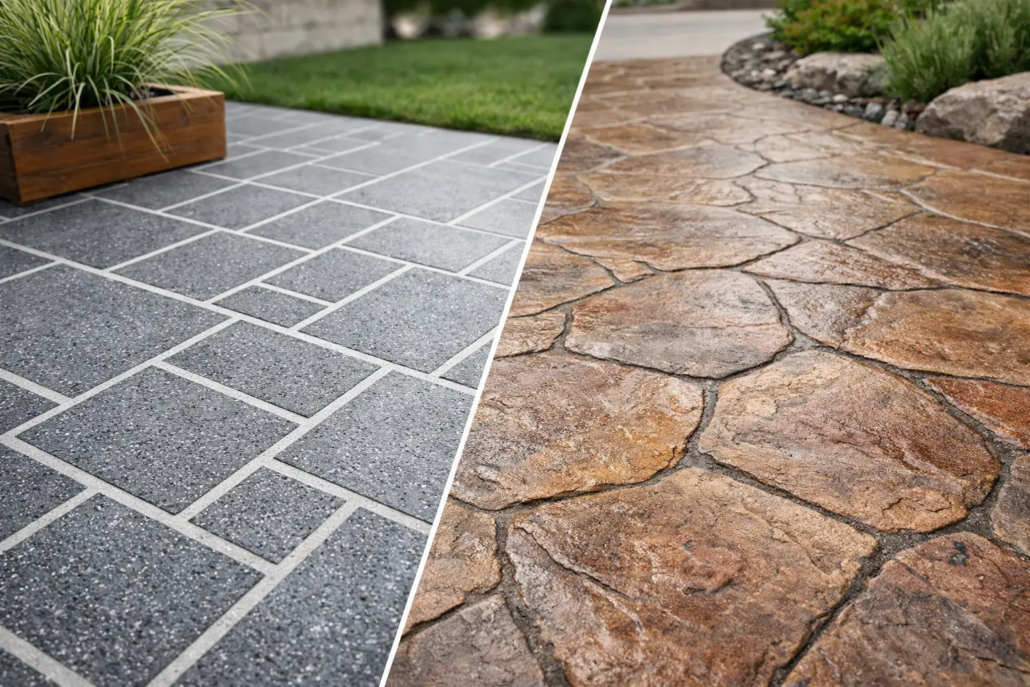
Stencil concrete is generally created by applying a stencil pattern over a prepared concrete base or resurfaced slab, then adding a coloured topping or decorative coating through that stencil. Once the stencil is removed, the pattern is left behind. The effect is clean, consistent and often slightly flatter in appearance, although texture can still be introduced depending on the system used.
Stamped concrete is patterned by pressing moulds or textured mats into freshly placed concrete while it is still workable. That means the design is physically impressed into the slab itself. The finish has more depth and texture, which can give it a more natural stone or hand-laid look when done well.
That difference in construction affects appearance, slip resistance, maintenance, repairs and where each finish tends to perform best.
Appearance and design flexibility
For many property owners, appearance is where the decision starts. Both finishes can create an attractive decorative surface, but they have a different visual style.
Stencil concrete is often chosen when the goal is a sharper, more defined pattern. It suits projects where people want a neat tiled, brick or paved look with clear lines and a uniform finish. Because the pattern sits on the surface layer, it can be easier to achieve crisp geometric designs and strong contrast between the pattern and the grout-style lines.
Stamped concrete tends to look more textured and organic. It is well suited to finishes that imitate natural stone, slate, cobblestone or rougher paving materials. Because the pattern is pressed into the slab, the finished surface can feel more dimensional and less uniform, which many clients prefer for outdoor entertaining areas and feature spaces.
Neither is automatically the better-looking option. It depends on the style of the property. A contemporary home may suit the cleaner detail of stencil concrete, while a more textured landscape design may pair better with stamped concrete.
Performance under foot and under tyres
A decorative finish has to do more than look good. On driveways, pathways and pool surrounds, performance matters just as much.
Stamped concrete typically has a more textured profile, which can be an advantage in some outdoor settings. The added texture can improve grip, particularly where the area may get wet. That said, the degree of slip resistance depends on the specific pattern, the sealer used and how the surface is finished. Too much texture on a driveway can also make cleaning a bit more involved.
Stencil concrete usually has a flatter profile, especially on resurfaced applications, which can make it practical for areas where a smoother surface is preferred. It can still be finished with slip-resistant additives where needed, particularly around pools or sloped paths. The key is making sure the finish is selected for the intended use, not just the appearance.
On vehicle areas, durability depends heavily on the quality of the slab preparation and installation. A decorative topping or patterned surface is only as reliable as the base beneath it. For driveways and commercial traffic areas, proper thickness, reinforcement, drainage and subgrade preparation matter more than the pattern itself.
Durability and long-term wear
When clients ask about stencil concrete vs stamped concrete, they are usually trying to work out which one will hold up better over time. The honest answer is that both can perform very well when professionally installed and properly maintained, but they do not age in exactly the same way.
Stamped concrete integrates the pattern into the slab, so the texture is part of the concrete rather than sitting as a separate decorative layer. That can be appealing for clients who want a finish that feels more built-in from day one.
Stencil concrete, especially when used as a resurfacing system, relies on the bond and condition of the surface layer. When the underlying concrete is suitable and the preparation is done properly, it can deliver a durable and attractive finish. However, as with any resurfaced decorative system, preparation is critical. Weak, unstable or poorly prepared substrates can shorten the life of the finish.
Sun exposure, weather, traffic and maintenance habits all play a role as well. In South East Queensland conditions, decorative concrete needs to cope with heat, rain and regular outdoor use. That is why sealer choice, surface prep and workmanship are not small details. They are central to how the concrete performs in real life.
Maintenance and repairs
Neither finish is maintenance-free, and it is better to be realistic about that upfront.
Both stencil and stamped concrete benefit from periodic cleaning and resealing to help protect the surface, support colour retention and reduce wear. Dirt, leaf staining, tyre marks and general grime are easier to manage when the surface is properly sealed and looked after.
Stamped concrete can sometimes hide minor marks better because of its varied texture and pattern. Stencil concrete, with its sharper lines and more uniform finish, may show wear differently depending on the colour contrast and traffic levels.
Repairs are where things can get more nuanced. If a decorative concrete area is damaged, patched sections can be difficult to blend perfectly regardless of finish. Matching colour, pattern and weathering is rarely exact. With stencil concrete, localised resurfacing may be possible in some situations. With stamped concrete, repairs may involve recreating texture in a way that sits naturally beside the original work. In both cases, the best repair outcomes usually come from planning ahead and using experienced installers who understand decorative concrete systems, not just standard slab work.
Which is better for different areas?
The right choice often comes down to where the concrete is going and what matters most to you.
For driveways, both options can work well, but the project needs to be designed for vehicle traffic from the start. If you want a bold decorative pattern with a more natural textured look, stamped concrete can be a strong choice. If you prefer a cleaner, more defined paved effect, stencil concrete may suit better.
For patios and alfresco areas, the decision is usually more about style and comfort. Stamped finishes can add depth and character, while stencil finishes can create a tidier, more architectural look.
For pool surrounds, slip resistance and heat comfort deserve close attention. A decorative finish should not just match the landscaping. It should also feel practical to walk on in wet conditions and regular summer use.
For commercial spaces, the decision often shifts towards durability, maintenance expectations and consistency of finish across a larger area. In these settings, there is value in working with a concreting team that understands both decorative presentation and structural performance.
How to choose between stencil concrete and stamped concrete
A good decision usually comes from asking the right questions early. What sort of look are you trying to achieve? How much texture do you want? Will the area carry foot traffic, vehicle traffic or both? Is this a new slab or a resurfacing project? And how important is ease of ongoing maintenance?
This is where professional advice can save a lot of second-guessing. At Creative Concrete Constructions, we often find that clients start by comparing finishes visually, then make the final decision based on how they want the space to function every day. That is the right approach.
The best decorative concrete does not just photograph well after installation. It still needs to work through summer storms, family traffic, parked vehicles and the general wear that comes with real use.
Stencil concrete vs stamped concrete: the better option depends on the job
If you want a crisp patterned finish with strong design definition, stencil concrete is often the better fit. If you want deeper texture and a more natural pressed-in appearance, stamped concrete may be the stronger option. Both can deliver excellent results when the slab, finish selection and installation method are matched properly to the site.
A decorative concrete surface is a long-term part of your property, not just a finishing touch. The smartest choice is the one that suits the space, performs well under use and still feels right every time you pull into the driveway or step out into the yard.

