
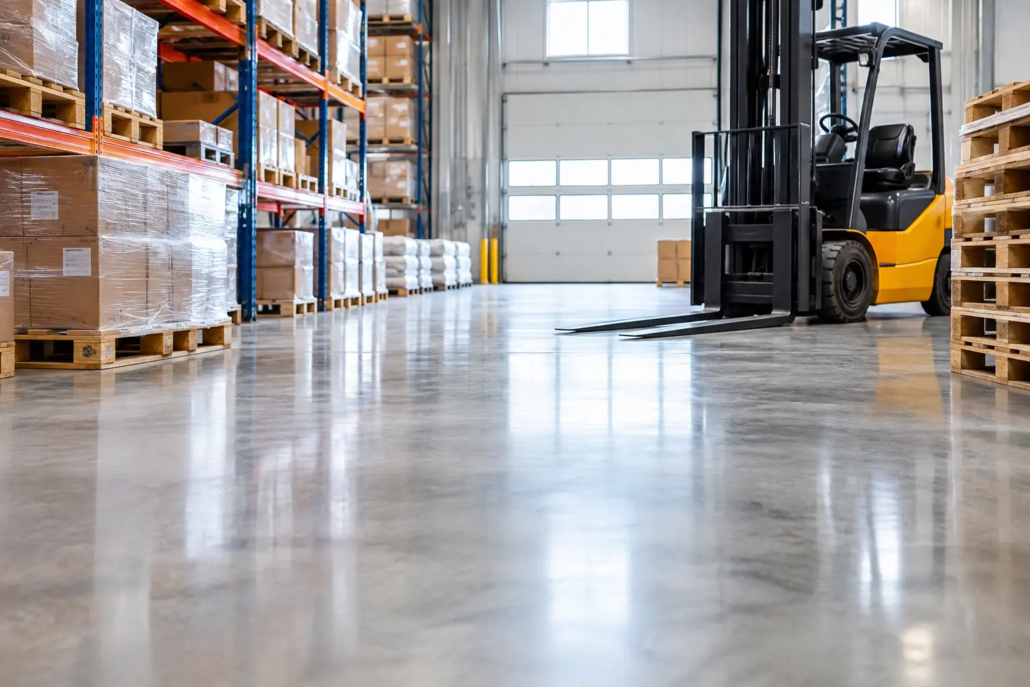
Warehouse Flooring Solutions That Work Harder
A warehouse floor is not simply the surface beneath the work. It carries forklifts, pallet jacks, racking loads, foot traffic, dropped stock and constant tyre movement, often from the first shift through to the last. The right warehouse flooring solutions protect that operation by reducing dust, improving cleanability and providing a surface built for the work taking place above it.
For facility managers, builders and business owners, the best option is rarely the one that looks good on day one alone. It is the floor that suits the building’s use, accommodates the slab beneath it and remains practical to maintain as the business grows.
Start With How the Warehouse Will Be Used
Every warehouse has a different traffic pattern. A storage facility with occasional pallet movement places very different demands on a floor than a busy distribution centre with forklifts travelling the same aisles all day. Before choosing a finish, consider the equipment on site, wheel types, point loads from racking, whether goods are moved manually, and the likelihood of spills from oils, chemicals or food products.
The existing concrete condition matters just as much. A new slab may be suitable for mechanical polishing, sealing or a protective coating once it has cured correctly. An older floor with cracking, surface wear or failing coatings may need repairs and preparation before any new finish is installed. Applying a coating over weak or contaminated concrete can lead to peeling, bubbling and early failure.
Moisture also needs proper assessment. Ground moisture moving through a slab can affect the bond of some coatings, while humidity and site conditions can influence installation. A professional inspection helps identify these issues early, rather than after the warehouse is back in operation.
Common Warehouse Flooring Solutions
Concrete is already the foundation of most commercial warehouses, but its final performance depends on the treatment applied to it. The most suitable choice comes down to durability, safety, appearance, cleaning requirements and downtime available for installation.
Finished and sealed concrete
A well-finished concrete slab is a practical starting point for many warehouses. When correctly placed, finished and cured, concrete provides a strong working surface for general storage, light industrial activity and vehicle access. A penetrating sealer or topical protective sealer can help reduce dusting, simplify cleaning and offer greater resistance to everyday staining.
This approach is often a sensible fit where heavy chemical exposure is not expected and the priority is a hard-wearing, low-maintenance surface. It still requires good slab design and installation from the beginning. Uneven finishing, poor joint detailing or inadequate curing can create long-term issues that no sealer can fully correct.
Polished concrete
Polished concrete offers a clean, refined look with strong wear characteristics. The surface is mechanically ground, densified and polished to create a durable finish that is easier to clean than untreated concrete. In warehouse settings, it can work particularly well in showrooms, dispatch areas, commercial storage spaces and mixed-use facilities where presentation matters alongside performance.
Its advantages include low dust, a bright reflective surface and reduced reliance on coatings that may eventually need replacement. However, polishing is not a universal answer for every industrial environment. Floors exposed to aggressive chemicals, heavy impact or frequent wet contamination may need a more specialised protective system. Slip resistance should also be considered carefully, especially in areas where water or other liquids are likely.
Epoxy flooring
Epoxy flooring is a popular choice for warehouses that need a continuous, protective surface with good resistance to abrasion, stains and many workplace chemicals. It can create a smooth, easy-to-clean finish and can be specified in colours that help define work zones, walkways, storage areas or safety boundaries.
The quality of preparation is central to epoxy performance. The concrete must be mechanically prepared, clean, dry enough for the system selected and structurally sound. Cracks, joints and damaged areas need attention before coating begins. A professionally installed epoxy system can perform well for demanding operations, but it is not maintenance-free. High-traffic routes may eventually show wear and may need local repair or recoating to maintain protection.
For a warehouse with frequent forklift activity, the system needs to be selected for the actual loads and tyre traffic involved. A decorative coating suited to a retail floor is not necessarily suited to an industrial loading area.
Concrete resurfacing and repairs
Surface damage does not always mean the entire floor needs replacement. Concrete resurfacing can restore selected areas affected by wear, shallow spalling, old coating failure or an uneven appearance. Localised repairs to cracks, joints and damaged edges can also improve safety and prevent minor defects from becoming larger maintenance problems.
The key is identifying why the damage occurred. Forklift impact, slab movement, moisture, poor drainage and unsuitable past repairs can all contribute. Treating only the visible defect without addressing the cause may shorten the life of the repair. In active warehouses, repairs should also be planned around access requirements so essential areas remain operational wherever possible.
Safety Is Part of the Floor Specification
A warehouse floor needs to support safe movement as well as heavy use. Slip resistance is particularly important around entrances, wash-down zones, cool rooms, loading areas and any location where spills are possible. The right finish balances cleanability with grip. A highly smooth surface may be easy to mop, but it may not offer sufficient traction in wet conditions.
Clear visual zoning can improve day-to-day safety too. Coloured epoxy or line marking can separate pedestrian routes from forklift lanes, identify exclusion zones and make work areas easier to navigate. These details are most effective when they are planned around the actual workflow, not added as an afterthought.
Expansion and control joints deserve attention as well. They allow concrete to move as intended, but damaged or poorly maintained joints can create rough travel paths, affect forklift wheels and become trip hazards. Joint repairs and protective joint systems can be worthwhile in high-traffic aisles.
Preparing the Concrete Properly
The visible finish receives most of the attention, but surface preparation does the real work. Before sealing, polishing, resurfacing or applying epoxy, the concrete needs to be assessed for strength, contamination, moisture and defects. Oil, adhesive residues, old coatings and weak surface laitance can all interfere with adhesion.
Mechanical grinding or shot blasting may be used to create the correct surface profile for a coating system. This is not a shortcut stage. It helps expose sound concrete and gives the new material the texture it needs to bond properly. Dust control, edge preparation and detailed repair work around drains, columns and doorways also make a noticeable difference to the finished result.
For new construction, coordination matters. The flooring outcome should be discussed while the slab is being planned, not after it has been poured. Expected racking loads, traffic lanes, drainage needs, joints and the final finish all influence the right concrete specification and installation method.
A Practical Maintenance Plan Extends Floor Life
Even the best warehouse flooring solutions need a routine care plan. Regular sweeping removes abrasive grit that can wear down coatings and polished surfaces. Prompt spill clean-up helps prevent staining and reduces slip risks. Cleaning products should suit the floor system, as harsh or unsuitable chemicals can dull finishes or weaken protective layers over time.
Inspect high-traffic routes, joints and loading areas regularly. Small chips, cracks or coating damage are easier to repair before water, contaminants or repeated impact worsen the problem. It is also worth reviewing the floor when operations change. A space that once stored light goods may need a different level of protection once heavier machinery or higher-volume dispatch is introduced.
Choosing a Floor That Supports the Operation
The best warehouse floor is one that is designed around real working conditions, not generic assumptions. A polished concrete finish may suit a customer-facing warehouse and dispatch area. A sealed concrete surface may be ideal for general storage. Epoxy may provide the protection and clear zoning needed in a busier industrial setting. In some buildings, a combination of finishes across different areas is the most practical answer.
For warehouses across Brisbane, Logan City and the Gold Coast, local conditions such as heat, moisture exposure and construction scheduling can also influence the right approach. An experienced concreting contractor can assess the slab, explain the trade-offs clearly and recommend a finish that fits the site rather than forcing a one-size-fits-all system.
A warehouse floor should make daily work easier: safer travel paths, simpler cleaning, less dust and a surface that stands up to the task. Starting with a clear understanding of how the space operates gives you the best foundation for a result that continues to perform long after handover.
