
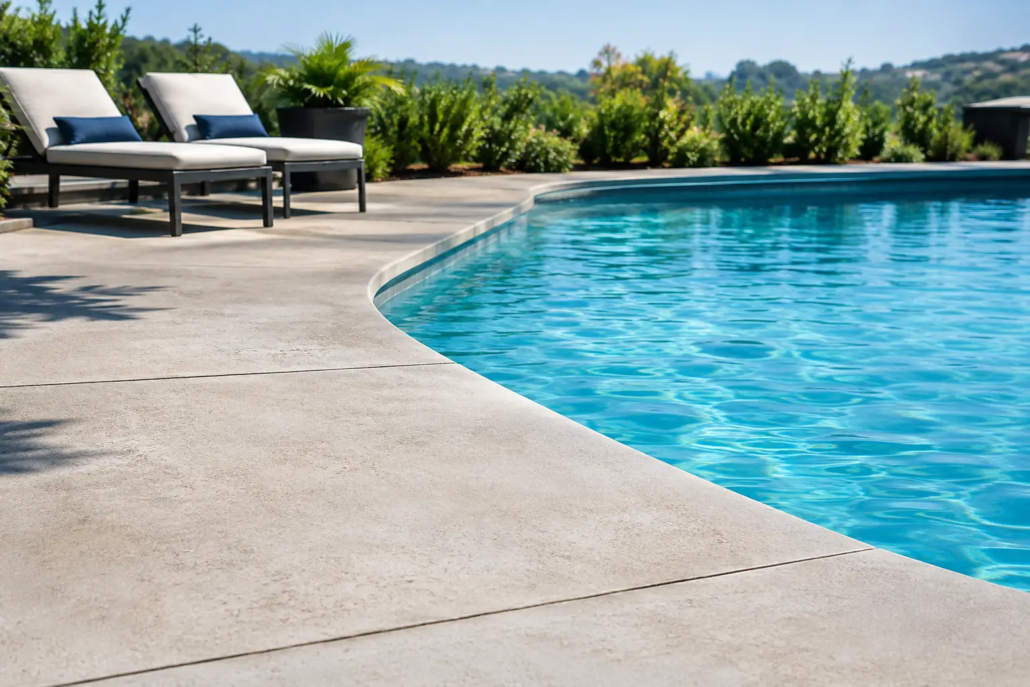
What Concrete Finish Suits Pool Areas Best?
Bare feet, wet swimmers and strong Queensland sun make a pool surround very different from a standard patio. When homeowners ask what concrete finish suits pool areas, the best answer is one that balances slip resistance, underfoot comfort, drainage, durability and the look of the whole outdoor area. A finish may look impressive in a showroom, but it needs to perform safely through summer storms, regular splashing and years of outdoor use.
For most homes, exposed aggregate is a leading choice because it offers dependable grip and a natural decorative appearance. However, it is not the only suitable option. The right finish depends on how the pool is used, the amount of sun the area receives, the surrounding landscape and whether you are building new or resurfacing an existing slab.
What concrete finish suits pool areas in Queensland?
A pool surround should provide traction when wet without being so rough that it is uncomfortable to walk on. It should also handle UV exposure, chlorinated or salt water splashes, outdoor furniture and regular cleaning without quickly losing its finish.
In Brisbane, Logan City and the Gold Coast, surface temperature deserves close attention. Dark concrete and dense, smooth finishes can become uncomfortably hot in full afternoon sun. Lighter aggregate blends and lighter concrete colours generally reflect more heat, helping the area remain more practical during the warmer months.
Drainage matters just as much as texture. Water should fall away from the pool edge and the home, rather than sitting on the surface. A well-chosen finish cannot compensate for poor levels or inadequate falls. Careful preparation, correct reinforcement and precise placement all contribute to a pool surround that looks good and works as intended.
Exposed aggregate: a practical poolside favourite
Exposed aggregate is often the strongest all-round option for pool areas. Once the top layer of cement paste is removed, the natural stone within the concrete becomes visible. This creates a textured surface with a decorative, hard-wearing finish.
The main benefit around a pool is grip. The exposed stone provides more traction than smooth trowelled concrete, which is valuable where children, guests and wet feet are part of everyday outdoor living. It also suits a broad range of home styles, from contemporary builds to more traditional Queensland properties.
There is plenty of design flexibility in aggregate selection. A softer blend of pale stones can complement light paving, rendered walls and coastal planting, while darker blends can create contrast around a modern pool. The key is to avoid an aggregate profile that is excessively sharp or uneven. A professionally selected mix and correctly finished surface should feel secure underfoot without being harsh on bare feet.
Exposed aggregate does require periodic cleaning to remove sunscreen residue, leaves and organic build-up. Sealing can help protect the surface and make routine maintenance easier, but the sealer should be suitable for a wet, external environment and should not create a glossy, slippery film.
Honed aggregate for a more refined look
Honed aggregate starts with a similar decorative mix, but the surface is ground back to reveal and refine the stone. It can deliver a clean, architectural result that pairs well with modern pool designs, large-format pavers and streamlined landscaping.
For pool surrounds, a honed finish needs to be specified carefully. Too smooth a grind can reduce wet-weather traction, particularly where water is regularly tracked across the surface. The finish can still work well when the aggregate exposure, level of honing and protective treatment are selected with slip resistance in mind.
This is a good example of why finish selection should never be based on appearance alone. A honed surface may be ideal for a covered entertaining area that connects to the pool, while exposed aggregate may be the better choice for the most heavily used wet zone beside the water.
Coloured concrete with a textured finish
Coloured concrete is a versatile option for homeowners who prefer a more uniform appearance than aggregate. Integral colour can be used to complement the pool coping, fence, exterior paintwork or garden design, giving the entire outdoor area a more coordinated feel.
A coloured pool surround should generally include a practical texture, such as a light broom finish or another non-slip treatment. This creates fine surface grip while maintaining a cleaner, more understated look than exposed stone. Light sand, warm grey and soft neutral tones are popular choices because they sit comfortably with many outdoor materials and are less likely to absorb heat than deep charcoal shades.
The trade-off is that a broomed finish is usually more functional than decorative. It does not have the visual depth of exposed aggregate, and its texture needs to be applied evenly to avoid an inconsistent appearance. Good workmanship is especially visible on large open pool decks, where changes in texture or colour can stand out.
Can stamped or stencil concrete work around a pool?
Stamped and stencil concrete can bring pattern and character to an outdoor space, particularly when the pool area needs to tie into pathways, patios or a broader entertaining zone. These finishes can mimic stone, pavers or tile-inspired patterns without introducing multiple materials and joints.
They are not automatically the best finish immediately around a pool. Some stamped profiles can be too smooth when wet, while deep patterns may collect dirt, sunscreen and moisture. Darker colours may also hold more heat. If a patterned finish is being considered, it should be designed with a suitable non-slip texture and used in the right location, rather than chosen solely for visual impact.
Often, a practical approach is to use exposed aggregate or textured coloured concrete around the pool edge, then introduce stencil or stamped concrete in a nearby alfresco area. This gives the outdoor space variation while keeping safety at the centre of the wet-zone design.
Finishes to approach with caution
Highly polished concrete is generally not suited to an uncovered pool surround. It can look exceptional indoors or in protected entertaining areas, but its smooth surface and reflective finish are not ideal where regular water exposure is expected.
Very smooth trowelled concrete can present similar concerns. It may be suitable for other external slabs, but it is rarely the first recommendation for a pool deck. Likewise, a high-gloss topical coating can change the slip characteristics of the surface. Any coating or sealer used around a pool should be chosen for external conditions and wet-foot traffic, not simply for shine.
New pool surrounds versus resurfacing existing concrete
If you are installing a new pool or replacing a damaged surround, you have the widest choice of finishes. The concrete mix, colour, levels, drainage and decorative treatment can all be planned together before the slab is poured. This is the best opportunity to create a consistent transition between the pool coping, patio, pathways and garden edges.
Resurfacing can be a practical option where the existing concrete is structurally sound but dated, stained or visually disconnected from a renovation. Decorative resurfacing systems, including specialty finishes such as Authenticrete, can refresh the look of an outdoor area without removing every section of concrete.
The existing slab must be assessed first. Cracking, movement, poor falls and drainage issues need to be addressed before a new finish is applied. A decorative overlay will not correct underlying structural problems, and no pool surround performs well if water continues to pond where people walk.
Choose the finish as part of the whole pool design
Pool coping, fence colour, landscaping, rooflines and outdoor furniture all influence which concrete finish will look right. A pale aggregate may suit a bright coastal-style yard, while a warm neutral coloured concrete can soften a more traditional home. For a contemporary design, honed aggregate or a restrained exposed blend may provide the cleanest result.
Practical use should lead the decision. Consider where children enter and leave the pool, where towels and chairs will sit, whether the area is fully exposed to the western sun and how often water will be tracked from the pool into the house. These details help determine the right balance of texture, colour and finish.
The best pool concrete is not simply the one that looks good on day one. It is the surface that remains comfortable, safe and easy to live with after countless summers. A tailored recommendation from an experienced concreting team can bring the design and technical details together, so your pool area feels like a considered extension of the home rather than an afterthought.

