
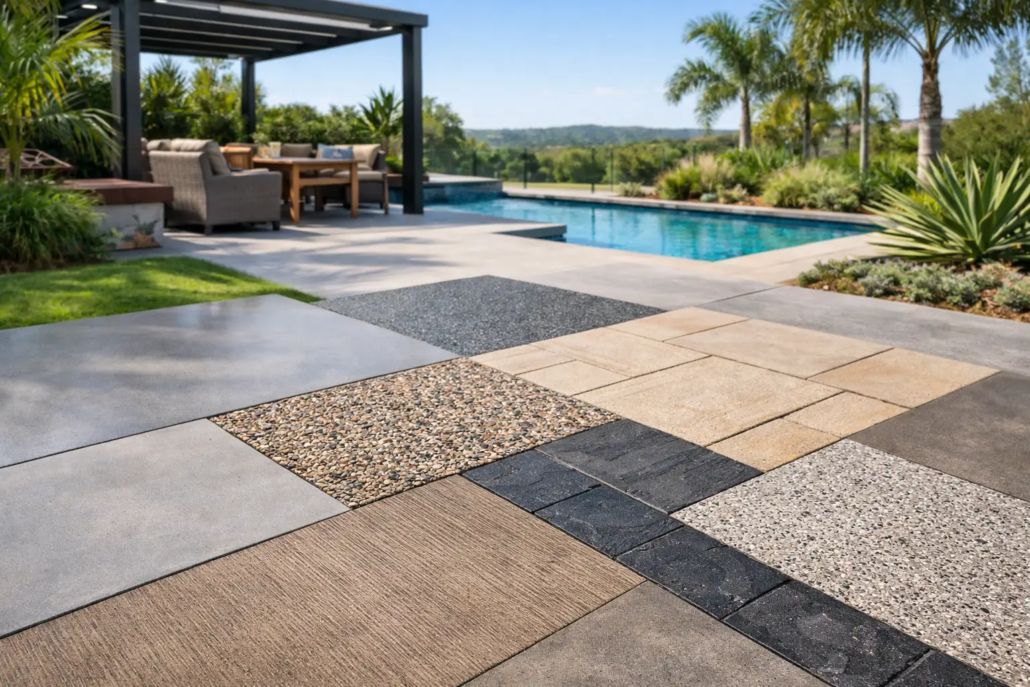
6 Best Concrete Finishes for Patios in Queensland
A patio has to cope with more than weekend entertaining. In South East Queensland, it may face strong sun, sudden downpours, muddy feet, outdoor furniture and regular cleaning. The best concrete finishes for patios balance safe footing, long-term durability and a look that suits the home rather than competing with it.
The right choice depends on where the patio sits, how it will be used and the amount of maintenance you are comfortable with. A covered alfresco area can accommodate a smoother, more refined surface than an exposed entertaining zone beside a lawn or pool. Getting the finish right before the concrete is poured, or before an existing slab is resurfaced, is one of the most effective ways to create an outdoor area that continues to perform well.
What makes a concrete patio finish work well?
A quality patio finish starts with sound preparation, correct falls for drainage and concrete installed to suit the site. Decorative treatments add character, but they do not replace good construction. Water should drain away from the house, control joints should be planned carefully, and the surface profile needs to match the way the area will be used.
For most homeowners, the key considerations are slip resistance, heat underfoot, ease of cleaning, colour coordination and resistance to everyday wear. A finish that looks excellent in a small sample may not be the best fit across a large, sun-exposed patio. Texture, aggregate selection and colour can all appear different outdoors, particularly through the changing light of the day.
1. Exposed aggregate for texture and traction
Exposed aggregate remains one of the most popular patio finishes for good reason. Once the top layer of cement paste is removed, the natural stones within the concrete are revealed. The result is a textured surface with visual depth and dependable grip underfoot.
It suits open patios, pool-adjacent entertaining areas, garden paths and transitions from a driveway to the backyard. Aggregate blends can be selected to complement brick, render, timber decking, natural stone or the tones of an existing pool coping. Lighter blends can also help the surface feel less visually heavy in a sunny yard.
The trade-off is its naturally textured feel. Exposed aggregate is comfortable for most outdoor uses, but it is not as smooth as a trowelled or polished finish. Leaves and dirt can also settle between the stones, so occasional pressure cleaning helps keep it looking sharp. A professionally applied sealer supports stain resistance and makes routine maintenance easier.
Best suited to
Exposed aggregate is a strong all-round option where the patio is fully exposed to weather, sees regular foot traffic or needs to tie into other external concrete surfaces. It is especially practical for households that want a decorative finish without sacrificing grip.
2. Coloured concrete for a clean, coordinated look
Coloured concrete introduces pigment through the mix, creating colour through the full slab rather than as a thin coating. It offers a more uniform appearance than exposed aggregate and can suit contemporary homes, traditional outdoor areas and projects where the patio needs to connect visually with pathways or a driveway.
Popular patio colours often sit within natural earth, charcoal, sandstone and warm grey families. The best choice is usually one that works with the home’s fixed elements, such as roof colour, fencing, paving, render and pool surrounds. A pale tone may make a compact courtyard feel more open, while a deeper shade can create a stronger contrast with light-coloured walls.
A coloured concrete patio can be finished with a light texture to improve footing, rather than left completely smooth. This matters in uncovered areas where rain or wet swimmers may be part of normal use. Colour also benefits from appropriate sealing and ongoing care, particularly where the patio receives intense UV exposure.
3. Stamped concrete for a paved appearance
Stamped concrete is designed to replicate the character of individual pavers, stone, slate, timber boards or brick while retaining the continuity of a concrete slab. Patterns are impressed into freshly placed concrete, then colour hardeners or release agents are used to build depth and variation.
For homeowners who like the look of paving but prefer not to manage weeds or shifting joints between separate pavers, stamped concrete can be a worthwhile option. It works well for covered alfresco spaces, courtyards and entertaining areas where the patio is intended to be a clear design feature.
The pattern should be chosen with scale in mind. A small-format pattern may look busy over a large expanse, while broad stone-style patterns can feel out of proportion in a narrow side courtyard. Texture should also be assessed for wet conditions. Some stamped finishes can be made more slip resistant, but the desired pattern and level of exposure need to be discussed before installation.
4. Stencil concrete for crisp pattern and contrast
Stencil concrete uses paper stencils and colour treatments to create the appearance of brick, tile or paver layouts. It is a practical decorative choice when a patio needs a defined pattern without separate paving units.
Its strengths are versatility and visual order. A brick-style stencil can soften a newer home, while geometric patterns can give a modern patio stronger definition. Border details are also useful for framing an entertaining zone or separating an outdoor dining area from a path.
Because the finish relies on surface-applied colour and protective sealing, workmanship and maintenance are particularly important. A well-prepared slab and quality coating system are essential for a finish that wears evenly. This option is generally best for homeowners who want a distinctive patterned surface and are prepared to maintain the protective finish over time.
5. Honed or polished-style concrete for covered alfresco areas
A honed or polished-style finish gives concrete a refined, contemporary appearance. The surface is mechanically ground to reveal a controlled amount of aggregate, then treated to create a smoother finish. It can look particularly effective in covered alfresco spaces where the patio flows directly from internal living areas.
This is not automatically the right finish for every outdoor setting. Highly smooth concrete can become less suitable where rain, pool water or regular moisture is expected. It may also show dust, water marks and outdoor debris more readily than a textured surface. For that reason, it is most successful in protected patios with good drainage and a carefully selected level of slip resistance.
When designed properly, a honed finish can create a high-end connection between indoor flooring and an outdoor entertaining area. It is a finish where samples and a site-specific discussion are especially valuable.
6. Resurfaced concrete when the existing slab is sound
A tired patio does not always need to be removed. If the existing concrete is structurally sound, concrete resurfacing can provide a fresh decorative finish over the top. Depending on the system and condition of the slab, options may include coloured coatings, textured overlays, stencil patterns or a renewed decorative surface.
The condition of the original slab determines whether resurfacing is appropriate. Significant movement, widespread cracking, drainage issues or an unstable base should be addressed before a new finish is applied. Covering the symptom without resolving the cause can shorten the life of the result.
Resurfacing is useful when the layout already works but the patio looks dated, stained or mismatched with a renovation. It can also help bring an older outdoor area into line with newer landscaping, fencing or exterior colours.
Choosing between the best concrete finishes for patios
Start by considering exposure. For an uncovered patio that will see wet weather and frequent outdoor use, exposed aggregate or lightly textured coloured concrete is often a practical choice. For a covered alfresco area where appearance and a smoother feel are the priority, stamped, stencil or honed-style finishes may be better suited.
Then consider the surrounding materials. Concrete should support the overall landscape, not appear as an afterthought. An aggregate blend can pick up the tones of stone garden edging, while coloured concrete can link a patio with a rendered façade. If the patio meets a pool area, texture, drainage and comfortable movement between surfaces deserve extra attention.
Finally, think beyond the first impression. The most successful patio is one that still looks appropriate after years of chairs being moved, barbecues being used and Queensland weather doing its work. A clear brief, quality preparation and an experienced concreting team will help turn the finish you like into an outdoor surface you can rely on.
A patio should make outdoor living easier, whether it is a quiet morning coffee spot or the place everyone gathers after a long summer day. Choose a finish that suits the way your household actually lives, and the concrete will do far more than fill an empty space.

