
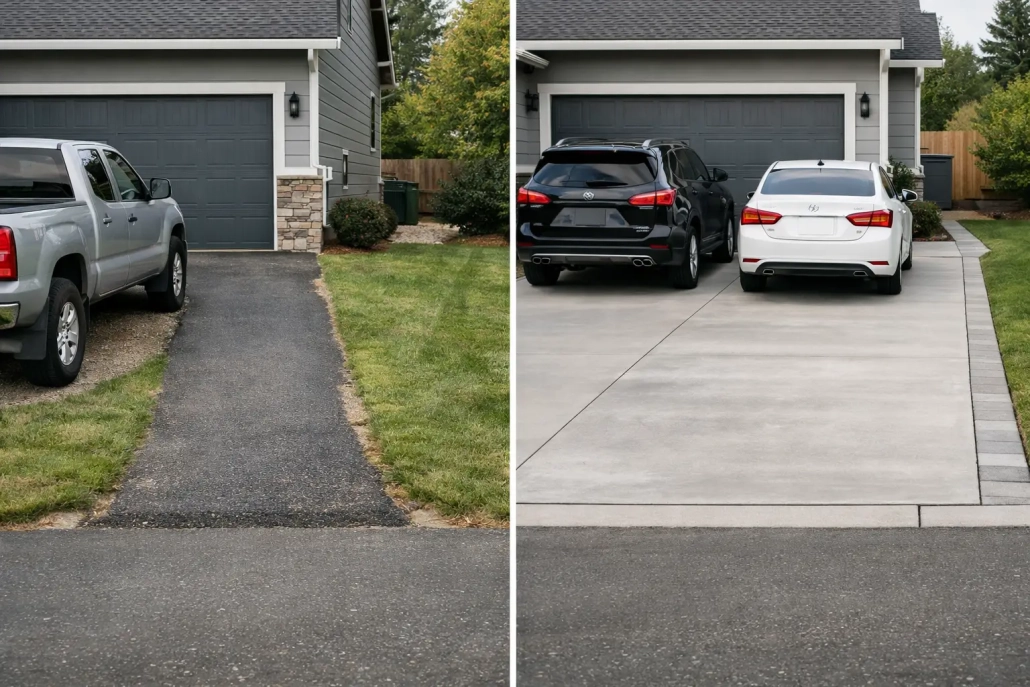
Driveway Extension Before and After Results
A driveway extension before and after comparison often shows far more than extra concrete. It can reveal a home that is easier to access, safer to use and better suited to everyday life – whether that means room for a second car, a caravan, a ute, or visitors who would otherwise park on the street.
For many Queensland homeowners, the original driveway was designed around a different lifestyle. A narrow strip to a single garage may have worked years ago, but growing families, larger vehicles and home improvements can quickly expose its limits. A well-planned extension solves the practical problem while making the front of the property look intentional rather than patched together.
What changes in a driveway extension before and after project?
The most obvious change is width. Extending a single driveway can create space for side-by-side parking, a turning area or clearer access around the garage. This reduces the need to drive over lawns, garden edges or uneven ground, which can become muddy and worn after heavy rain.
The best results, however, are not just about adding a slab beside the existing one. They come from considering how vehicles enter, turn, park and leave the property. A driveway may need a gradual transition from the kerb, enough room to open car doors comfortably, or a layout that allows a trailer or boat to be stored without blocking pedestrian access.
Visually, the difference can be just as significant. Before an extension, the front yard can feel cramped or unfinished, especially where tyres have created bare tracks through grass. After the work is complete, the driveway can frame the home, define the parking area and create a cleaner street presence. The finish, edging and connection to existing paths all influence whether the new concrete feels like a natural part of the property.
Start with how you use the space
A successful driveway extension begins with daily routines, not a standard shape. Think about who parks at the home, what vehicles need access and how often the space is used. A household with two cars has different requirements from a home where a caravan, work trailer or boat needs to be moved regularly.
It is also worth allowing for the way visitors use the property. A wider approach can make it easier for guests to park without blocking the garage, while a dedicated bay may keep vehicles off the lawn during family gatherings. If children walk through the front yard, a defined pedestrian path can help separate foot traffic from vehicle movement.
Site conditions matter too. Sloping blocks, drainage paths, retaining walls, service locations and established trees can all affect the final layout. In Brisbane, Logan City and the Gold Coast, intense rainfall makes drainage particularly important. Water should move away from the house and avoid pooling where people step out of vehicles. The right falls and surface preparation protect both the driveway and the surrounding property.
Check approvals and crossover requirements early
A driveway extension within private property is one consideration. Changes that affect the footpath, kerb, verge or vehicle crossover may involve council requirements. These requirements can vary by local area and may cover the width, location and construction of the crossover, as well as drainage and protection of public infrastructure.
Planning this early prevents a design from being built around an access point that cannot be altered as expected. An experienced concreting contractor can assess the site and identify practical issues before the project moves ahead, including how the extension will connect with the existing driveway and street frontage.
Matching new concrete to the existing driveway
One of the most common questions in a driveway extension before and after project is whether the new section will match the old one. The honest answer is that it depends on the age and condition of the existing concrete, along with the finish selected.
Older plain concrete naturally changes colour over time due to weather, use and cleaning. Even a carefully matched new pour may initially appear lighter. This contrast often softens as the concrete cures and weathers, but it may not disappear entirely. If the original surface is heavily stained, cracked or worn, extending it can make the difference more noticeable.
There are several ways to approach this. A plain concrete extension may be the right choice when the existing slab is in good condition and a straightforward, functional result is the priority. If the driveway is being refreshed as part of a larger front-yard upgrade, resurfacing the full area can create a more consistent appearance.
Decorative finishes also give homeowners more design control. Exposed aggregate can add texture and a premium look while providing grip underfoot. Coloured concrete can complement brickwork, render or landscaping. Stencil concrete and stamped concrete can introduce pattern where a more distinctive entrance is wanted. The right option depends on the home style, how much direct sun the driveway receives and the maintenance expectations of the household.
Joints are part of good workmanship
Concrete moves slightly as temperatures change and as the ground responds to moisture. Control joints help manage this movement and encourage any cracking to occur in planned lines rather than randomly across the surface. They are not a shortcut or a flaw – they are an important part of durable concrete construction.
The join between an existing driveway and the extension also needs careful preparation. The base must be properly compacted, the concrete thickness suited to vehicle use and the new section finished with appropriate falls. Simply pouring concrete over unstable ground may look acceptable at first, but it can lead to settlement, cracking or water issues later.
The construction details that shape the after result
The finished surface gets the attention, but what sits beneath it determines how it performs. Driveway extensions need an appropriately prepared sub-base to support the expected load. A small passenger vehicle, a loaded work ute and a caravan each place different demands on the surface.
Excavation and compaction create a stable foundation. Reinforcement may be required depending on the design and site conditions. Formwork establishes the lines and levels, while correct concrete placement and finishing help produce an even, durable surface. Curing is also essential. Concrete gains strength over time, and protecting it during the early curing period supports long-term performance.
Good drainage is another detail that should never be treated as an afterthought. Water trapped against the garage, house slab or fence line can create problems beyond the driveway itself. The extension should be shaped to direct water where it needs to go, without sending runoff towards neighbouring properties.
Avoid the shortcuts that create poor before-and-after outcomes
A driveway extension should not be treated as a thin cosmetic layer over soil, grass or damaged concrete. The area needs proper excavation and base preparation before the pour. This is especially relevant where cars have already been driving over a soft verge or lawn, as the ground may be uneven and compacted inconsistently.
Another mistake is making the extension too narrow. An extra strip may technically fit another vehicle, but if drivers need to mount garden edging or squeeze past a wall, it may not improve day-to-day use. It is better to plan dimensions around real vehicle movements and door clearances than to focus only on the available patch of land.
Finally, avoid selecting a finish solely from a photo. A decorative surface should suit the property, but it must also suit how the area is used. Heavily shaded areas, steep driveways and pool-adjacent paths all have different slip-resistance and cleaning considerations.
A driveway extension should look planned, not added on
The strongest before-and-after results balance function with proportion. The extension should make parking easier, guide water correctly and complement the home without overwhelming the front yard. Sometimes that means a simple side widening; other times it means reshaping the entire approach, adding a path or choosing a decorative finish that ties the driveway into surrounding landscaping.
For property owners across South East Queensland, local site knowledge and careful preparation make a visible difference. Creative Concrete Constructions approaches driveway extensions as a complete surface solution, with attention to access, drainage, finish selection and the details that support a lasting result.
A well-designed extension gives your home room to work the way it does now, while leaving the entrance cleaner, more usable and more welcoming every time you arrive.

