
Concrete vs Pavers Brisbane: Which Surface Fits?
A driveway that looks sharp on handover day still needs to handle summer downpours, strong UV, daily vehicles and the occasional dropped wheelie bin years later. That is why the concrete vs pavers Brisbane decision deserves more than a quick comparison of appearances. Both surfaces can suit Queensland homes and commercial properties, but they perform differently depending on the site, intended use, drainage and finish you want.
For many property owners, concrete is the practical choice for a continuous, low-maintenance surface with broad design potential. Pavers can be an excellent fit where a segmented look, easy access to underground services or a particular architectural style is the priority. The best result comes from choosing the material around the job, not simply choosing what has been used next door.
Concrete vs Pavers Brisbane: the core difference
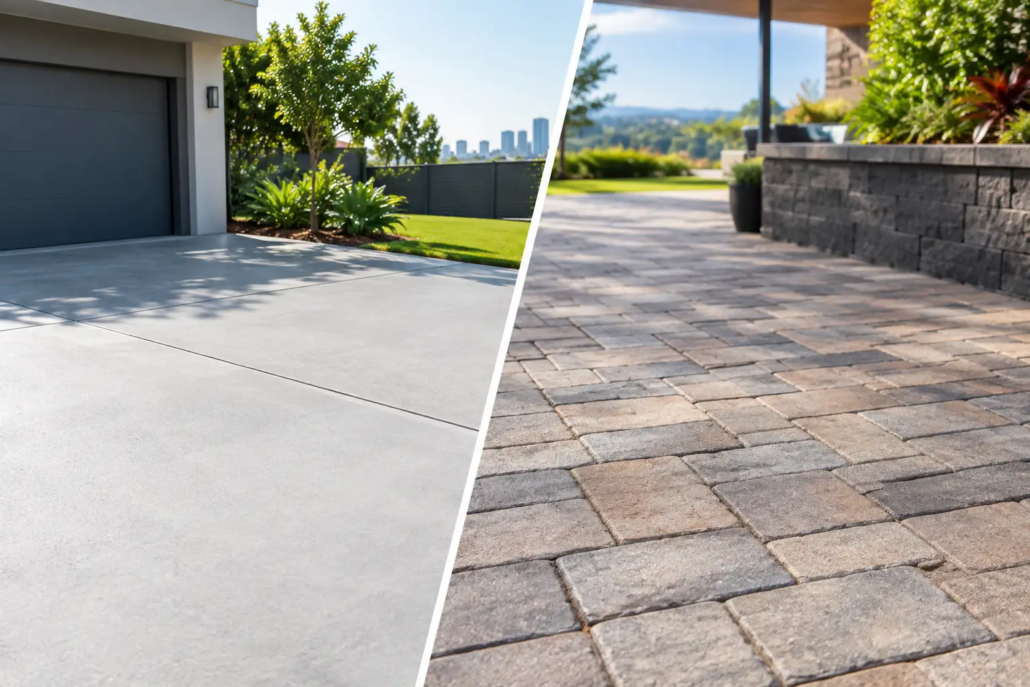
Concrete is installed as a prepared and poured surface, then finished to suit the area. It can be plain, coloured, exposed aggregate, stamped, stencilled, polished or resurfaced, depending on the application. Because it forms one continuous slab, it creates a clean visual line and a stable surface when the base preparation, reinforcement, joints and drainage are properly designed.
Pavers are individual units laid over a prepared base, typically with jointing material between them. They offer pattern, texture and the option to lift and relay sections if access is required below the surface. Their long-term performance depends heavily on correct excavation, compaction, edge restraints and drainage. A well-laid paved area can look excellent, but a poor base will eventually show through as movement, uneven levels or spreading joints.
Neither option is automatically better. A front driveway, a pool surround and a garden path all place different demands on the surface.
Where concrete is usually the stronger option
Driveways and vehicle areas
For driveways, driveway extensions, crossovers and commercial vehicle areas, concrete is often the more dependable solution. It handles regular vehicle loading across a continuous surface and avoids the individual movement that can occur with pavers over time. This is particularly valuable on sloping blocks, wide driveways and areas where turning tyres place extra stress on the surface.
The finish does not need to be basic grey. Exposed aggregate gives a textured, premium look with useful grip, while coloured concrete can complement a home’s façade and landscaping. Decorative borders, saw-cut joints and contrasting finishes can also add definition without creating the maintenance points associated with multiple individual pavers.
Concrete does require correctly placed control joints. These joints manage natural shrinkage and help guide cracking to planned locations. They are a normal part of a quality concrete installation, not a sign that the slab has failed.
Large patios and outdoor entertaining areas
A continuous concrete patio makes sense when homeowners want a level, easy-to-clean foundation for outdoor furniture, dining areas and covered entertaining spaces. It is especially effective where the patio meets a home extension or alfresco area, as levels and falls can be carefully planned to direct water away from the building.
Decorative concrete gives this type of space more flexibility than many people expect. A subtle coloured finish may suit a contemporary home, while exposed aggregate creates a more tactile surface that works well beside gardens. For existing but tired concrete, resurfacing can provide a refreshed finish without removing a sound slab.
Pavers can create a relaxed courtyard feel, particularly in smaller garden settings. However, furniture legs can catch in widened joints, and leaf litter, soil and moisture may encourage weeds or staining between units if routine maintenance is missed.
Paths, access areas and commercial surfaces
Concrete footpaths and access routes provide a firm, consistent surface for walking, prams, bins and mobility needs. For commercial settings such as warehouses, car parks, foundations and external access areas, the ability to tailor slab thickness, reinforcement and finish to expected use is a major advantage.
Commercial work should not be treated as a scaled-up domestic pour. Site preparation, drainage, vehicle loads, safety requirements and programme coordination all affect the final specification. This is where experienced concreting advice can prevent an attractive surface from becoming an operational headache.
When pavers may be the better fit
Pavers are worth serious consideration when the visual character of individual units is central to the design. They suit formal entry paths, heritage-style homes, compact courtyards and landscaped spaces where variation in shape or laying pattern is part of the appeal.
They can also be practical over services that may need future access. Rather than cutting a continuous slab, individual pavers can potentially be lifted and reinstated. That said, the repaired section still needs careful re-levelling and matching, especially if the surrounding pavers have weathered differently.
On sites where minor movement is expected, pavers may be able to be lifted and adjusted more readily than a slab. This does not remove the need for proper ground preparation. If the base settles, water is not directed away, or edge restraints fail, pavers can become uneven and create trip points.
Brisbane weather, drainage and ground conditions matter
Brisbane’s wet summers place drainage high on the priority list. Water should move away from buildings and not pond on the finished surface. This is a design issue before it is a material issue. Both concrete and pavers need planned falls, appropriate surface levels and a base that supports effective drainage.
With concrete, the installer can form consistent falls across the slab and integrate drainage points where required. With pavers, water can pass through joints, but it still needs somewhere to go beneath the surface. Without a properly prepared base and drainage strategy, water can soften the sub-base and contribute to movement.
Heat is another consideration. Dark surfaces, whether concrete or pavers, can feel warmer underfoot in direct sun. For pool surrounds and uncovered entertaining areas, colour selection, texture and surrounding shade all influence comfort. A lighter exposed aggregate or textured concrete finish may be a sensible choice where barefoot use and slip resistance are important.
Maintenance: what the long-term work looks like
Concrete generally asks for straightforward care. Regular sweeping, occasional washing and prompt attention to spills will help preserve its appearance. Sealing may be recommended for certain decorative finishes to support stain resistance and make cleaning easier. The suitable maintenance approach depends on the finish, how exposed the area is and how it is used.
Pavers need more attention at the joints. Jointing sand can reduce over time, weeds may establish, and individual units can shift if the edges or base are compromised. Moss and grime can also build up in shaded, damp areas. None of this makes pavers unsuitable, but it should be factored into the decision before installation.
Concrete can develop visible cracking, especially if movement occurs beneath the slab or joints are poorly planned. Pavers can become uneven rather than visibly cracked. In other words, both materials show site and installation issues in different ways. Quality preparation is the common factor that matters most.
Design flexibility is not just a paver advantage
Pavers are often chosen because they appear more decorative at first glance. Modern concrete finishes deserve equal consideration. Exposed aggregate can provide natural colour variation and texture. Coloured concrete creates a more deliberate finish than standard grey. Stamped or stencil concrete can introduce pattern, while polished concrete offers a refined surface for suitable internal and sheltered applications.
The key is to select a finish that matches the environment. A driveway needs durability and traction. A pool surround needs comfortable, slip-conscious detailing. A patio should suit the home’s architecture while remaining practical for everyday use. The best decorative result is one that still performs well after years of weather and foot traffic.
How to make the right choice for your property
Start with how the area will be used. If it carries vehicles, connects to a garage or needs a continuous, stable surface, concrete is often the logical direction. If the area is a feature courtyard, entry path or garden zone where unit-by-unit character matters most, pavers may suit the brief.
Then look at the site itself. Levels, soil conditions, access, existing drainage, nearby structures and future plans all influence the right construction method. It is also worth thinking about the finish early, rather than treating it as a last-minute decision once the base work has begun.
A site-specific discussion with an experienced contractor can clarify the practical details that photos cannot show. Creative Concrete Constructions can help property owners assess surface use, drainage and finish options so the completed area is designed for the way it will actually be lived on, driven over or worked around.
Choose the surface that gives your property a sound foundation first, then make it look the part. When preparation, drainage and workmanship are right, concrete or pavers can become a feature that continues to earn its place long after the landscaping has settled in.
