
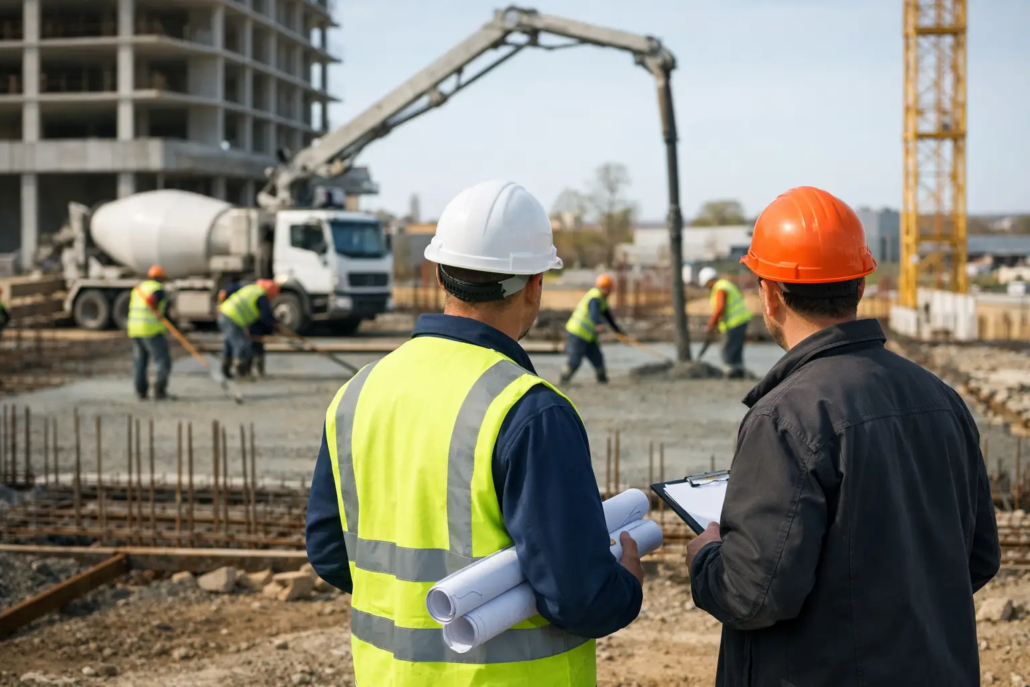
Choosing Commercial Concreting Contractors
A commercial concrete job usually looks simple from a distance – pour it, finish it, let it cure. On site, it is rarely that straightforward. Commercial concreting contractors are often working around access limits, drainage requirements, traffic loads, compliance standards and tight build schedules, all while delivering a surface that has to perform for years.
That is why choosing the right contractor matters well beyond the day of the pour. Whether you are planning a warehouse slab, a car park, a footpath or a foundation, the quality of the preparation and installation will shape how that asset performs, how it looks and how much maintenance it demands over time.
What commercial concreting contractors actually do
Commercial concreting is not just larger-scale residential work. The expectations are different, the loads are different and the margin for error is smaller. A commercial site often needs concrete that can handle regular vehicle traffic, equipment use, weather exposure and consistent daily wear without premature cracking, surface failure or drainage issues.
Good commercial concreting contractors bring more than labour to the project. They assess ground conditions, review the intended use of the area, plan reinforcement and thickness requirements, coordinate formwork and placement, and make sure the finish suits the environment. In some jobs, functionality is the priority. In others, appearance matters just as much, especially where customer-facing spaces or modern developments require a cleaner, more refined result.
This is also where experience counts. A contractor who understands both structural performance and finish options can help you avoid a common mistake – treating commercial concrete as purely utilitarian when a better finish could improve durability, safety or presentation with very little compromise.
Why contractor selection affects long-term performance
Concrete has a reputation for being hard-wearing, and that reputation is deserved when the work is done properly. But durability is not automatic. It depends on preparation, mix selection, reinforcement, placement methods, curing and finishing.
If the base is not prepared correctly, the slab can settle unevenly. If falls are wrong, water can pond where it should drain away. If joints are poorly planned, cracks can appear in places that create maintenance headaches or safety concerns. If the finish is not matched to the environment, the surface may become too slippery, too rough or difficult to keep clean.
These issues are not always visible on handover. Some only show up after months of use, once forklifts, delivery vehicles, foot traffic or weather have had time to expose weak points. That is why reliable commercial concreting contractors focus on the full lifespan of the surface, not just the initial pour.
What to look for in commercial concreting contractors
The first thing to check is relevant experience. A contractor may be highly capable in residential driveways and decorative patios, but commercial work introduces different technical demands. Ask whether they have delivered projects such as warehouses, car parks, footpaths, hardstands or foundations, and whether they understand the practical needs of active commercial sites.
Communication is just as important. Commercial projects involve moving parts, and delays in one trade can affect everyone else. You want a contractor who is responsive, clear about timing and realistic about site conditions. Straight answers early are usually a good sign. So is a willingness to explain the reasoning behind recommendations instead of pushing a one-size-fits-all solution.
Workmanship should also be visible in their past projects. Look beyond whether a slab appears neat on day one. The better question is whether the contractor consistently delivers clean edges, sound finishing, sensible joint placement and a result suited to the intended use of the space. If decorative or branded finishes are required, their portfolio should show that capability as well.
Commercial projects need more than plain grey concrete
Many commercial clients still think of concrete as a strictly functional surface. In some spaces, that is fine. A service area or back-of-house slab may only need durability, drainage and reliable finishing. But there are many projects where presentation matters alongside performance.
Entry areas, pedestrian spaces, retail surrounds, hospitality venues and mixed-use developments often benefit from a more considered finish. Exposed aggregate can create a durable, attractive texture in external areas. Coloured concrete can help tie hard landscaping into the wider design of a site. Polished concrete suits selected interiors where a cleaner, more refined look is needed. Epoxy flooring may be the better choice in spaces that demand easy cleaning and a specific surface performance.
This is where a full-service contractor adds value. Instead of separating structural work from surface design, they can help match the finish to the environment, traffic type and maintenance expectations. That gives you a surface that does its job without looking like an afterthought.
Site conditions and intended use always matter
No two commercial sites are exactly alike, and good contractors do not treat them that way. A warehouse floor has different demands from a footpath outside a tenancy. A car park needs a different approach from a foundation or loading area. The right solution depends on traffic loads, drainage, subgrade condition, exposure to weather, safety requirements and how the space will be used day to day.
That means the best advice is often conditional. A smoother finish may work well indoors but not in an exposed outdoor area where slip resistance matters. Decorative concrete can be an excellent fit for customer-facing spaces, but only if it is installed with the same attention to base preparation and durability as any structural slab. In commercial concreting, appearance should support function, not compete with it.
Local experience can help here too. In South East Queensland, weather, heat and stormwater management can influence both scheduling and finish selection. Contractors who regularly work across Brisbane, Logan City and the Gold Coast generally have a better sense of how to plan for those conditions and deliver a result that holds up in the real environment, not just on paper.
Questions worth asking before work begins
Before appointing a contractor, it helps to understand how they approach the job from start to finish. Ask how they assess site preparation, what they consider when recommending slab design or finish options, and how they manage curing and quality control. If access or staging is likely to be an issue, ask how they coordinate with other trades and minimise disruption.
It is also worth asking how they deal with practical risks. Commercial sites can shift quickly, and a dependable contractor should be able to explain how they manage weather delays, site readiness issues and changes to scope without losing control of the job.
You do not need a highly technical answer to every question. What you do need is confidence that the contractor understands the work, communicates clearly and is thinking ahead.
Why a tailored approach gets better results
The strongest commercial concrete outcomes usually come from a contractor who listens first. Some clients need a hard-wearing slab that simply performs without fuss. Others need a surface that supports branding, customer presentation or a broader architectural finish. Many need both.
A tailored approach allows the contractor to recommend the right construction method and surface treatment for the job rather than defaulting to the same finish every time. That is particularly valuable when a project includes both practical and visual requirements, such as a development with service areas, pedestrian zones and customer-facing entries all in one footprint.
For businesses that want reliability as well as finish quality, working with an experienced team such as Creative Concrete Constructions can make that process far more straightforward. The benefit is not just the completed concrete work. It is having a contractor who can guide decisions early, communicate clearly throughout the project and deliver a surface built for the way the site will actually be used.
Commercial concreting contractors should make the job easier
At their best, commercial concreting contractors do more than place concrete. They reduce risk, solve practical site issues and help create surfaces that hold up under real use. That is what separates a basic installation from a worthwhile long-term asset.
If you are planning commercial concrete works, it pays to choose a contractor who understands both performance and finish, asks the right questions early and treats your project like a working part of the property rather than just another slab. The right result is not simply concrete that sets. It is concrete that keeps doing its job long after the site is handed over.

