
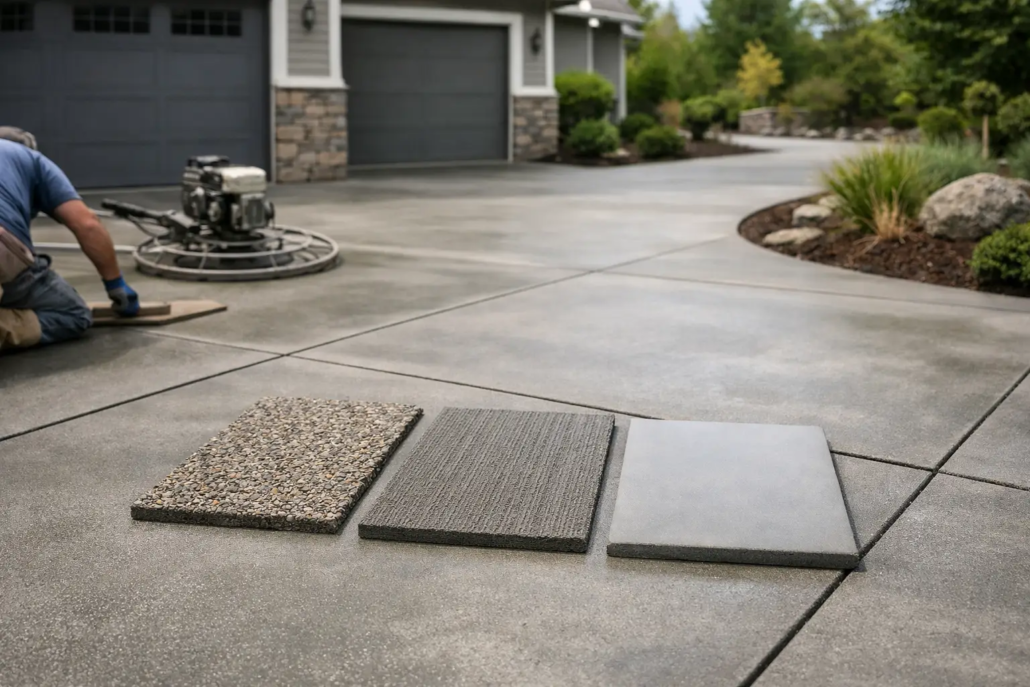
Concrete Driveway Finish Guide for Lasting Results
A driveway can look solid on day one and still be the wrong finish for how you actually use the space. If you are comparing options, this concrete driveway finish guide is the place to start – not with what looks best in a photo, but with what will handle traffic, weather, maintenance and the overall style of your property.
The right finish affects more than appearance. It changes slip resistance in wet weather, how much tyre marking you notice, how easily the surface can be cleaned, and how well the driveway ties in with the rest of the home. For homeowners, builders and commercial property owners alike, choosing the finish early helps avoid compromises later.
What a driveway finish really needs to do
A driveway works harder than most concrete surfaces around a property. It needs to carry vehicle weight, cope with turning tyres, deal with rain, sun and leaf litter, and still present well from the street. That means the best finish is rarely just the most decorative one.
In practical terms, a good driveway finish should balance durability, traction and visual appeal. If the surface is too smooth, it can become slippery. If it is too coarse, it may trap dirt or feel too aggressive for the style of the home. The right choice usually comes down to how the driveway is used, the slope of the site, and whether you want a clean understated look or something with more design impact.
Concrete driveway finish guide: the main options
Plain concrete finish
Plain concrete remains a popular choice because it is clean, reliable and suits a wide range of homes. It can be finished with a broom texture for added grip or a more refined surface depending on the intended look.
This option suits homeowners who want a practical driveway that does not compete with the rest of the property. It is also a sensible choice when durability and easy maintenance matter more than decorative detail. The trade-off is that plain concrete is more understated, so if street appeal is a major priority, another finish may offer more character.
Exposed aggregate
Exposed aggregate is one of the strongest options for combining appearance with everyday performance. By revealing the natural stone within the concrete mix, it creates texture, depth and a more premium look than standard grey concrete.
It is well suited to driveways because the finish naturally provides grip underfoot and under tyres. It also tends to hide dust, minor marks and general wear better than smoother finishes. The main consideration is that the final look depends heavily on stone selection and mix consistency, so quality installation matters.
Coloured concrete
Coloured concrete is a good fit when you want the driveway to complement the exterior palette of the home rather than stand apart from it. Earthy tones, charcoals and softer neutrals can all help a driveway feel more integrated with landscaping, facades and pathways.
From a performance point of view, coloured concrete can be as practical as standard concrete, but the finish still needs the right surface texture for traction. Colour adds design flexibility, although darker shades may show dust differently and lighter shades can reveal stains more easily depending on the environment.
Stencil concrete
Stencil concrete gives you the look of patterned paving or more decorative surfacing while retaining the strength of a concrete slab underneath. It is often chosen for homes where the driveway needs to make more of a statement from the street.
This finish can work well when matched carefully to the style of the house, but it is not the right fit for every property. If the pattern is too busy or out of step with the home, it can date more quickly than simpler finishes. It is most effective when the design choice feels intentional rather than purely decorative.
Stamped concrete
Stamped concrete creates pattern and texture by pressing a design into the slab while the surface is still workable. It can mimic stone, pavers or tiled finishes and is usually selected for visual impact.
For driveways, the key question is not whether it looks impressive, but whether it suits the traffic demands and overall property style. A stamped finish can be an excellent feature when done well, though it requires careful installation and finishing to perform consistently across a larger area.
Honed or polished style surfaces
These finishes are more common in indoor or covered applications, but some clients ask about them for external areas because of their refined appearance. On a driveway, they need to be approached carefully.
A smoother decorative surface may not offer the traction needed for outdoor vehicle use, especially on sloping sites or in wetter conditions. In most cases, a textured finish is the safer and more practical option for an exposed driveway.
How to choose the right finish for your property
The best finish is usually the one that suits the site, not just the one that looks best in isolation. A steep driveway, for example, needs more grip than a flat one. A home surrounded by trees may benefit from a finish that hides leaf staining and debris more effectively. A newer architectural build may suit a cleaner, more minimal finish than a heavily patterned one.
Think about traffic as well. A family home with multiple vehicles and regular turning movement places different demands on the surface than a lightly used driveway at the front of a smaller property. Commercial sites need to consider heavier loads, more frequent use and a finish that supports function without creating unnecessary maintenance.
It also helps to consider what sits next to the driveway. Pool surrounds, pathways, retaining walls and entry areas should feel connected. A driveway does not need to match every nearby surface, but it should belong to the overall design of the property.
Texture, grip and maintenance
One of the biggest mistakes with driveway selection is focusing on colour or pattern before checking how the surface will behave in daily use. Texture matters. In Queensland conditions, where rain can hit hard and outdoor surfaces are exposed for much of the year, slip resistance should always be part of the conversation.
A finish with some texture generally performs better for driveways than a very smooth decorative surface. That does not mean it has to feel rough or overly industrial. It simply means the finish should be practical enough to provide confidence when wet while still delivering the look you want.
Maintenance is the other half of the decision. Some finishes are better at disguising dust and tyre marks, while others need more regular cleaning to maintain their appearance. Sealing can help protect decorative finishes and support easier upkeep, but the driveway still needs routine care if you want it looking its best over time.
Why installation quality matters as much as the finish itself
Even the best finish choice can disappoint if the slab preparation, pour or finishing process is not right. A driveway has to be built on proper foundations, with correct levels, drainage planning and reinforcement suited to the job. The finish sits on top of all that, but it cannot compensate for poor installation underneath.
This is especially true with decorative concrete. Exposed aggregate, coloured concrete, stencil and stamped finishes all rely on timing, consistency and attention to detail. Small variations in process can affect the final look across the whole driveway.
That is why experience matters. An installer should be able to explain not only what a finish looks like, but where it works well, what limitations to expect and how it will perform in real conditions. At Creative Concrete Constructions, that practical guidance is a big part of helping clients choose a finish that looks right and holds up properly.
A finish should suit the property for years, not just the handover
Trends come and go, but a driveway stays in view every day. The best result is usually one that feels right with the home now and still makes sense years down the track. For some properties that means a straightforward broom-finished concrete driveway. For others, it means exposed aggregate, colour or a decorative pattern that adds more presence from the street.
A well-chosen finish should feel easy to live with. It should handle weather, traffic and regular use without becoming a constant maintenance issue or looking out of place as the rest of the property evolves.
If you are weighing up options, start with how the driveway needs to perform, then work back to the finish that supports that outcome. The smartest choice is not always the flashiest one. It is the finish that gives you durability, safety and a look that still feels right long after the concrete has cured.

