
How to Maintain Exposed Aggregate Surfaces
A well-finished exposed aggregate driveway or patio should look textured and natural, not dull, patchy or buried beneath grime. Knowing how to maintain exposed aggregate surfaces protects the stone’s colour, keeps the concrete matrix in sound condition and helps the area continue to add appeal to your property.
Exposed aggregate is a hard-wearing finish, but it is not maintenance-free. Brisbane and South East Queensland conditions can be tough on outdoor concrete: strong sun, heavy rain, leaf litter, humidity, pool water and tyre marks all leave their mark over time. A straightforward cleaning routine and correctly timed resealing will make a noticeable difference.
Start with regular, gentle cleaning
The best maintenance is often the simplest. Sweep exposed aggregate regularly, particularly on driveways, paths and patios beneath trees. Leaves, soil and mulch hold moisture against the surface, which can encourage mould growth and leave tannin stains after rain.
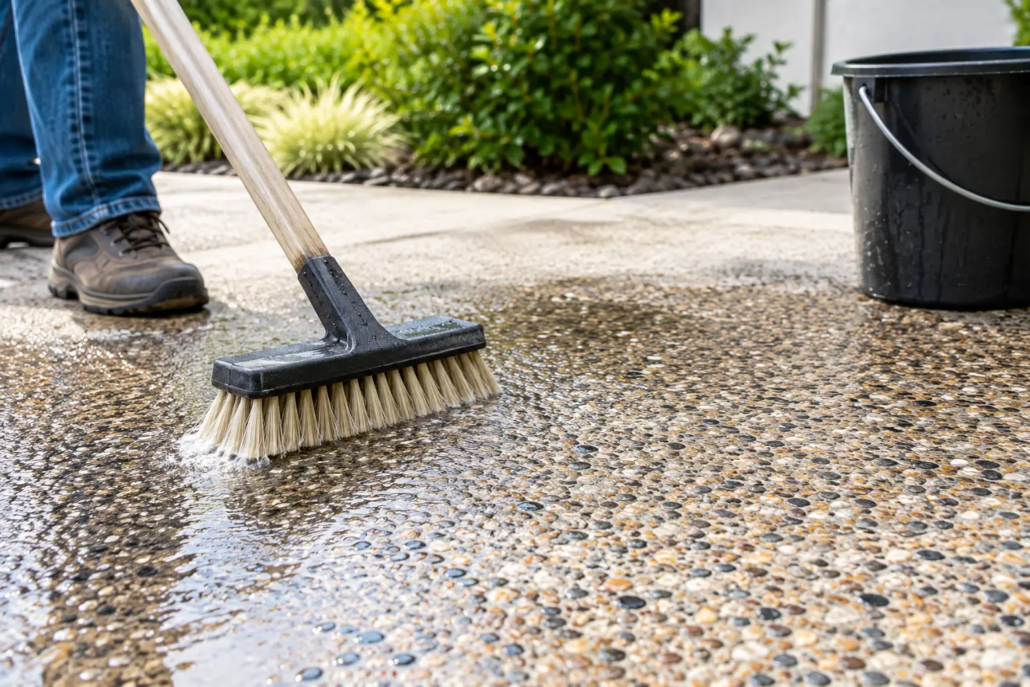
For general cleaning, use a garden hose and a stiff-bristled broom with a mild, pH-neutral outdoor cleaner. Work in manageable sections, scrub across the surface and rinse thoroughly. This removes everyday dirt without attacking the cement that holds the decorative stone in place.
A pressure washer can be useful for ingrained grime, but it needs a careful approach. Use a fan nozzle rather than a pinpoint jet, keep the lance moving and hold it well back from the surface. Excessive pressure at close range can damage the sealer, dislodge weaker stones or create an uneven appearance. If you have not used a pressure washer on exposed aggregate before, test an inconspicuous area first.
Avoid using strong acids, undiluted bleach or harsh degreasers as a routine cleaner. These products may alter the colour of the aggregate, erode the concrete paste or leave the finish looking chalky. They can also harm nearby gardens and pool equipment. A specialist should assess stubborn staining before aggressive chemicals are used.
Deal with spills before they settle
Oil, grease, fertiliser, paint and rust are easier to remove when treated promptly. Blot fresh oil with absorbent material rather than spreading it around, then use a concrete-safe degreaser according to its directions. Rinse the treated area fully so cleaner residue does not attract more dirt.
Fertiliser deserves special care. Granules left on a driveway or path can create orange-brown rust marks once wet. Sweep them away as soon as possible after garden work. Likewise, keep metal furniture, tools and planters from sitting in one damp spot for long periods, especially if they can rust.
For tyre marks, start with warm water, a mild detergent and a stiff broom. Some marks require a purpose-made concrete cleaner, but avoid abrasive methods that can create a noticeably different patch in the decorative finish.
Control mould, algae and leaf staining
Shaded patios, pool surrounds and southern-facing paths can develop mould or algae during wet, humid periods. Apart from looking neglected, growth on a walking surface can become slippery. Improve drainage where practical, trim back dense vegetation that blocks airflow and clear debris from the surface regularly.
Use a suitable outdoor mould treatment that is compatible with sealed concrete, then rinse as directed. Do not assume a product is appropriate simply because it is designed for outdoor use. A cleaner formulated for timber, tiles or roofing may not suit exposed aggregate or its sealer.
Leaf stains can fade with sun and rain, but heavy staining may need a gentle concrete-specific treatment. Test any cleaner in a discreet area first. The goal is to lift the stain without bleaching the surrounding surface or stripping sections of sealer.
Reseal the surface when protection is wearing away
Sealer is central to how to maintain exposed aggregate surfaces over the long term. It enhances the depth of the stone, reduces water and contaminant absorption, and makes routine cleaning easier. However, no sealer lasts forever. Traffic, ultraviolet exposure, weather and cleaning gradually wear it down.
There is no single resealing interval for every property. A lightly used covered patio can hold its protection far longer than a sun-exposed driveway used daily by vehicles. As a general guide, inspect the finish every year and plan for resealing when water no longer beads on the surface, the colour looks persistently flat after cleaning, or areas of the finish have become uneven.
Before resealing, the concrete needs to be clean, dry and free of surface contaminants. Applying fresh sealer over dirt, oil, moisture or peeling older coatings can trap problems beneath the new layer. This is why preparation matters as much as the sealer itself.
The chosen product should suit the location and the existing sealer system. Penetrating sealers provide a more natural appearance, while film-forming sealers can give stronger colour enhancement or a gloss finish. Gloss is not always the best choice, particularly around pools or on sloping paths. The finish should be selected with traction, exposure and intended use in mind. A compatible non-slip additive may be appropriate for wet areas.
If an existing sealer is flaking, whitening, bubbling or lifting in patches, do not simply coat over it. The cause needs to be identified and the failed coating properly prepared or removed. Professional advice is worthwhile here, as an incorrect product combination can make the issue harder to rectify.
Protect driveways from avoidable wear
Driveways receive the most concentrated wear, especially where vehicles turn, brake or sit for extended periods. Clean up fuel, oil and brake fluid quickly, and avoid parking very heavy loads on young concrete until the installer confirms the surface has reached the required strength.
Take care when using jacks, stands, skips or equipment with narrow contact points. Spread the load with suitable boards where necessary. Metal edges can chip the concrete matrix or scratch the sealed finish, even though the exposed stones themselves are hard.
Where possible, do not let soil and garden beds build up against the edge of a driveway or path. This can hold moisture, obscure drainage and leave the concrete looking permanently dirty along the perimeter. Keeping joints, drainage channels and nearby grates clear also helps water move away as intended.
Watch for early signs of damage
Small changes are easier to manage than larger repairs. Inspect exposed aggregate periodically for cracking, loose stones, joint breakdown, pooling water or isolated areas that remain damp. Hairline cracking can occur in concrete and is not always a structural concern, but cracks that widen, move, create a trip edge or allow water beneath the slab should be assessed promptly.
A few loose stones may be a local surface issue, while widespread aggregate loss can indicate wear, poor bonding or unsuitable cleaning methods. Patching exposed aggregate is more specialised than patching plain grey concrete because the colour, stone blend and texture need to be matched as closely as possible.
Do not fill cracks or chipped sections with a generic grey repair compound if appearance matters. It may solve a short-term problem but can stand out sharply against the decorative finish. An experienced concreting contractor can recommend whether a targeted repair, joint treatment, reseal or resurfacing solution is the more suitable option.
Adjust care around pools and outdoor entertaining areas
Pool surrounds need consistent rinsing to remove splashed chlorinated or salt water, sunscreen, food spills and organic matter. These contaminants can leave residue that makes the area feel grimy or affects the sealer over time. Keep the surface clear of wet towels, pot plants and outdoor furniture that may trap moisture in the same spot.
For entertaining areas, fit protective pads beneath furniture legs and avoid dragging heavy tables, barbecues or planters across the finish. A quality exposed aggregate surface is built for everyday living, but small habits prevent unnecessary scuffs and concentrated wear.
Know when professional maintenance is the sensible option
Routine sweeping and washing are suitable for most owners. It is time to call a professional when stains persist after appropriate cleaning, the sealer fails unevenly, the surface becomes slippery, aggregate starts coming loose or cracking appears to be worsening.
At Creative Concrete Constructions, the approach is to assess the condition of the concrete and recommend work that suits the surface rather than applying a one-size-fits-all treatment. This is especially valuable for older driveways, pool surrounds and decorative patios where finish matching and safe surface preparation matter.
A little regular care keeps exposed aggregate doing what it was selected to do: provide a durable, practical surface with genuine visual character for years to come.

