
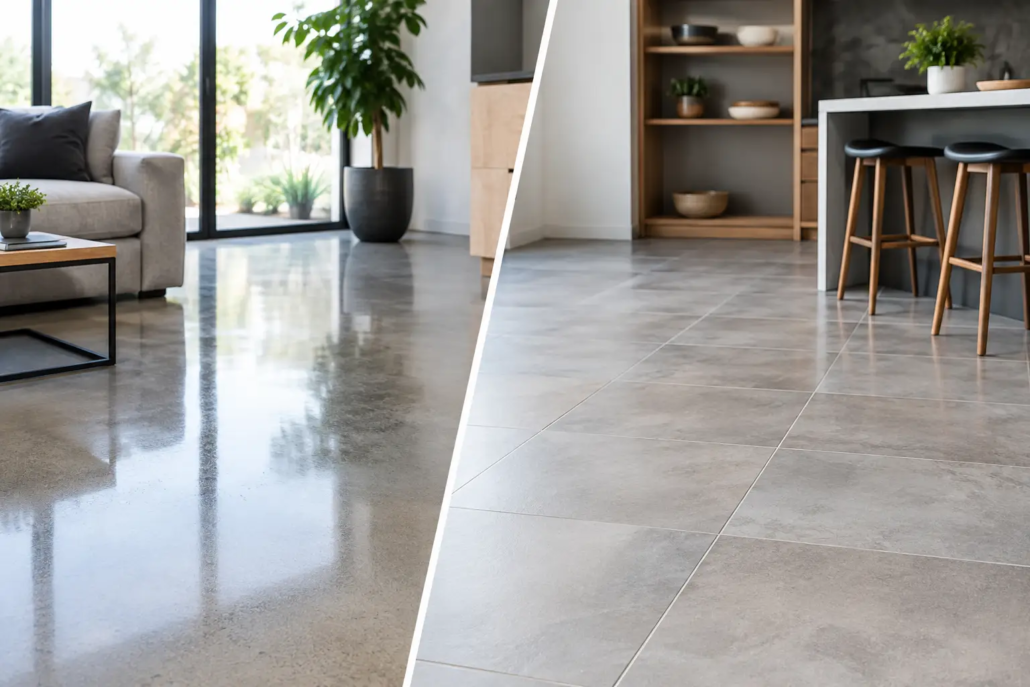
Polished Concrete Versus Tiles for Your Space
A floor or outdoor surface has to do more than look good on handover day. It needs to stand up to wet feet, dropped tools, Queensland heat, regular cleaning and the way the space is actually used. When considering polished concrete versus tiles, the better choice depends on the location, the existing slab, your preferred finish and the level of maintenance you are prepared to take on.
Both options can create a polished, high-quality result. Tiles offer a wide range of patterns and surface textures, while polished concrete delivers a continuous finish that can make rooms and commercial areas feel larger and more considered. The right answer is rarely about one material being universally better. It is about selecting a surface that performs well for your property over the long term.
Polished Concrete Versus Tiles: The Main Difference
Tiles are individual manufactured units fixed to a prepared surface with adhesive and finished with grout joints. They can be ceramic, porcelain, natural stone or another specialised material, each with different performance characteristics.
Polished concrete starts with a concrete slab. The surface is mechanically ground, refined and sealed to expose or retain varying amounts of aggregate, then polished to the desired level of sheen. It is not simply concrete with a glossy coating. The preparation, condition of the slab and skill of the installation team all influence the finished result.
That fundamental difference affects appearance, maintenance and suitability. Tiles create a modular finish with visible joint lines. Polished concrete creates a more continuous plane, with natural movement and variation that comes from the slab itself.
Appearance and Design Flexibility
For homeowners seeking a clean, contemporary interior, polished concrete has strong visual impact. Its uninterrupted surface works particularly well in open-plan living areas, kitchens, hallways and commercial spaces where a consistent finish helps connect large zones. Aggregate exposure, colour, sheen and edge detailing can all be adjusted to suit a more subtle or more decorative design direction.
No two polished concrete floors are exactly alike. Minor tonal changes, aggregate distribution and existing marks in the slab may remain visible. For many property owners, this character is part of the appeal. For those wanting a completely uniform pattern or a specific stone-look design, tiles may offer more control.
Tiles provide variety that concrete cannot replicate in the same way. They can introduce colour, texture, geometric layouts and feature areas, from a restrained large-format porcelain tile to a more detailed entry or bathroom design. Grout colour also becomes part of the finished look, whether it is selected to blend in or provide contrast.
The practical question is whether you want the floor to be a calm backdrop or a strong design feature. Polished concrete generally suits the first approach, although decorative aggregate can add plenty of interest. Tiles are often better suited when pattern, shape or a highly defined material look is the priority.
Durability in Busy Homes and Commercial Areas
A properly installed polished concrete floor is exceptionally hard-wearing. It is well suited to high-traffic spaces such as retail areas, showrooms, workshops, warehouses and busy family living zones. There are no grout lines to crack, discolour or collect dirt, and the surface handles regular foot traffic with minimal fuss.
However, polished concrete is only as reliable as the slab beneath it. Existing cracking, moisture issues, poor curing or an uneven finish need to be assessed before polishing begins. Control joints are also a normal part of concrete construction and may remain visible. They help manage natural slab movement, so they should be treated as a functional feature rather than a defect.
Tiles can also be highly durable, especially quality porcelain products installed over a correctly prepared substrate. Yet individual tiles can crack or come loose if the base moves, the adhesive bond fails or a heavy impact occurs. Replacing a damaged tile is possible, but it relies on having matching stock available and can be difficult where a product has been discontinued.
For commercial properties, durability is not just about strength. It includes how a surface performs under trolleys, equipment, cleaning routines and concentrated traffic paths. A polished concrete system may be the more practical option where a large, hard-working floor needs a consistent finish with fewer joints.
Cleaning and Ongoing Maintenance
Maintenance is one of the clearest differences between the two surfaces. Polished concrete is straightforward to keep clean with regular sweeping or dust mopping and a suitable neutral cleaner. Using harsh acidic products or abrasive cleaners can dull the finish or affect protective treatments, so the cleaning method should match the system installed.
Tiles themselves are generally easy to wipe down, but grout is the maintenance point that owners often underestimate. In kitchens, entry areas and bathrooms, grout joints can hold dirt and staining over time. They may need deeper cleaning or resealing, depending on the tile and grout selected.
Neither surface is maintenance-free. Polished concrete may require periodic resealing or refinishing in high-wear environments to maintain its appearance and protection. Tiles may need grout care and occasional repairs. The advantage of concrete is that its day-to-day cleaning routine is usually simpler because there are fewer places for dirt to settle.
Wet Areas, Pool Surrounds and Slip Resistance
A glossy indoor polished concrete floor and an external entertaining area should not be treated as the same application. Around pools, on patios and at commercial entries, slip resistance becomes a key design and safety consideration.
Tiles are available in many slip-rated finishes, which can make them a suitable choice for bathrooms and outdoor wet areas. The rating should suit the specific location and expected conditions, not just the appearance of the tile in a showroom. Highly polished tiles may look impressive but can be unsuitable where water is regularly present.
Concrete can also be tailored for outdoor use, but a fully polished finish is not always the right choice. Honed concrete, exposed aggregate and other textured decorative concrete finishes often provide better traction while maintaining a premium appearance. Surface drainage, falls and water management matter just as much as the chosen finish.
In South East Queensland, outdoor surfaces need to cope with strong sun, humidity and frequent rain. Choosing a finish that feels safe underfoot when wet is more valuable than selecting one purely for its dry-weather appearance.
Comfort, Heat and Everyday Use
Concrete has significant thermal mass. In a well-designed home, it can help moderate indoor temperature by absorbing and releasing heat gradually. It also works well with underfloor heating where that is part of the build. Underfoot, though, polished concrete can feel firm and cool, particularly in bedrooms or living spaces where comfort is the main concern. Rugs can soften the experience without hiding the floor entirely.
Tiles have similar hard-surface qualities, although the feel varies by product and installation. Both materials are practical for allergy-conscious households because they do not trap dust and pet hair in the way carpet can.
For kitchens and family areas, consider how long people stand in one spot. A hard floor is durable and easy to clean, but a mat at the sink or work zone can make daily use more comfortable. Practical design often comes down to these small decisions.
When Polished Concrete Is the Better Fit
Polished concrete is worth serious consideration when you have a sound slab and want a low-joint, contemporary surface for a large internal area, retail space or commercial floor. It suits property owners who value durability, simple cleaning and the natural character of concrete.
It is particularly effective in new builds where the slab can be planned with the final finish in mind. Early coordination helps manage levels, joints, aggregate selection and protection of the slab during construction. It can also be an option for renovations, although the condition of the existing concrete must be inspected before a final recommendation can be made.
When Tiles Are the Better Fit
Tiles are often the stronger choice where a specific pattern, decorative look or slip-rated wet-area surface is required. Bathrooms, laundries and detailed feature spaces can benefit from the design options available in tile ranges.
They may also be more suitable when the existing substrate is not appropriate for polishing, or when a renovation calls for a finish that can be installed over a prepared base without relying on the appearance of the original slab. Product selection and installation quality remain critical, particularly for large-format tiles and outdoor areas.
Make the Decision Around the Whole Space
The best flooring choice should account for the substrate, drainage, expected traffic, exposure to water and the visual outcome you want to live with. A sample can help, but it cannot replace an on-site assessment of the slab or installation area.
For a polished concrete project, careful preparation is where long-term performance begins. Creative Concrete Constructions can assess the practical requirements of your Brisbane, Logan City or Gold Coast property and help match the finish to the way the space will be used. Choose the surface that will still feel right after years of busy mornings, wet weather and everyday wear – not just the one that looks best on the first day.
