
How to Prepare for Concrete Resurfacing Properly
A resurfaced driveway, patio or commercial entry can make a worn concrete area look sharp and purposeful again, but the finished result is only as reliable as the surface beneath it. Knowing how to prepare for concrete resurfacing helps prevent common issues such as lifting, cracking, patchy colour and poor adhesion. The preparation stage is where existing problems are identified, the slab is made sound, and the site is set up for a clean, durable finish.
Start by checking whether the slab is suitable
Concrete resurfacing is designed to refresh structurally sound concrete, not disguise a failed slab. Before work begins, inspect the area for cracks, movement, drainage problems, loose sections and signs of moisture rising through the concrete.
Fine, stable hairline cracks can often be repaired as part of the preparation process. Wider cracks, cracks that continue to move, or sections with uneven levels may point to movement in the base underneath. These issues need to be assessed before a resurfacing system is applied. A new decorative surface over an unstable slab may look good initially, but the original movement can transfer through the new finish.
Pay close attention to areas around expansion joints, downpipes, garden edges and vehicle turning zones. Driveways and commercial access areas carry heavier loads than a pedestrian path, so the existing slab needs to be in suitable condition for its intended use. Pool surrounds and patios also need careful consideration, particularly where water exposure or drainage has affected the concrete over time.
A professional inspection is especially worthwhile when concrete is spalling, has large areas of delamination, or shows signs of sinking. In some cases, repairs or removal may be the better long-term option than resurfacing.
Clear the area and plan access
Resurfacing work requires clear, safe access to the slab. Move vehicles, outdoor furniture, pots, bins, play equipment and stored items well away from the work zone. If the surface is a driveway, make alternative parking arrangements before work starts. For a patio or pool area, consider how family members and pets will move around the property while access is restricted.
Commercial sites need a little more planning. Identify delivery routes, customer entry points, staff access and any operational areas that could be affected. A staged approach may be possible on larger sites, but it needs to be organised before surface preparation begins.
It is also sensible to protect nearby gardens, walls, doors, garage openings and outdoor fixtures. Surface preparation can create dust, while coating and resurfacing products need a controlled area to achieve a neat edge. Clear communication about access and timing helps the project run smoothly from the first day through to curing.
Think about weather and drying time
South East Queensland weather can change quickly, and concrete work should be planned with conditions in mind. Heavy rain, high humidity and extreme heat can affect preparation, product application and curing times. The slab must be dry enough for the chosen resurfacing system, while the surrounding area should be protected from unexpected water runoff.
Avoid watering gardens directly beside the slab immediately before scheduled work, and redirect sprinklers where needed. Downpipes that discharge across a driveway or patio should also be addressed. Water management is not just a concern during installation – it is central to the lifespan of the resurfaced area.
Remove dirt, coatings and contaminants
The concrete must be properly cleaned before resurfacing. Dust, mud, leaf tannins, tyre marks, oil, grease, paint, old sealers and curing compounds can all interfere with adhesion. A surface that appears clean at a glance may still have contaminants embedded in its pores.
Start by sweeping away loose dirt and rubbish, then remove weeds or moss growing through joints and cracks. Degreasing is particularly important on driveways, garage floors and commercial areas where vehicles, machinery or stored equipment may have left oil stains. Ordinary washing may not be enough for deeply absorbed contaminants.
Existing coatings need special attention. Acrylic sealers, paint, epoxy, old resurfacing products and patch repairs can create an inconsistent base. Depending on the material and its condition, these layers may need to be mechanically removed so the new system can bond directly to sound concrete.
Pressure washing can be useful, but it should not be treated as the entire preparation process. It can clean a surface, yet it may not remove stubborn contaminants or provide the surface profile required for a strong bond. The right preparation method depends on the slab condition and the selected finish.
Create the right surface profile
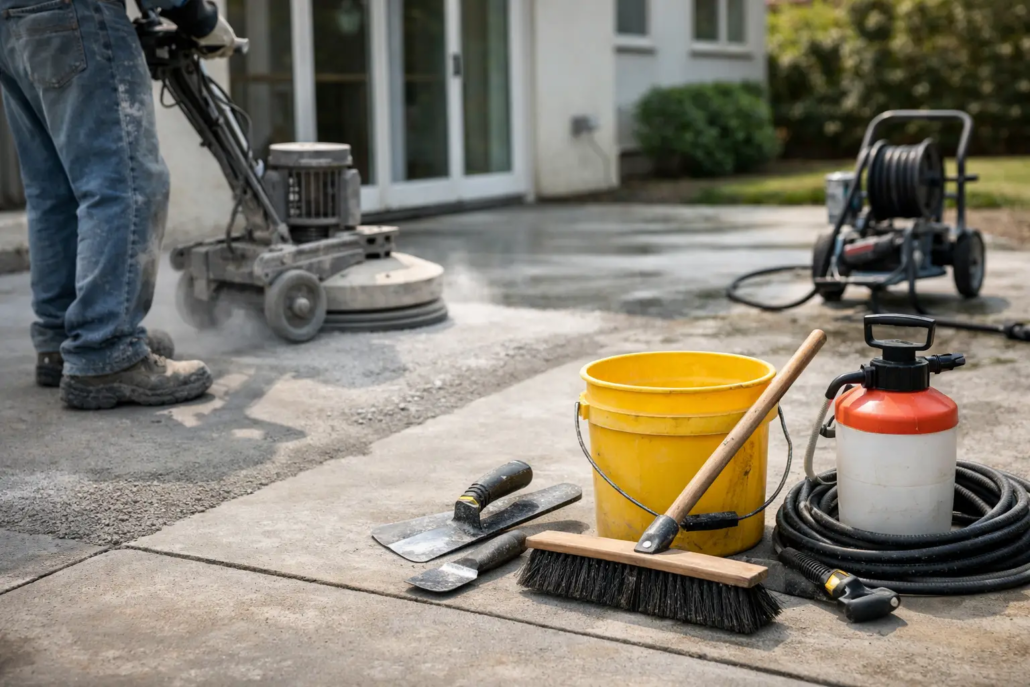
Resurfacing materials need a clean, textured surface to grip. Smooth or dense concrete can prevent proper bonding unless it is mechanically prepared. This is commonly achieved through grinding, scarifying or other appropriate surface-profiling methods.
The goal is not to damage sound concrete. It is to remove weak material and create a consistent profile that allows the resurfacing product to adhere evenly. This step can reveal hidden issues, including weak patches, old repairs and areas where the concrete has started to break down.
A professional concreting team will select the preparation method to suit the intended finish. For example, a decorative overlay, stencil pattern or coating system may have different requirements from a practical resurfacing solution for a warehouse walkway or car park. Preparation should always match the system being installed, rather than relying on a one-size-fits-all approach.
Repair cracks, holes and weak sections first
Once the slab is clean and profiled, repairs can be completed properly. Cracks are cleaned out and treated using suitable repair materials, while chips, pits and small holes are filled and levelled. Loose or hollow-sounding concrete should be removed rather than covered over.
Expansion and control joints need to remain functional. They are designed to accommodate natural concrete movement, so filling or bridging them without the right detail can lead to cracking. Where joints are part of the existing slab design, they may need to be honoured in the finished resurfacing layout.
This is also the time to correct minor falls or low spots where practical. Water should drain away from buildings and avoid pooling on the finished surface. Resurfacing can improve the appearance of a slab, but it cannot solve every drainage problem without appropriate repair work or changes to surrounding levels.
Protect adjoining areas and confirm the finish
Before application, confirm the design direction for the space. Resurfacing offers practical and decorative options, including coloured finishes, stencil patterns, stamped effects and textures suited to driveways, patios, pathways and pool surrounds. The right choice should reflect how the area is used, the level of grip required and the overall style of the property.
For a driveway, durability and tyre traffic are key considerations. Around a pool, slip resistance, bare-foot comfort and water exposure matter more. A commercial entry or footpath may need a finish that supports safe pedestrian movement while maintaining a professional appearance.
Masking and edge protection are then installed around walls, drains, garden borders and other adjoining surfaces. This is a small but valuable detail. Clean edges make a resurfacing project look considered and help protect the parts of the property that are not being treated.
Give the finished surface time to cure
Preparation continues beyond the application day because the resurfaced area needs protection while it cures. Keep people, pets, vehicles, furniture and cleaning equipment off the surface for the advised period. Returning a heavy vehicle to a driveway too early, or dragging furniture across a new patio finish, can mark the surface before it has developed its intended strength.
Once the area is ready for use, follow the maintenance advice provided for its finish. Routine sweeping, prompt attention to spills and sensible cleaning methods will help preserve its appearance. Sealing may also be recommended depending on the resurfacing system and exposure conditions.
A well-prepared slab gives resurfacing the foundation it needs to perform. If you are unsure about cracks, old coatings, drainage or the best finish for your property, an experienced local concreting contractor can assess the surface before work begins. Creative Concrete Constructions can help Brisbane, Logan City and Gold Coast property owners turn tired concrete into a durable, well-finished surface with preparation that is treated as carefully as the final design.

